Best Hospital at Home Vital Signs Tools for Health Systems
A commercial roundup of hospital at home vital signs tools for health systems, comparing wearables, Bluetooth kits, and contactless camera-based remote vitals tracking.
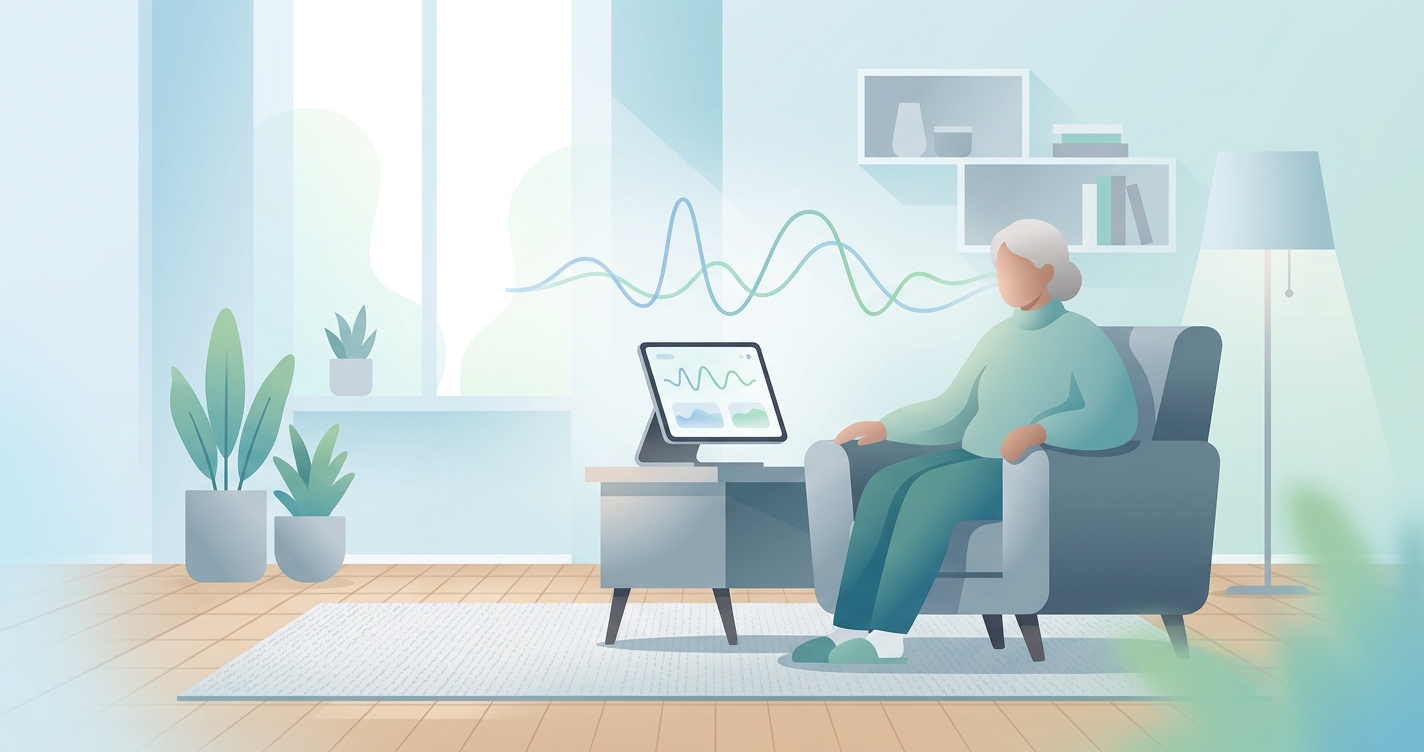
Health systems choosing a hospital at home vital signs platform are no longer evaluating a fringe pilot. They are picking the monitoring backbone for an acute care model that CMS has committed to through September 30, 2030, and that nearly 400 hospitals across 39 states already run under the Acute Hospital Care at Home waiver. The tooling decision shapes everything downstream: clinician workload, patient adherence, alarm fatigue, and whether a program can scale past its first cohort. This roundup compares the major categories of vital-sign monitoring tools available to care-at-home programs and ranks them against the criteria program directors actually budget around.
A 2024 CMS report on the Acute Hospital Care at Home initiative found that patients treated at home generally experienced lower 30-day mortality, lower readmission rates, and lower post-discharge spending than comparable inpatients. The global remote patient monitoring market, valued near $14 billion in 2023, is projected to reach $41.7 billion by 2028 at a 20.1 percent annual growth rate.
Comparing hospital at home vital signs tools
The hospital at home vital signs category breaks into four practical tool classes. Each captures the core acute-care set differently: heart rate, respiratory rate, blood pressure, oxygen saturation, and temperature. The differences that matter at scale are not raw specification sheets. They are adherence, setup burden on a discharge nurse, logistics for device return and reprocessing, and how cleanly the data flows into the command center an organization staffs around the clock.
The most common failure mode in early programs is not accuracy. It is missing data. A reading that never happens because a patient cannot pair a cuff, lost a charger, or removed an itchy patch is clinically invisible, and it breaks the 16-days-of-data rule that CMS reaffirmed for RPM billing in 2024. So the right lens for a buyer is not "which device is most precise in a lab" but "which approach reliably produces usable vitals from an 80-year-old with arthritis and no Wi-Fi confidence."
| Tool class | Vitals captured | Patient adherence burden | Logistics and reprocessing | Best fit | |---|---|---|---|---| | Continuous wearable patches | HR, RR, temp, posture, some SpO2 | Moderate to high (charging, skin tolerance, re-application) | Shipping, charging, adhesive resupply, sanitizing | High-acuity continuous surveillance | | Bluetooth peripheral kits | BP, SpO2, HR, weight, temp (spot) | High (multiple devices, pairing, scheduled readings) | Multi-device kits, returns, cleaning | Chronic and post-acute spot checks | | Cellular gateway tablet kits | Same as paired peripherals | Moderate (guided prompts reduce errors) | Tablet plus peripherals to ship and recover | Mixed-tech-literacy populations | | Camera-based contactless | HR, RR, and trend signals via device camera | Low (no wearable, no pairing) | Software only, minimal hardware footprint | Broad enrollment, adherence-limited cohorts |
Key buyer takeaways from the comparison:
- Continuous patches give the richest signal but carry the heaviest resupply and reprocessing tail, which scales linearly with census.
- Bluetooth kits are mature and well reimbursed, yet pairing failures and device attrition quietly erode data completeness.
- Gateway kits reduce user error with guided prompts but still require shipping, recovery, and cleaning of physical hardware.
- Camera-based remote vitals tracking removes the wearable compliance problem entirely, trading some continuous-monitoring depth for far higher enrollment reach.
Industry applications by program type
Acute hospital at home
For substitutive acute care, programs typically blend a continuous wearable for the highest-acuity patients with scheduled spot checks for the rest. The wearable handles overnight surveillance; the spot-check layer confirms blood pressure and oxygen saturation on a clinician-defined schedule. The operational cost here is real: every patch and gateway must be shipped, tracked, retrieved, and reprocessed, and a 50-patient daily census can tie up a logistics coordinator full time.
Post-discharge and transitional care
The 30 days after discharge are lower acuity but higher volume, and this is where adherence decides program economics. Camera-based home vital sign monitoring fits well because enrollment is frictionless, there is no hardware to return, and the goal is trend detection rather than continuous waveform capture. Programs aiming to prevent readmissions care most about catching a drifting respiratory rate or rising resting heart rate over days, which contactless capture supports without asking a recovering patient to manage devices.
Chronic disease and population health
For heart failure, COPD, and hypertension panels, Bluetooth peripherals remain the workhorse because weight and blood pressure trends drive titration. The emerging pattern is hybrid: contactless capture for daily heart and respiratory rate plus a single connected cuff or scale for the disease-specific measure, which shrinks the device count per patient and the attrition that comes with it.
Current research and evidence
The evidence base behind contactless options has matured quickly. Smartphone-based remote photoplethysmography (rPPG) studies report heart rate accuracy within roughly 2 to 5 beats per minute mean absolute error against clinical-grade references under controlled conditions, and one validation of the WellFie application reported 97.3 percent heart rate accuracy and 84.4 percent respiratory rate accuracy in normotensive participants. A 2024 systematic review of contactless respiratory rate measurement using RGB cameras documented consistent performance across multiple methods, while a near-infrared time-of-flight camera study reported a mean respiratory rate deviation of 1.7 breaths per minute with motion compensation.
Equity signals are improving too. Google Research reported that its smartphone-camera heart-rate approach achieved wearable-level accuracy for daily resting heart rate across all skin tones, an important data point given documented pulse-oximetry bias in darker-skinned patients. Regulatory momentum followed in 2024 when a contactless respiratory rate measurement received FDA clearance.
On the clinical value side, a systematic review published in PMC on remote vital signs monitoring for detecting deterioration in hospital at home and post-acute patients found that vital-sign trends can surface clinical decline before crisis, though the authors caution that alarm thresholds need careful tuning. That caution is echoed in a real-world healthcare-at-home dataset analysis in MDPI, which examined alarm burden and the tradeoff between sensitivity and false alerts. The practical lesson for buyers: the tool that generates the cleanest, most complete longitudinal trend, with manageable alarm volume, is worth more than the one with the tightest single-reading specification.
The future of hospital at home vital signs
Three shifts are reshaping the buying decision. First, hardware minimization. As camera-based capture proves out, programs are reducing the number of physical devices per patient to cut logistics cost and device attrition, which is one of the least-discussed line items in RPM budgets. Second, hybrid architectures are becoming the default rather than single-vendor monocultures, with contactless capture handling broad daily vitals and a small set of connected peripherals reserved for disease-specific measures. Third, command-center integration is the real battleground; the platform that normalizes data from multiple capture modes into one prioritized clinician queue will win the enterprise contract, because virtual nursing staff cannot toggle between five dashboards.
The regulatory runway through 2030 gives health systems time to standardize. Expect procurement criteria to weight adherence and total cost of monitoring per patient-day more heavily than headline accuracy, and to scrutinize how each tool performs with the lowest-tech-literacy quartile of patients, since that group drives both readmission risk and program drop-off.
Frequently asked questions
What vital signs do hospital at home programs need to capture? Most acute programs track heart rate, respiratory rate, blood pressure, oxygen saturation, and temperature. The capture method varies by acuity: continuous monitoring for high-risk patients and scheduled spot checks for the rest. Post-acute and chronic programs often prioritize trend detection in heart and respiratory rate over continuous waveform data.
How does camera-based remote vitals tracking compare to wearables for adherence? Camera-based monitoring removes pairing, charging, and skin-tolerance issues that cause wearable non-compliance, so it tends to produce more complete data across mixed-literacy populations. Wearables still offer richer continuous signal for the highest-acuity patients, which is why many programs run a hybrid model.
Will contactless vital signs meet CMS RPM billing requirements? CMS reaffirmed in 2024 that RPM billing requires at least 16 days of device-transmitted data within a 30-day period. Programs should confirm that any platform reliably produces qualifying daily readings, since data completeness, not capture method, is the practical constraint on reimbursement.
What is the biggest hidden cost in hospital at home monitoring tools? Device logistics and attrition. Shipping, charging, retrieving, cleaning, and replacing lost hardware scale with census and rarely appear on a spec sheet. Reducing the number of physical devices per patient is one of the most direct ways to lower total cost of monitoring.
Circadify is building in this space with camera-based remote patient monitoring designed to remove the wearable compliance problem that limits hospital at home enrollment. Care-at-home program directors evaluating their vital signs stack can book a platform consultation and explore an RPM pilot program to see how contactless capture fits alongside existing connected devices.