Can my hospital actually see if I'm breathing okay from my phone?
How a breathing monitor without devices works: the camera science, accuracy evidence, and what contactless respiratory RPM means for health systems.
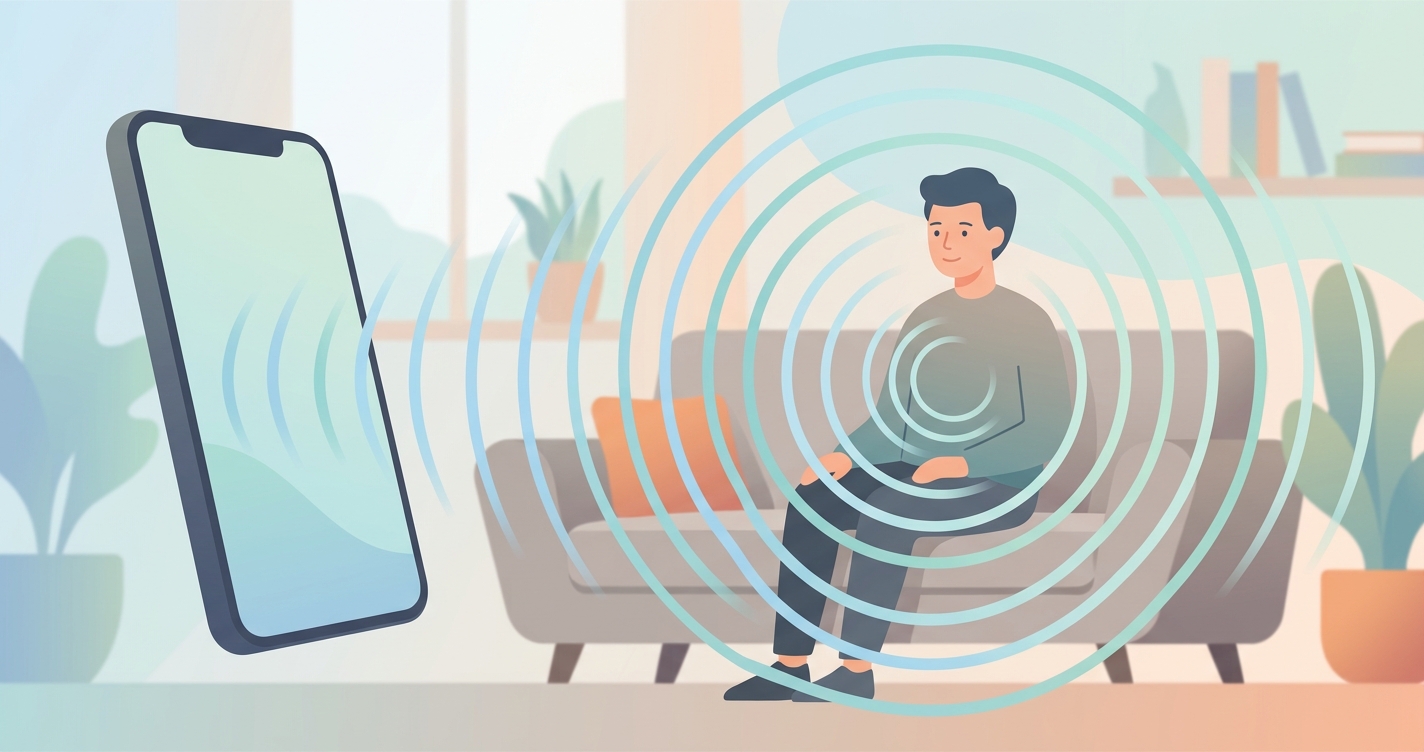
If you have a respiratory condition and your care team asked you to check in through a phone or tablet camera, the question is reasonable: can anyone really tell whether you are breathing okay without a sensor strapped to your chest? The short answer is that a breathing monitor without devices is no longer a laboratory curiosity. Camera-based methods now estimate respiratory rate from subtle motion and color changes captured by an ordinary smartphone, and health systems are beginning to fold these methods into remote monitoring for conditions like COPD, heart failure, and post-discharge recovery. For hospital leaders weighing contactless remote patient monitoring (RPM), the relevant question is not whether the technology exists, but how reliably it performs and where it fits in a respiratory care pathway.
In a 2025 validation study of remote photoplethysmography from RGB facial videos, researchers reported a correlation above 0.9 and a mean absolute error within 1 breath per minute compared with a contact-based respiratory belt.
How a breathing monitor without devices reads respiration
Respiration produces several signals a camera can detect. When you inhale, your chest and shoulders rise, your head shifts slightly, and the volume of blood in surface tissue changes in a rhythmic way. A breathing monitor without devices works by isolating those rhythms from video.
Two technical approaches dominate the field:
- Motion-based estimation tracks the rise and fall of the chest, shoulders, or head. Migyeong Gwak, Korosh Vatanparvar, Jilong Kuang, and Alex Gao demonstrated that head movements alone, captured by an RGB camera, can estimate respiratory rate and even flag breathing absence.
- Remote photoplethysmography (rPPG) reads tiny color changes in the skin caused by the cardiac and respiratory cycles, then extracts a respiratory waveform from that signal.
Both approaches run on the camera most patients already own. There is no cuff to fit, no finger clip to charge, and no chest band to position correctly. That distinction matters because the failure mode of traditional RPM is rarely the sensor's accuracy. It is the patient who stops wearing or using the device after the first week.
The clinical signal of interest is usually respiratory rate, measured in breaths per minute. A resting adult typically breathes 12 to 20 times a minute. Sustained elevation above that range is one of the earliest and most sensitive warnings of respiratory deterioration, sepsis, and decompensation, which is exactly why a low-friction way to capture it at home is attractive to population health teams.
Contactless versus device-based respiratory monitoring
The trade-offs between a camera-based approach and traditional respiratory devices are easier to see side by side.
| Factor | Breathing monitor without devices (camera) | Pulse oximeter / chest band | Hospital impedance monitor | | --- | --- | --- | --- | | Hardware sent to patient | None; uses existing phone or tablet | Device per patient, plus replacements | Not applicable at home | | Setup burden | Open app, face camera | Fit, pair, charge, position | Clinician-applied | | Sustained adherence | Higher; nothing to wear | Drops sharply after weeks | N/A | | What it captures | Respiratory rate, often heart rate | Oxygen saturation, pulse rate | Continuous respiratory waveform | | Logistics cost | Minimal | Shipping, cleaning, loss, returns | High, inpatient only | | Best fit | Scheduled or frequent home check-ins | Spot oxygen checks | Acute inpatient care |
A camera-based check is a snapshot or short reading rather than a continuous waveform, so it does not replace inpatient telemetry. What it does well is convert a routine home check-in into a vital sign capture, without asking the patient to manage another gadget.
Key operational points for program directors:
- Camera methods remove device attrition from the respiratory monitoring equation entirely.
- They lower the cost of enrolling large, lower-acuity populations who would never justify a shipped device.
- They depend on adequate lighting, a reasonably steady frame, and a short cooperative reading, which is a coaching problem rather than a hardware problem.
Industry applications for contactless respiratory RPM
COPD and chronic respiratory disease
Chronic obstructive pulmonary disease rarely deteriorates without warning. Respiratory rate and symptom changes often drift upward for days before an exacerbation forces an emergency visit. A breathing monitor without devices lets a care team collect respiratory rate during daily app check-ins, giving virtual nurses a trend line to act on rather than a single late phone call. For patients who abandon wearables, a camera reading may be the only respiratory data a program reliably receives.
Post-discharge and hospital-at-home
The first 30 days after discharge carry the highest readmission risk, and respiratory status is a frequent culprit in heart failure and pneumonia recovery. Hospital-at-home programs already struggle with the logistics of shipping, cleaning, and recovering devices. Capturing respiratory rate through the same tablet used for video visits folds monitoring into a workflow patients already accept.
Virtual nursing and triage
Virtual nursing teams need structured data to prioritize their day. When respiratory rate arrives automatically with each check-in, nurses can triage by exception, focusing attention on patients whose readings are climbing. This is the practical version of scaling oversight without scaling staff one to one.
Current research and evidence
The evidence base for contactless respiratory measurement has matured quickly. Migyeong Gwak and colleagues reported that their head-movement method for detecting breathing absence reached an F1 score of 0.87, with 0.9 sensitivity and 0.85 specificity, and that combining absence detection with rate estimation improved accuracy from 2.46 to 1.91 breaths per minute mean absolute error.
A 2025 study estimating respiratory signals from rPPG of RGB facial videos reported correlation above 0.9 and mean absolute error within 1 breath per minute against a contact respiratory belt, which is a clinically meaningful level of agreement for trend monitoring. Separately, Dimitrios Kolosov, Vasilios Kelefouras, Pandelis Kourtessis, and Iosif Mporas at the University of Hertfordshire showed that camera-based heart rate and respiratory rate pipelines using Eulerian Video Magnification and rPPG can run on off-the-shelf edge devices, which matters for privacy-preserving, on-device processing.
A few caveats are honest and necessary:
- Accuracy degrades with motion, poor lighting, and very high or very low respiratory rates.
- Most validation has occurred in controlled or semi-controlled settings, and real-world home environments are messier.
- Forthcoming prospective trials, including a pediatric protocol comparing rPPG-derived rates with chest impedance monitoring, will help define where contactless methods are clinically sufficient and where they are not.
The reasonable reading of the literature is that camera-based respiratory rate is dependable enough for trend monitoring and triage in lower-acuity home populations, and not a substitute for continuous monitoring of unstable patients.
The future of breathing monitors without devices
Three shifts are likely over the next few years. First, multi-signal capture will become standard, with a single short video yielding respiratory rate, heart rate, and motion-based context together, giving clinicians a richer picture from one check-in. Second, on-device processing will grow, keeping raw video on the patient's phone and transmitting only the extracted numbers, which addresses the privacy concern many patients raise about being filmed at home. Third, integration with electronic health records and risk models will turn isolated readings into early-warning scores that fit existing escalation protocols.
For hospital CMOs and population health leaders, the strategic point is that respiratory monitoring is moving from a device problem to a software and workflow problem. The constraint on most programs has never been measurement physics. It has been whether patients keep participating. A monitoring method that asks for nothing more than a phone the patient already uses changes the adherence math, and adherence is what determines whether any RPM program actually catches deterioration in time.
Frequently asked questions
Can my hospital really tell if I am breathing okay through my phone camera? A phone camera can estimate your respiratory rate from chest and head motion and subtle skin color changes, and validated methods agree closely with contact sensors. It works best for routine check-ins and trend monitoring rather than continuous tracking of an unstable patient.
Is a camera-based breathing monitor as accurate as a chest band? For respiratory rate trends, published studies report mean absolute error within about 1 to 2 breaths per minute compared with contact belts. That is accurate enough to flag a worsening trend, though motion and poor lighting can reduce reliability.
Does the hospital record video of me? Many camera-based systems are moving toward on-device processing, where the analysis happens on your phone and only the extracted vital sign numbers are sent to your care team. Always ask your provider how your specific platform handles video and data.
What conditions is contactless respiratory monitoring used for? It is most useful for COPD, heart failure, pneumonia recovery, and post-discharge monitoring, where rising respiratory rate is an early warning sign and where patients often stop using shipped devices.
Circadify is building toward this space with camera-based RPM designed to capture respiratory and other vital signs through the devices patients already own, removing the wearable compliance problem that limits traditional programs. Health systems exploring contactless respiratory monitoring can learn more about launching an RPM pilot program.