BYOD vs. RPM Kits: A Guide for Hospital at Home Logistics
An operational analysis of BYOD versus proprietary hardware kits for remote patient monitoring, examining cost, logistics, patient adoption, and digital equity.
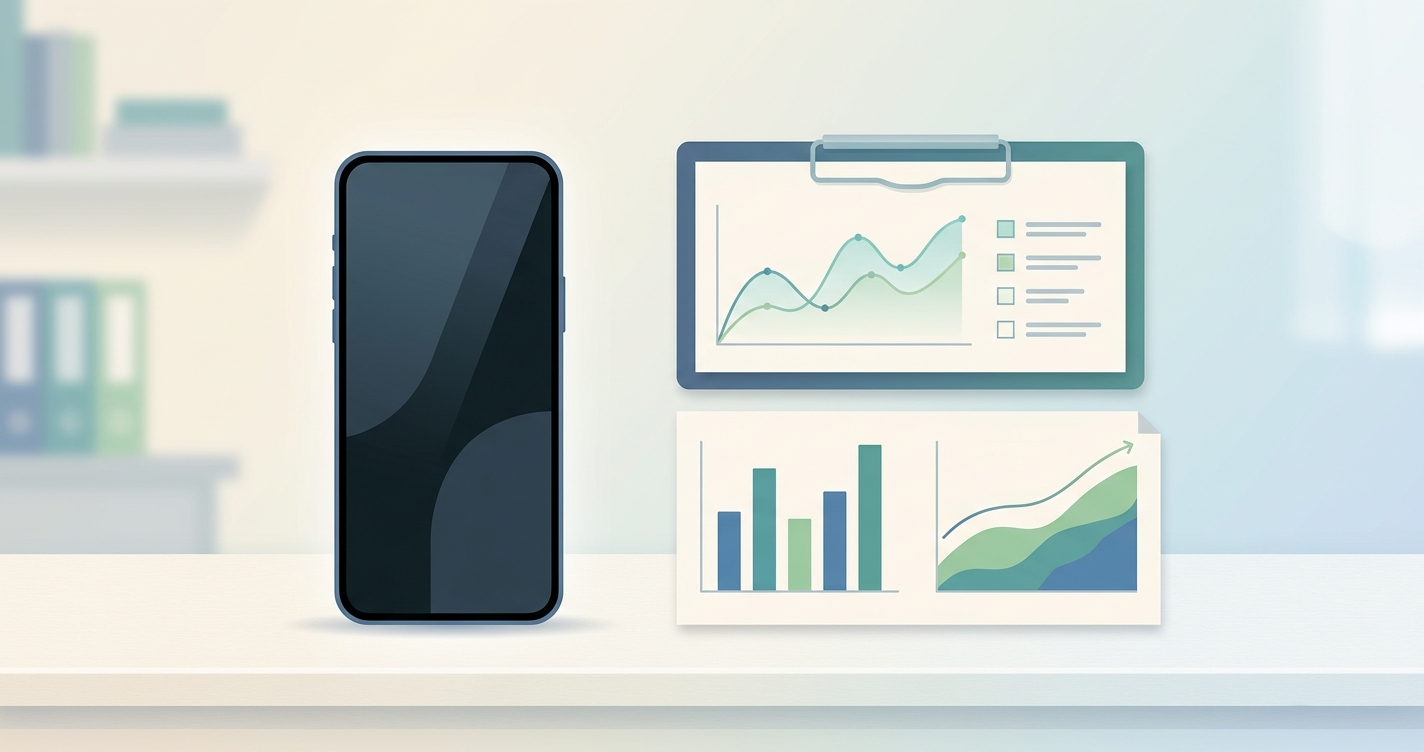
Scaling a hospital-at-home program forces health system leaders to confront a difficult operational reality: the logistics of distributing hardware quickly become a primary bottleneck to growth. As programs expand beyond pilot phases, the sheer volume of pulse oximeters, blood pressure cuffs, and proprietary tablets moving between warehouses, patient homes, and sterilization facilities creates substantial overhead. In response, the push for patient monitoring without devices, or more accurately, utilizing software to transform the hardware patients already own, has emerged as a strategic alternative to shipping physical kits. This Bring-Your-Own-Device (BYOD) model is fundamentally reshaping how health systems manage care transitions and population health economics.
"The operational burden of remote patient monitoring often eclipses the clinical intervention itself, with hardware costs ranging from $200 to $5,000 per patient, before factoring in reverse logistics and device attrition."
JetBase Industry Analysis, 2023
Enabling patient monitoring without devices
For care-at-home directors, the choice between shipping physical hardware and adopting a BYOD model dictates program economics for years. Traditional kits provide a standardized, controlled experience. The health system provisions a cellular-enabled tablet pre-paired with Bluetooth peripherals. However, this model inherits the rigid constraints of a physical supply chain. Every time a patient is discharged, a kit must be located, prepared, and dispatched. When the monitoring period ends, reverse logistics must be coordinated to retrieve, clean, and recalibrate the equipment.
Conversely, BYOD remote patient monitoring shifts the operational focus from hardware to software. By allowing patients to use their personal smartphones or tablets, the logistical burden drops drastically. This approach relies on the patient downloading a secure application or accessing a web interface upon discharge. The most advanced iterations operate as a contactless RPM platform, utilizing the smartphone's existing hardware to measure vital signs. This eliminates the need to ship peripheral sensors entirely, neutralizing the patient monitoring kits cost equation and streamlining rpm logistics.
Hardware attrition, the loss of devices due to theft, misplacement, or accidental damage, is a silent drain on remote care budgets. When a health system ships a $500 kit to a patient's home, they are assuming a financial risk. Industry data suggests that non-return rates for remote monitoring equipment can routinely exceed 10 to 15 percent in certain populations. For a program managing five thousand patients annually, this equates to hundreds of thousands of dollars in lost capital every year. Tracking down unreturned equipment requires staff time, multiple phone calls, and occasionally engaging courier services to knock on doors, further inflating the administrative cost of the program. A BYOD strategy neutralizes this risk entirely. If a patient misplaces their own smartphone, the health system incurs zero financial penalty.
Furthermore, infection control protocols demand rigorous sterilization of any medical hardware traveling between patient homes and the hospital. Each retrieved kit must undergo a documented cleaning process, recalibration of sensors, and battery testing before it can be redeployed. This creates an unavoidable delay between the time a kit is returned and the time it is available for the next patient. This dead time in the inventory cycle means health systems must purchase more kits than their maximum daily census dictates, just to account for the units sitting in the sterilization queue. By utilizing devices that never change hands, hospitals eliminate this entire operational phase.
| Operational Dimension | RPM Kits (Health System Provided) | BYOD (Patient Owned Device) | | --- | --- | --- | | Capital Expenditure | High upfront cost per patient | Minimal hardware investment | | Inventory Management | Requires warehousing and tracking | No physical inventory required | | Reverse Logistics | High cost for retrieval and cleaning | Zero retrieval cost | | Patient Familiarity | Steep learning curve for some | High familiarity with own device | | Hardware Attrition | Risk of loss, damage, and non-return | Zero risk to health system capital |
When evaluating these logistics models, operational leaders must weigh several critical variables:
- The rate of device attrition and non-returns, which often exceeds initial budget projections in high-volume programs.
- Supply chain dependencies and the impact of hardware shortages on the ability to enroll new patients.
- Infection control protocols required for cleaning and sterilizing shared hardware between patient deployments.
- Immediate activation capabilities, specifically the ability to enroll a patient the moment they are discharged without waiting for a courier delivery.
- The user experience and how a patient's familiarity with their own operating system affects daily compliance rates.
Industry applications for BYOD models
Acute care transitions
The transition from an inpatient ward to the home is highly time-sensitive. Coordinating the delivery of a physical kit to coincide with a patient's arrival home is notoriously difficult. A BYOD model allows a discharge nurse to assist the patient in setting up the monitoring application on their personal phone before they ever leave the building. This guarantees that monitoring begins the moment the patient walks through their front door.
Chronic disease management
For population health programs managing thousands of patients with chronic conditions, the capital required to supply every individual with a proprietary kit is economically unfeasible. By using the hardware patients already possess, programs can scale their reach without a proportional increase in capital expenditure. The financial resources saved on logistics can be redirected toward expanding clinical staff and improving care coordination.
Post-Surgical Follow-up
Post-operative patients often require short-term monitoring to ensure vital signs remain stable. Shipping an expensive kit for a five-day monitoring period yields a poor return on investment due to the high cost of reverse logistics. A software-based approach allows surgical teams to monitor recovery efficiently, with zero physical equipment to retrieve once the critical window closes.
Current research and evidence
A major concern when shifting away from provided hardware is the impact on digital equity. The assumption is often that requiring a patient to use their own smartphone excludes those without access or digital literacy. Research by Ibukun-Oluwa Omolade Abejirinde at Women's College Hospital and the University of Toronto (2022) highlighted that remote care programs frequently make assumptions about digital health equity without incorporating inclusive strategies.
Interestingly, providing a device does not universally solve the equity problem. If a provided piece of hardware is confusing, stigmatizing, or requires navigating an unfamiliar operating system, adherence drops rapidly. The user interface, language options, and cognitive load required to operate a provided tablet can create massive barriers for elderly populations. When a patient is forced to learn a new operating system while simultaneously recovering from a major medical event, frustration often leads to abandonment. They leave the device in its box, and the clinical team loses visibility into their recovery.
Conversely, research indicates that patients are significantly more likely to engage with applications on devices they already know how to use. For populations familiar with their own smartphones, interacting with virtual nursing technology via a trusted device often results in higher daily compliance. Most individuals have established habitual usage patterns with their personal smartphones. They know how to charge it, how to adjust the screen brightness, and how to open an application. By leaning on this pre-existing digital fluency, programs can dramatically reduce the friction of onboarding.
Simultaneously, the clinical mechanisms enabling this shift are advancing. Studies indexed by the National Institutes of Health regarding remote photoplethysmography (rPPG) demonstrate that software can extract vital signs by analyzing subtle changes in light absorption on a patient's face. This allows a remote patient monitoring camera, the lens already built into a patient's phone, to function as a clinical tool. This capability fundamentally alters the logistics equation, proving that an RPM no wearable approach is technically feasible and increasingly validated in clinical settings.
The future of hospital at home logistics
The trajectory of remote care suggests a gradual decoupling of monitoring from proprietary hardware. While physical devices will remain necessary for highly complex, high-acuity interventions, the broad base of hospital at home vital signs collection is shifting toward software as a medical device (SaMD).
The shift toward software-defined monitoring is not just an operational convenience; it is a structural necessity for the future of healthcare delivery. As the population ages and the prevalence of chronic disease rises, the traditional model of building more hospital beds is financially and physically impossible. Health systems must move care into the home at an unprecedented scale. Attempting to match this scale with a one-to-one ratio of proprietary hardware kits is a logistical impossibility. The supply chains simply cannot support it, and healthcare budgets cannot afford it.
The most successful care-at-home programs of the next decade will be those that view patient-owned technology not as a liability, but as a vast, untapped infrastructure network. By deploying software that securely interfaces with consumer hardware, hospitals can activate a remote monitoring node in virtually any home, instantly. This evolution mirrors the trajectory of other industries that abandoned dedicated hardware in favor of software running on universal devices. In healthcare, this transition means that clinical resources can be allocated toward patient intervention rather than inventory management. The ultimate goal is a seamless ecosystem where continuous monitoring is an ambient background process, requiring no specialized delivery trucks, no return shipping labels, and no hardware warehousing.
Frequently asked questions
How does BYOD reduce the cost of remote patient monitoring?
BYOD eliminates the upfront capital expenditure of purchasing proprietary hardware and the ongoing operational costs of shipping, retrieving, cleaning, and repairing devices. This dramatically reduces the cost per patient enrolled, allowing health systems to allocate budgets toward clinical staff instead of logistics.
Are patients willing to use their own devices for healthcare monitoring?
Yes. Multiple studies show that patients often prefer using their personal smartphones because they are already familiar with the interface, battery management, and screen settings. This removes the learning curve associated with new, unfamiliar hardware and typically leads to higher daily engagement.
How do health systems manage data security with a BYOD model?
Data security is managed at the application level rather than the device level. Patients log into secure, HIPAA-compliant portals or applications that encrypt data during transmission and do not store sensitive health information locally on the personal device, ensuring compliance regardless of the hardware used.
Can a regular smartphone capture clinical vital signs?
Advancements in software are enabling smartphones to capture certain vital signs without additional hardware. Techniques like remote photoplethysmography use the phone's standard camera to measure physiological data, reducing the need for peripheral sensors and simplifying the remote monitoring experience.
As health systems look for sustainable ways to scale care beyond the hospital walls, Circadify is actively addressing this space with technology designed to bypass the logistics bottleneck entirely. To explore how your organization can deploy a highly adopted, contactless approach, learn more about starting an RPM pilot program.