Can my phone really replace a heart monitor after surgery?
Can your smartphone camera really replace a dedicated heart monitor after surgery? Explore the science behind camera-based monitoring and its clinical applications.
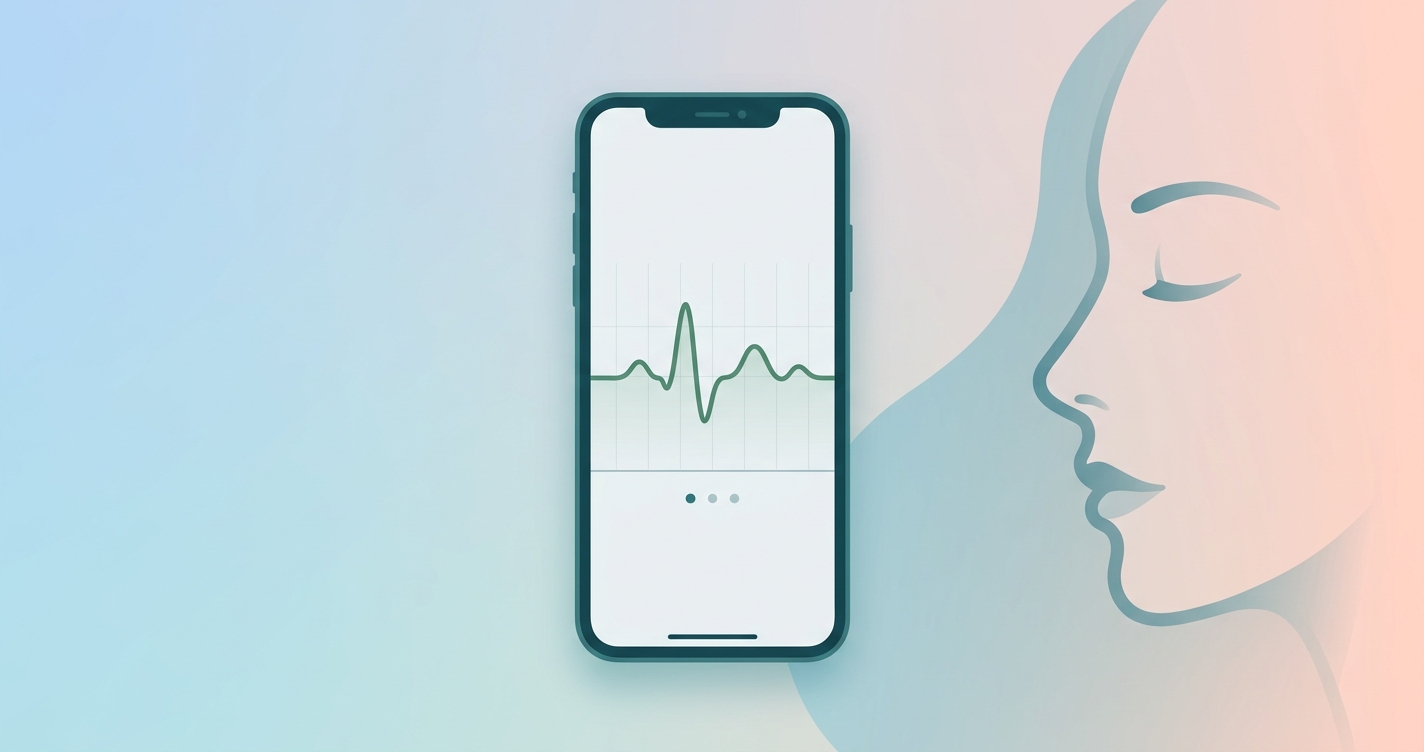
If you've recently been discharged from a hospital, your care team's top priority is ensuring your recovery continues smoothly at home. You might be asked to use a blood pressure cuff, a pulse oximeter, or another medical device. Increasingly, however, hospitals are turning to a tool you already own and use every day: your smartphone. This leads to a critical question many patients and their families are asking: can my phone really replace a heart monitor after surgery? The short answer is more complex than a simple yes or no, but it points to a major shift in how healthcare is delivered.
"In a study of post-cardiac surgery patients, remote monitoring using a smartphone app for photoplethysmography showed excellent sensitivity (98.3%) and specificity (99.9%) for the detection of atrial fibrillation..." - C. Bianchini et al., Journal of Medical Internet Research (2019)
The shift toward camera-based patient monitoring
The idea that a phone can replace a heart monitor after surgery is rooted in a technology called photoplethysmography (PPG). For decades, this technology was found mostly in dedicated medical devices, like the pulse oximeters they clip on your finger in the hospital. Today, the high-resolution cameras and processing power of modern smartphones are capable of performing a similar function, often referred to as remote photoplethysmography (rPPG). This technology allows a device to measure changes in light absorption to detect the volumetric changes in blood circulation.
For hospitals, the appeal is clear. Instead of purchasing, shipping, and managing thousands of medical devices, they can use the hardware patients already possess. This "bring-your-own-device" (BYOD) model dramatically reduces the logistical complexity and cost of launching and scaling remote patient monitoring (RPM) programs. For patients, it means no new, unfamiliar gadget to learn or keep charged. Adherence to a monitoring plan becomes as simple as taking a daily selfie. But how does this convenience stack up against the clinical accuracy required for post-operative care?
How does my phone measure my heart rate?
When your hospital asks you to "scan your face," the smartphone camera is acting as a sophisticated sensor. The technology, remote photoplethysmography (rPPG), works by detecting subtle, imperceptible changes in the color of your skin.
Here is how it works:
- Light Source: The ambient light in your room (or the phone's own flash) illuminates your face.
- Blood Flow: With each heartbeat, oxygenated blood is pumped through the vessels in your face. This blood absorbs certain wavelengths of light differently than deoxygenated blood.
- Camera Detection: The phone's camera records a short video of a region of your skin. It's sensitive enough to pick up the tiny color changes that correspond to the pulsing blood flow underneath.
- Signal Processing: Sophisticated algorithms analyze this video feed, isolating the pulsatile signal from other "noise" like changes in lighting or slight movements.
- Vital Sign Extraction: From this clean signal, the software calculates your heart rate, heart rate variability, and in some platforms, even blood pressure, oxygen saturation, and respiration rate.
This process, which takes less than a minute, provides a wealth of data that, until recently, could only be captured using dedicated medical hardware.
Smartphone monitoring vs. traditional heart monitors
While a smartphone app can't replace the continuous, multi-lead ECG you'd find in an intensive care unit, it presents a powerful new option for spot-checking vitals remotely. The question of whether a phone can replace a heart monitor after surgery depends on the specific monitoring needs and the type of device it's being compared to.
| Feature | Smartphone Camera (rPPG) | Wearable ECG Patch | Traditional Holter Monitor | | :--- | :--- | :--- | :--- | | Form Factor | Software on personal phone | Adhesive patch worn on chest | Small box with wires and electrodes | | How it Works | Measures blood volume changes via light | Measures electrical signals of the heart | Measures electrical signals of the heart | | Patient Compliance | High; uses existing device | Moderate; can cause skin irritation | Low; can be cumbersome | | Data Capture | Spot-checks (e.g., once a day) | Continuous (24-72 hours) | Continuous (24-48 hours) | | Key Measurement | Heart Rate, HRV, SpO2, RR | Heart Rhythm (for arrhythmia) | Heart Rhythm (for arrhythmia) | | Logistics | None; software download | Device shipping and retrieval | Device fitting, shipping, and retrieval |
Industry applications for post-surgical recovery
The use of smartphone-based monitoring is expanding rapidly, particularly in programs designed to support patients after they leave the hospital.
Hospital-at-Home Programs
For patients stable enough to recover at home but who still require regular oversight, camera-based RPM provides a vital link to the care team. It allows clinicians to track key indicators of recovery or deterioration without the cost and complexity of sending dedicated devices.
Cardiac Rehabilitation
After a cardiac event or surgery, rehabilitation programs require patients to monitor their heart rate. Using a phone simplifies this process, making it easier for patients to adhere to their programs and for clinicians to track progress and adjust care plans.
Post-Discharge Monitoring
For a wide range of surgeries, care teams need to watch for signs of complications, such as infection (which can elevate heart rate) or respiratory distress. Daily check-ins using a smartphone camera provide a simple, scalable way to gather this data and intervene early if a patient's condition changes.
Current research and evidence
The clinical community has been actively studying the accuracy and utility of smartphone-based PPG. Research from the University of Birmingham has shown that while PPG is highly accurate for heart rate, its reliability for heart rate variability (HRV) can be influenced by the measurement conditions.
A significant study by Bianchini et al. published in the Journal of Medical Internet Research (2019) focused specifically on post-cardiac surgery patients. The research found that a smartphone app using PPG was highly effective at detecting atrial fibrillation, a common and serious post-operative complication. This demonstrates that for specific use cases, a phone-based system can be a powerful screening tool.
Furthermore, researchers at Ariadne Labs, a joint health systems innovation center of Brigham and Women's Hospital and the Harvard T.H. Chan School of Public Health, have explored using smartphone sensor data to measure post-surgical recovery. Their work suggests that data from the phone's GPS and accelerometer can provide insights into a patient's mobility and return to normal activities, complementing vital sign data from the camera.
ECG remains the gold standard for diagnosing cardiac arrhythmias. However, the growing body of evidence supports PPG-based smartphone apps as a scalable and effective way to monitor heart rate and screen for rhythm abnormalities in a remote setting.
The future of the post-surgical phone monitor
As smartphone camera and sensor technology continues to improve, its role in healthcare will only expand. We are moving toward a reality where your phone doesn't just supplement a medical device but, for certain use cases, can effectively act as one. The ability to combine vital sign data from the camera with mobility data from the phone's accelerometer and GPS will give clinicians a more holistic view of a patient's recovery journey. While it won't replace a critical care monitor, the answer to "Can my phone really replace a heart monitor after surgery?" is increasingly leaning toward a qualified "yes" for remote, post-discharge care.
Frequently asked questions
Q: Is using my phone camera as a heart monitor secure? A: Yes. Medical applications of this technology are designed to be HIPAA-compliant. The video of your face is analyzed on the device or encrypted for processing, and it is not stored. Only the resulting vital sign data is transmitted to your healthcare provider.
Q: Do I need a special phone? A: Generally, no. These applications are designed to work with most modern smartphones that have a standard-quality front-facing or rear-facing camera. Your provider will let you know of any specific device requirements.
Q: Can this technology detect a heart attack? A: No. A smartphone camera measures your heart rate and rhythm but cannot detect a heart attack. A heart attack is a medical emergency. If you are experiencing symptoms like chest pain, shortness of breath, or discomfort in your arms, back, neck, jaw, or stomach, you should call 911 immediately.
The technology to transform a smartphone into a powerful remote monitoring tool exists today. Circadify is at the forefront of this space, developing camera-based solutions that help hospitals and health systems keep a closer watch on patients after they go home. These platforms are designed to improve patient outcomes, reduce readmissions, and lower the logistical burden of traditional remote care. To learn more about implementing a contactless, device-less RPM pilot program, visit circadify.com/solutions/remote-patient-monitoring.