Can my vitals be watched at home using just a camera?
Explore the science and application of camera-based remote patient monitoring for tracking vital signs at home without wearables, a key technology for scaling virtual care.
The expansion of hospital-at-home programs and virtual care initiatives is a strategic priority for health systems, driven by the need to manage capacity, reduce costs, and improve patient outcomes. However, the operational complexity of traditional remote patient monitoring (RPM) often creates a bottleneck. Managing supply chains for medical devices, handling returns and sanitation, and troubleshooting patient-worn sensors require significant logistical overhead. This friction limits the scalability of otherwise effective programs, leaving clinical leaders searching for a more efficient model to gather essential patient data from the home.
"A study by the Mayo Clinic found that patient compliance with care plans among high-intensity RPM users was slightly over 70%."
This statistic, while seemingly positive, highlights a critical gap for health systems aiming for population-scale impact. A 30% non-compliance or attrition rate in a program covering thousands of patients represents a significant clinical and operational failure. The core challenge often lies not in the clinical value of the data, but in the burden placed on the patient. The solution may not be a better wearable, but no wearable at all.
The rise of the remote patient monitoring camera
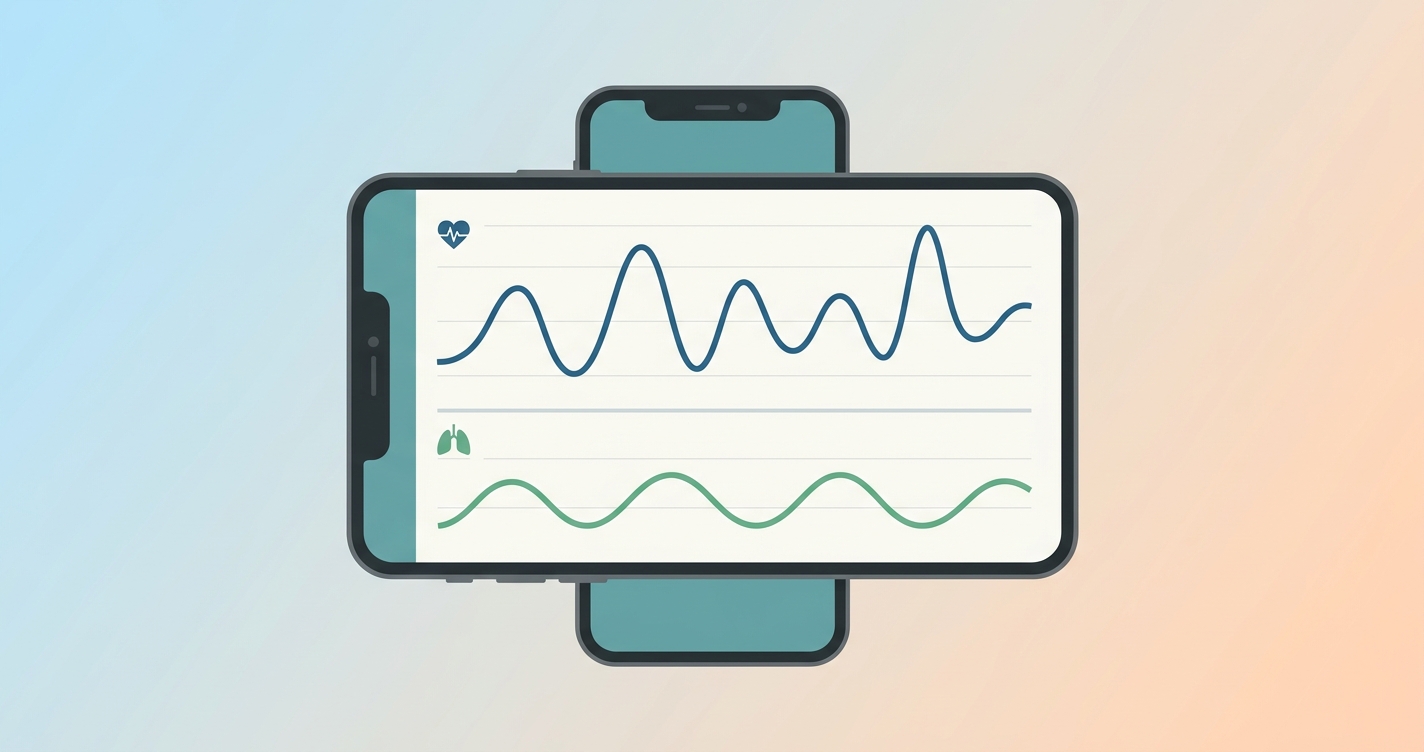
The concept of a remote patient monitoring camera uses technology already ubiquitous in patients' lives: the smartphone. Using a technique known as remote photoplethysmography (rPPG), the camera on a standard mobile phone or tablet can detect subtle changes in the color of a person's skin. These changes, invisible to the human eye, correspond to the pressure wave of blood flowing through the vascular system with each heartbeat. Advanced algorithms process this video data to calculate vital signs like heart rate, respiratory rate, and even blood pressure and oxygen saturation. This approach transforms a patient's own device into a clinical-grade data collection tool, eliminating the need for the health system to procure, ship, and manage dedicated hardware.
For care-at-home program directors and population health VPs, this shift is profound. It moves the operational model from hardware logistics to software-as-a-service (SaaS), enabling rapid and cost-effective scaling. Instead of mailing a pulse oximeter or blood pressure cuff, a hospital can direct a patient to a secure application. This dramatically lowers the barrier to entry for patients and the total cost of care for the system.
| Feature | Wearable-Based RPM | Camera-Based RPM (rPPG) | | :--- | :--- | :--- | | Patient Adherence | Dependent on device comfort, battery life, and patient memory. Attrition is a known issue. | Higher potential adherence; uses patient's own device. Scan is an intentional, momentary event. | | Hardware & Logistics | High cost (procurement, shipping, returns, sanitation, inventory management). | Near-zero hardware cost; uses patient's existing smartphone or tablet. | | Clinical Workflow | Integrates with EMR but requires staff to manage device alerts and troubleshooting. | Integrates with EMR via API; focuses workflow on data analysis, not device management. | | Data Parameters | Measures specific parameters (e.g., SpO2, HR, BP) depending on the device. | Can measure multiple parameters (HR, RR, BP, SpO2, HRV) from a single short scan. |
Key advantages of a camera-based approach include:
- Reduced operational friction: Eliminates the logistics of device shipping, retrieval, and maintenance.
- Improved patient equity: Lowers barriers to access for patients who may struggle with managing multiple dedicated medical devices.
- Scalability: Allows health systems to scale virtual care programs rapidly without a proportional increase in logistics staff or hardware budget.
- High patient acceptance: uses familiar technology (the smartphone), reducing the learning curve and technical anxiety for patients.
Industry Applications
The application of a remote patient monitoring camera system extends across multiple service lines and patient populations.
Post-Discharge Monitoring
For patients recovering from surgery or a significant cardiac event, daily vital sign checks are crucial for early detection of complications. A camera-based solution allows a nurse or care manager to request a vital signs scan via a smartphone app, providing trend data that can inform intervention before a full-blown crisis leads to readmission.
Chronic condition management
Patients with chronic conditions like congestive heart failure (CHF), hypertension, or COPD require ongoing monitoring. The ease of use of a camera-based system encourages the long-term adherence needed to manage these conditions effectively. Daily or weekly checks can provide the longitudinal data necessary to adjust medication, modify care plans, and keep patients stable at home.
Virtual nursing and hospital-at-home
As more acute care moves into the home, the need for efficient and reliable vital sign collection becomes critical. Virtual nursing teams can use camera-based measurements to conduct remote assessments, triage patients, and manage larger patient panels than would be possible with traditional methods. It provides an objective data layer to supplement subjective patient reporting during telehealth visits.
Current research and evidence
The underlying science of rPPG is well-established and has been the subject of extensive academic research. A 2022 systematic review by Wang et al. published in the Journal of Medical Internet Research analyzed numerous studies on the accuracy of camera-based measurements. The findings show that for heart rate, accuracy is extremely high, with a mean absolute error often below 3 beats per minute compared to ECG.
Research into camera-based blood pressure and oxygen saturation is also advancing rapidly. For example, a study by Al-Naji & Chahl (2020) demonstrated the feasibility of tracking respiratory rate with high accuracy. While factors like lighting conditions, skin tone, and patient motion can influence readings, modern systems incorporate machine learning models to correct for these variables. As researchers from institutions like the University of South Australia have noted, the use of deep learning and convolutional neural networks is significantly improving the robustness and reliability of these contactless measurements, moving them from laboratory curiosities to clinically viable tools.
The future of contactless monitoring
The trajectory of the remote patient monitoring camera is toward more passive and multi-modal data collection. The future is not just an intentional, 30-second scan but ambient sensing. Imagine a future where the devices in a patient's environment can provide continuous, background-level monitoring without requiring any action from the patient. As AI models become more sophisticated, they will be able to synthesize this data to detect subtle declines in a patient's condition hours or even days before they would become apparent through intermittent checks. This evolution will transform remote monitoring from a reactive tool for capturing data points to a proactive system for predicting and preventing adverse events.
Frequently asked questions
Q: How accurate is a remote patient monitoring camera compared to traditional devices? A: For heart rate and respiratory rate, studies have shown accuracy comparable to contact-based sensors under typical conditions. Blood pressure and oxygen saturation measurements are an area of active research, with machine learning models significantly improving accuracy to levels that are clinically useful for trend monitoring, though not yet a replacement for diagnostic cuff measurements in all situations.
Q: What are the privacy and security implications of using a camera? A: This is a critical consideration. Leading platforms do not save or transmit the video feed. The video stream is processed on the device itself, and only the resulting numerical vital sign data is encrypted and transmitted to the provider's secure cloud environment, which is compliant with HIPAA and other healthcare data regulations.
Q: How does this technology integrate with our existing EMR or population health platform? A: Modern camera-based RPM platforms are designed for interoperability. They typically offer a robust API that allows for seamless integration with major Electronic Medical Record (EMR) systems like Epic or Cerner, as well as data warehouses and third-party population health dashboards. This ensures that vital sign data appears directly in the patient's chart, fitting into existing clinical workflows.
The challenges of scaling at-home care are fundamentally logistical. By shifting the paradigm from hardware to software, camera-based monitoring offers a path to build robust, scalable, and patient-centric virtual care programs. Circadify is at the forefront of this transition, developing solutions that empower health systems to overcome the operational hurdles of traditional RPM. To learn more about how a software-centric approach can enhance your remote monitoring strategy, explore our RPM pilot program at circadify.com/solutions/remote-patient-monitoring.