Can remote monitoring catch a problem before I am back in the ER?
Explore how remote patient monitoring (RPM) technology can prevent hospital readmissions by detecting early warning signs before they become critical emergencies.
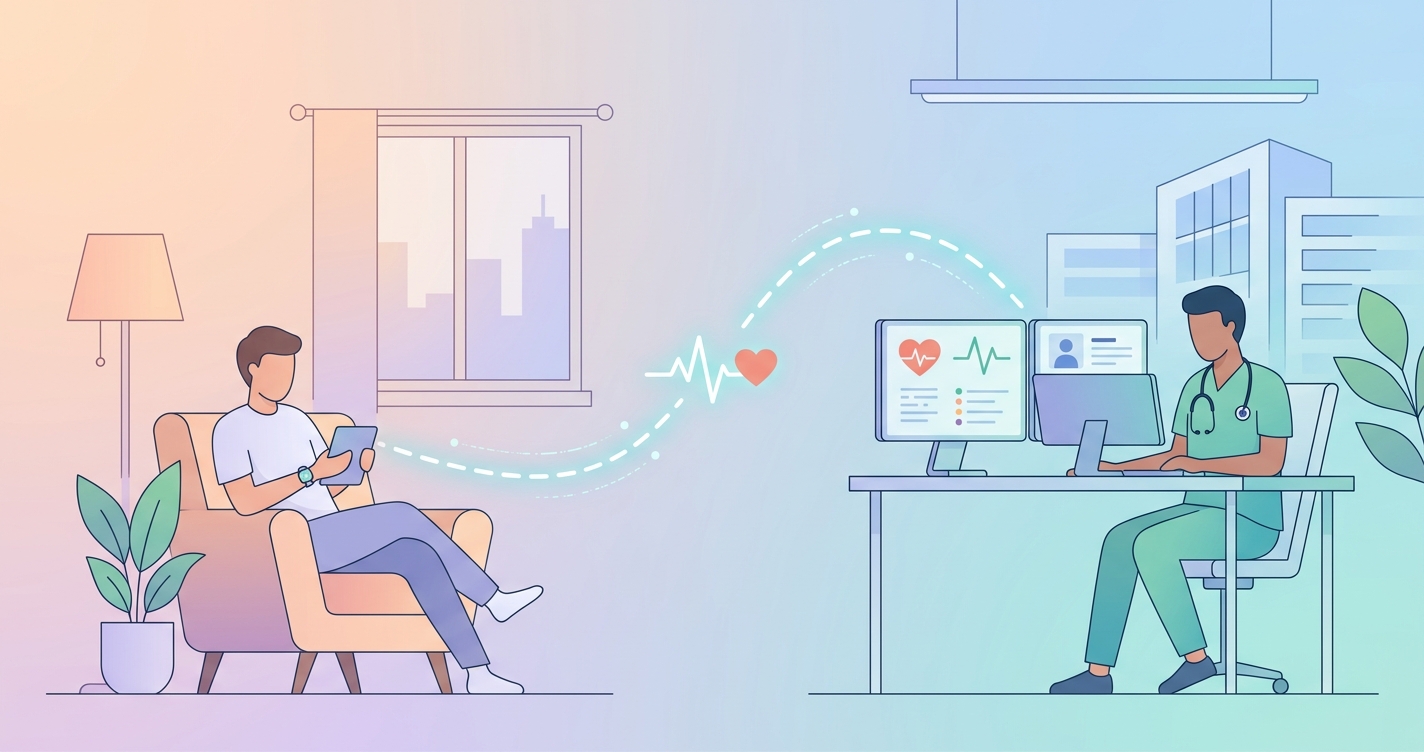
The transition from hospital to home is a critical, often vulnerable, period in a patient's recovery. For health systems, managing post-discharge care is a major operational and financial challenge, with readmissions costing an estimated $26 billion annually in the United States alone. A significant portion of these readmissions are considered preventable, often stemming from a lack of timely intervention when a patient's condition begins to decline. This raises a crucial question for hospital leaders and population health executives: can technology provide the necessary oversight to catch problems before they escalate into an emergency room visit? The growing body of evidence surrounding remote patient monitoring (RPM) suggests the answer is yes.
"A 2022 study highlighted a 25% reduction in readmissions for patients using RPM compared to standard care." - mHealth Intelligence
The proactive advantage: how to prevent readmission with RPM
The core value of a strategy to prevent readmission with RPM lies in its ability to shift the care paradigm from reactive to proactive. Instead of waiting for a patient to feel sick enough to call a doctor or go to the ER, RPM systems collect daily, objective physiological data. This consistent stream of information allows clinical teams to identify subtle negative trends in a patient's health status, often days before the patient would notice symptoms themselves. This early detection is the key to intervening with lower-acuity, lower-cost measures, such as a medication adjustment or a telehealth visit, rather than a costly and disruptive hospital readmission.
For example, a slight but steady increase in weight and blood pressure over several days in a patient with congestive heart failure (CHF) is a classic indicator of fluid retention. In a traditional post-discharge model, this might go unnoticed until the patient experiences significant shortness of breath, leading to an ER visit. With RPM, a monitoring nurse would be alerted to these trends, trigger a telehealth consultation with a cardiologist, and facilitate a diuretic adjustment, all from the comfort of the patient's home. This proactive loop is the fundamental mechanism by which RPM helps prevent readmissions. It's not just about collecting data; it's about making that data actionable in a timeframe that precedes a crisis. This approach is particularly effective for chronic conditions like COPD and heart failure, which are leading causes of readmissions.
However, the effectiveness of any RPM program hinges on two critical factors: patient adherence and data quality. If patients do not use the provided devices consistently, or if the data is inaccurate, the ability for clinical teams to intervene is compromised. This has led to an evolution in RPM technology, moving beyond traditional, often cumbersome, peripheral devices.
| RPM Modality | Patient Adherence Challenges | Logistical Burden for Health System | Data Richness | | :--- | :--- | :--- | :--- | | Manual-Entry Apps | High; requires daily patient initiative and self-reporting. Prone to errors and omissions. | Low; software-only deployment. | Low; subjective and often incomplete data. | | Traditional Wearables/Cuffs | Moderate; requires patients to remember to use, charge, and correctly place devices. Device fatigue is common. | High; involves shipping, device setup, troubleshooting, and reverse logistics for retrieval and sanitation. | Moderate; provides objective data for specific vitals, but often siloed. | | Contactless (Camera-Based) RPM | Low; requires only a simple, guided scan with a smartphone or tablet. No wearables to manage or charge. | Very Low; uses patient's own device, eliminating device logistics and associated costs. | High; can capture multiple vital signs (e.g., heart rate, respiratory rate, SpO2, blood pressure) from a single reading. |
This comparison highlights a significant operational consideration for health systems. While traditional device-based RPM has proven effective, the logistical overhead of device management and the persistent challenge of patient compliance can limit scalability. Newer, contactless approaches that use the patient's own smartphone camera are emerging as a solution to these barriers, potentially widening the scope of patients who can benefit from post-discharge monitoring.
Industry Applications
The application of RPM to prevent readmissions spans numerous clinical areas, each with specific warning signs that can be monitored remotely.
Post-acute care for chronic conditions
Chronic diseases are the primary driver of hospital readmissions.
- Heart Failure (CHF): Daily monitoring of weight, blood pressure, and heart rate can detect fluid retention and cardiac decompensation early. A study by researchers at the University of Pittsburgh Medical Center (UPMC) demonstrated that RPM for heart failure patients could reduce readmissions by as much as 40% (UPMC, 2021).
- COPD: Tracking respiratory rate and blood oxygen (SpO2) levels helps identify the onset of an exacerbation, allowing for timely intervention with medication or telehealth support before it requires hospitalization.
- Diabetes: Regular monitoring of blood glucose levels helps clinicians fine-tune insulin and medication regimens, preventing hyperglycemic or hypoglycemic events that can lead to ER visits.
Post-Surgical Recovery
After surgery, the risk of complications like infections or adverse reactions to medication is high.
- Surgical Site Infection: While not directly measuring infection, changes in vital signs like an elevated resting heart rate can be an early indicator, prompting a telehealth check-in or a request for the patient to send a photo of the incision site.
- Medication Management: RPM platforms can include medication reminders and symptom surveys to ensure patients are adhering to their post-operative care plan, a critical component in preventing complications.
Maternal Health
RPM is increasingly used to manage high-risk pregnancies and postpartum conditions. Monitoring for postpartum hypertension, for example, can prevent severe complications like stroke. The University of Michigan's program for remote blood pressure monitoring in high-risk postpartum patients saw a significant reduction in readmissions for hypertension-related issues (University of Michigan, 2020).
Current research and evidence
The evidence base supporting the use of RPM to prevent readmissions is substantial and growing. A 2022 meta-analysis published in the Journal of Medical Internet Research reviewed multiple studies and found a consistent and significant reduction in 30-day all-cause readmissions among patients enrolled in RPM programs. The authors, including Dr. Arjun K. Venkatesh from the Yale School of Medicine, noted that the largest effects were seen in programs that combined automated data collection with a dedicated nursing response team.
Economically, the data is just as compelling. Research in the journal Circulation: Heart Failure (2020) conducted a systematic review and meta-analysis of randomized controlled trials on RPM for heart failure. The findings pointed to significant cost savings driven by fewer inpatient days and ER visits. For hospital CMOs and population health VPs, this demonstrates a clear return on investment, where the cost of the RPM program is more than offset by the savings from avoided readmissions.
The challenge that current research is now tackling is not if RPM works, but how to implement it most effectively. Studies are examining the optimal frequency of measurements, the most effective intervention workflows, and which patient populations benefit most. A key area of investigation is patient engagement. A 2023 study in JMIR Human Factors found that programs with simplified technology and strong patient-provider communication had dramatically higher adherence rates, which directly correlated with better clinical outcomes.
The future of remote monitoring
The future of using prevent readmission RPM strategies is focused on making the technology more intelligent and less intrusive. The industry is moving from active to passive monitoring. While current systems often require the patient to actively take a measurement, future platforms will rely more on ambient, contactless sensors.
The integration of artificial intelligence (AI) and machine learning is the next frontier. Instead of simply alerting a nurse to an abnormal reading, future AI-powered systems will analyze trends over time, cross-reference data with a patient's electronic health record, and predict the likelihood of an adverse event before any single vital sign crosses a critical threshold. This predictive capability will allow care teams to stratify risk and focus their attention on the patients who need it most, making the entire process more efficient and scalable. Furthermore, the development of remote photoplethysmography (rPPG) technology, which allows for vital sign measurement via a standard camera, removes the last major friction point: the need for any dedicated hardware other than the patient's own smartphone.
Frequently asked questions
Q: How does remote monitoring actually prevent a readmission? A: It provides a continuous stream of patient data (like blood pressure, heart rate, weight) to clinical teams. This allows them to detect subtle signs of deterioration, often before the patient feels symptoms. Early detection enables timely interventions, like adjusting medication or a quick telehealth call, which can resolve the issue before it becomes severe enough to require an ER visit or hospitalization.
Q: Is this technology difficult for older patients to use? A: This is a critical consideration. While some older adults may struggle with complex gadgets, many RPM programs are designed for simplicity. The most user-friendly systems use devices patients already own, like their smartphones. Camera-based, contactless monitoring, for example, only requires the patient to look at their phone's camera for a short period, which is significantly easier than managing multiple wearable devices, cuffs, and charging cables.
Q: Who is looking at the data my device sends? A: The data is typically sent to a secure clinical dashboard monitored by a dedicated team of nurses or care managers under the direction of your doctor. These professionals are trained to interpret the data and will contact you and your physician if they notice any concerning trends that require intervention.
Q: Is my health data secure? A: Reputable RPM platforms are built on HIPAA-compliant infrastructure. All data is encrypted during transmission and storage, ensuring that your personal health information is protected and accessible only to authorized members of your care team.
As the healthcare industry continues its shift towards value-based care and managing patient populations outside the hospital walls, technologies that can effectively and efficiently bridge the gap between discharge and full recovery are essential. Circadify is at the forefront of this transition, developing contactless, camera-based monitoring solutions designed to improve patient adherence and provide clinicians with the actionable data needed to prevent readmissions. To learn more about implementing a modern approach to remote care, explore our RPM pilot program at circadify.com/solutions/remote-patient-monitoring.