Can Virtual Nursing Tech Calculate Early Warning Scores?
Explore how contactless virtual nursing technology calculates early warning scores like MEWS to predict patient deterioration in hospital-at-home settings.
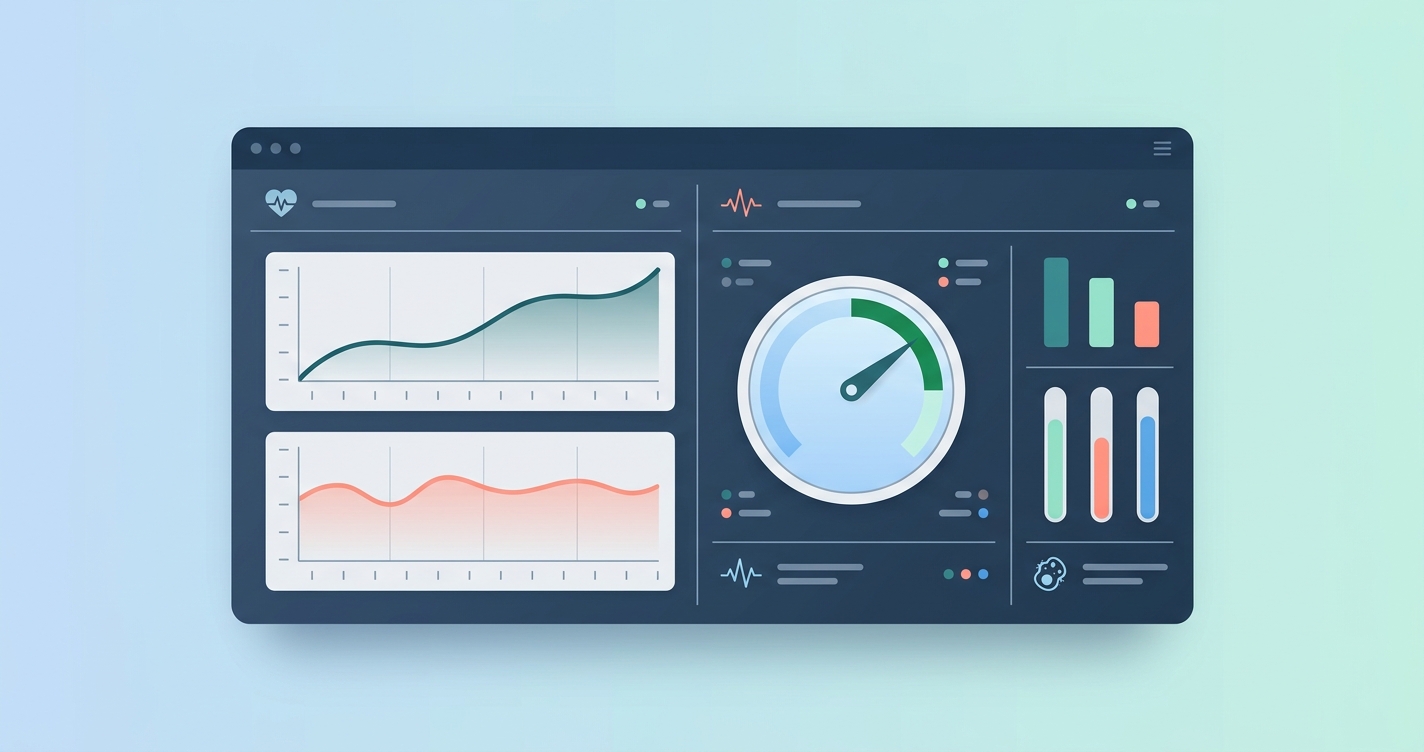
Scaling an acute care program beyond the four walls of a hospital forces health system leaders to confront a difficult operational reality. When high-acuity patients recover at home, nurses can no longer rely on bedside monitors to alert them the moment a patient's condition changes. To close this gap, clinical executives are increasingly turning to virtual nursing technology to track vital signs automatically and calculate early warning scores without requiring the patient to manage cumbersome wearable devices. By relying on camera-based sensors, health systems can detect subtle physiological changes that indicate clinical decline long before physical symptoms appear.
"For deteriorating participants, the average time from the initial alert to clinical deterioration was at least 18 hours for remote patient monitoring systems equipped with automated early warning."
- Pavithra Lakshman, Priyanka T Gopal, and Sheen Khurdi, JMIR Medical Informatics, 2025.
The mathematics of patient decline
Early warning scores, such as the Modified Early Warning Score (MEWS) or National Early Warning Score (NEWS2), are foundational to modern acute care. These systems assign weighted numerical values to physiological measurements like resting heart rate, respiratory rate, blood pressure, body temperature, and oxygen saturation. A composite score of zero indicates normal physiological function, while escalating scores trigger rapid response protocols, alerting the care team to intervene immediately.
In a traditional hospital setting, clinical staff calculate these scores manually based on intermittent spot checks taken every four to eight hours. While effective for relatively stable patients, intermittent checks create dangerous blind spots in high-acuity wards. A patient's respiratory rate, often the earliest and most sensitive indicator of clinical deterioration, can begin trending upward hours before their next scheduled observation. If a nurse is delayed by other clinical duties, the window for early intervention closes rapidly.
Transitioning these scoring models to a home environment presents severe logistical challenges. Expecting patients to measure their own vital signs accurately, record the data, and transmit it to a care team introduces massive friction into the recovery process. Adherence drops off quickly after the first few days, and data quality often suffers due to improper cuff placement or incorrect pulse oximeter usage. Consequently, maintaining an accurate, continuous MEWS calculation is nearly impossible using traditional remote monitoring kits that rely on patient-operated hardware.
How virtual nursing technology automates acuity tracking
The application of virtual nursing technology changes the operational model for patient monitoring entirely. Instead of relying on active patient participation to gather data, modern systems use contactless sensors, such as sophisticated smartphone or tablet cameras, to track physiological markers passively.
These optical systems rely on remote photoplethysmography (rPPG) and advanced computer vision. The camera detects microscopic changes in skin pixel color that correspond to the cardiac cycle, extracting a highly accurate heart rate. Simultaneously, the system tracks the subtle rise and fall of the upper torso to calculate respiratory rate. Because the data collection requires no physical contact and no wired connections, it runs continuously whenever the patient is resting in the camera's field of view.
The platform's software processes this continuous data stream, applies the relevant clinical algorithms, and generates real-time early warning scores. The calculations happen instantly, eliminating the transcription errors that frequently occur when staff must manually enter data into an electronic medical record.
When a patient's score crosses a predefined risk threshold, the system immediately alerts the centralized care team. This shifts the clinical model from reactive intervention to predictive management, allowing clinicians to adjust medications, schedule a telehealth consultation, or dispatch a mobile health unit before an emergency room readmission becomes inevitable.
Manual spot checks vs. contactless automated EWS
| Feature | Traditional Manual Spot Checks | Contactless Virtual Nursing Tech | | :--- | :--- | :--- | | Data Frequency | Intermittent (every 4 to 8 hours) | Continuous background tracking | | Score Calculation | Manual entry into the clinical record | Automated real-time algorithmic calculation | | Hardware Required | Cuffs, finger clips, chest straps | None (camera-based optical sensors) | | Deterioration Warning | Reactive observation | Predictive (hours in advance of symptoms) | | Patient Adherence | Declines rapidly due to user friction | Passive monitoring with zero friction |
Industry applications for contactless patient acuity
Automated early warning systems provide substantial clinical and operational value across multiple post-acute care settings.
Hospital at home programs
The core foundation of any hospital-at-home initiative is parity of care. Health systems must prove they can monitor patients just as safely in a living room as in a traditional telemetry ward. Virtual nursing technology provides the continuous data stream necessary to calculate real-time early warning scores. This capability gives chief medical officers the confidence to admit higher-acuity patients to home-based programs without risking patient safety or overburdening the mobile nursing staff.
Skilled nursing facilities
Staffing shortages in skilled nursing facilities often lead to delayed recognition of patient deterioration. By deploying contactless monitoring via bedside tablets, facilities can track baseline vital signs continuously without disturbing sleeping residents. Automated alerts notify the nursing staff when a resident's early warning score begins to climb, allowing for prompt medical evaluation and preventing unnecessary, costly emergency department transfers.
Post-surgical recovery monitoring
Following complex procedures, patients are highly vulnerable to complications such as surgical site infections, sepsis, or internal bleeding. An automated EWS tracks the subtle physiological changes associated with these complications. An elevated heart rate combined with a rapidly increasing respiratory rate will trigger a warning score escalation, alerting the surgical care team well before the patient experiences fever, severe pain, or a hypotensive crisis.
Chronic disease exacerbation tracking
Patients managing chronic conditions like congestive heart failure or severe chronic obstructive pulmonary disease (COPD) live with a constant risk of acute exacerbations. An automated scoring system establishes a multi-day baseline for each specific patient. When a COPD patient's respiratory mechanics begin to alter days before they feel short of breath, the virtual nursing platform identifies the deviation from baseline and alerts the population health team to intervene with preventative therapeutics.
Current research and evidence
Recent clinical literature validates the shift toward automated, continuous early warning systems. A 2025 retrospective cohort study by Pavithra Lakshman, Priyanka T Gopal, and Sheen Khurdi evaluated a remote patient monitoring system equipped with an automated early warning protocol in tertiary care hospital wards. The researchers found that the continuous, automated system demonstrated a 97.37 percent sensitivity for identifying clinical deterioration. In contrast, a simulated manual MEWS protocol achieved only a 47.37 percent sensitivity rate. Crucially, the automated system provided an average warning time of 18 hours prior to the actual acute clinical event, offering nurses a massive operational window to correct the patient's trajectory.
Similarly, research from the University of Bristol by Lauren J. Scott and colleagues published in early 2026 examined the application of NEWS2 in remotely monitored virtual wards. The study tracked 2,533 unique admissions and found that the median length of stay for patients on these virtual wards was 10 days. The data revealed that traditional baseline NEWS2 scores calculated manually at admission were poor predictors of future deterioration on their own. The researchers noted that relying on a single entry score fails to capture the dynamic nature of a recovering patient. This finding highlights the absolute necessity for continuous vital sign tracking and dynamic score recalculation, a capability that contactless monitoring platforms deliver without burdening the patient with 10 straight days of complex wearable device management.
The future of remote warning scores
The next generation of acute monitoring will rely almost entirely on ambient, invisible sensors integrated directly into the patient's environment. As computer vision models become more advanced and processing power increases, camera-based systems will measure an expanding array of physiological metrics with absolute clinical precision.
Future iterations of early warning scores will likely incorporate advanced predictive analytics that weigh personalized patient baselines rather than relying strictly on generic, population-wide thresholds. Instead of waiting for a patient's respiratory rate to hit a hard limit of 22 breaths per minute, the software will recognize when a patient whose historical baseline is 14 breaths per minute begins resting steadily at 18. This personalized approach to calculating patient acuity will drastically reduce false alarm rates while significantly increasing the clinical sensitivity of early warning protocols.
Furthermore, as these systems integrate more deeply with existing electronic medical records, the automated scores will trigger automatic clinical pathways, such as scheduling a same-day telehealth visit or automatically adjusting medication dosages based on the specific physiological trend, creating a truly seamless extension of the hospital ward.
Frequently asked questions
Can a camera accurately measure respiratory rate for an early warning score?
Yes. Modern optical sensors analyze the subtle rise and fall of the chest cavity to calculate respiratory rate. Peer-reviewed studies show these software-based systems operate with high correlation to traditional contact-based medical devices, providing accurate data for continuous scoring.
Do automated early warning scores cause alert fatigue for virtual nurses?
When implemented correctly, continuous systems actually reduce alert fatigue by filtering out transient physiological spikes. Advanced algorithms analyze sustained trends over time rather than momentary fluctuations, ensuring nurses only receive alerts for genuine deterioration.
How do patients interact with a contactless monitoring system at home?
Patients simply open a secure application on their smartphone or tablet and position the device so the camera has a clear view of their upper body. The software handles the vital sign extraction entirely passively, requiring no further interaction, data entry, or hardware manipulation from the patient.
What happens if the automated system loses connection?
Enterprise-grade virtual nursing platforms are designed to cache data locally on the device during temporary internet outages. Once the connection is restored, the software uploads the vital sign history, recalculates the trending warning score, and alerts the care team if any retroactive thresholds were crossed.
For health systems scaling their acute care footprint, transitioning from manual spot checks to automated predictive models is an operational necessity. By removing the friction of wearable devices, providers can finally secure the continuous data required for accurate acuity tracking. Circadify is developing solutions in this space, building platforms that utilize everyday devices to support clinical workflows seamlessly. To learn more about implementing scalable monitoring frameworks, explore our RPM pilot program and discover how health systems are rethinking continuous patient observation at home.