Contactless RPM Platform vs Wearable Programs: Compared
A head-to-head comparison of a contactless RPM platform versus wearable kits on cost, accuracy, and patient adherence for population health leaders.
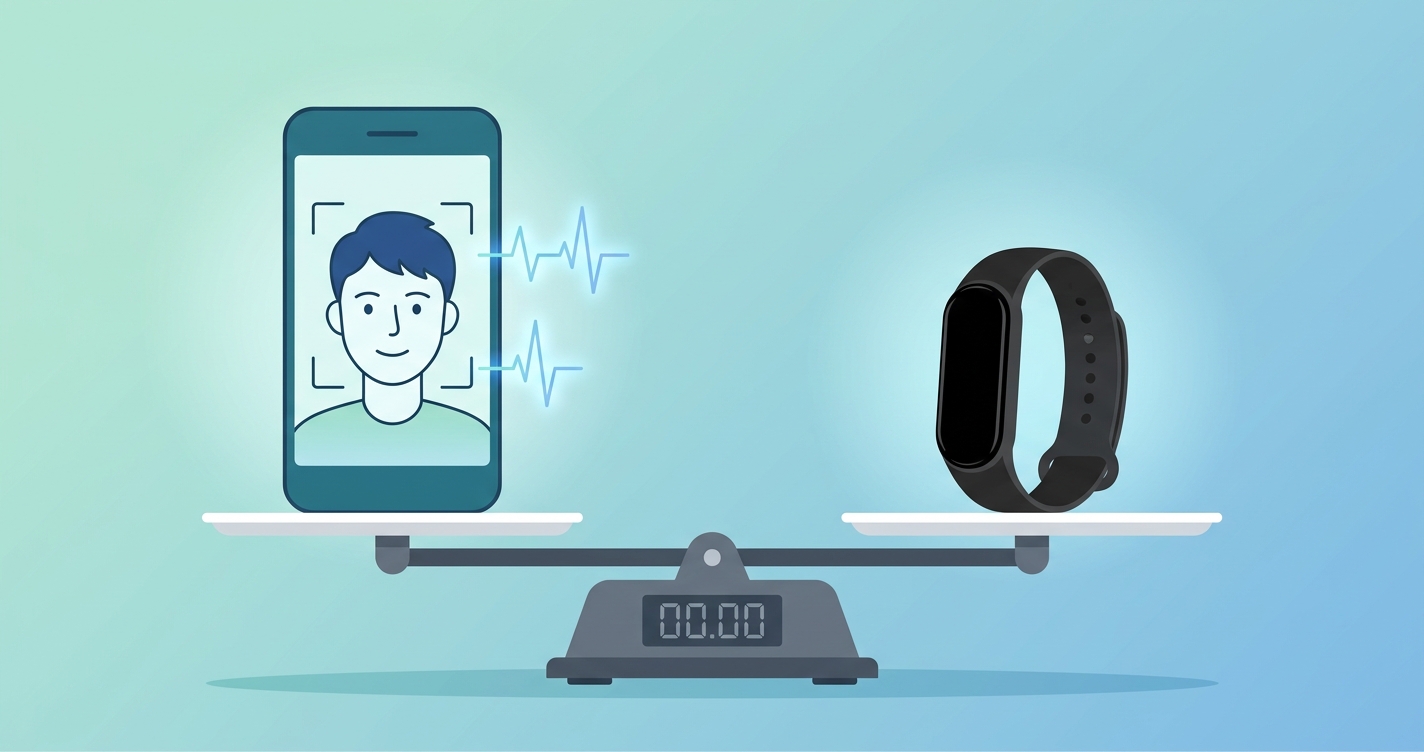
Population health leaders evaluating remote monitoring face a structural choice that shapes program economics for years: do you ship hardware to every enrolled patient, or do you capture vitals through a device the patient already owns? The question is no longer academic. As hospital-at-home census grows and value-based contracts put readmission risk on the provider, the difference between a contactless RPM platform and a wearable kit program shows up directly in cost per enrolled patient, in the quality of the data you collect, and in whether patients keep using the tool after week three. This comparison looks at both models head to head on the metrics that actually move a population health budget.
Across published reviews, long-term engagement remains the central failure point of remote monitoring. Programs that rely on patient-worn or patient-operated devices frequently see participation decline sharply within the first month, which means the readings clinicians need most often arrive least reliably., synthesis of findings reported by Mecklai and colleagues, NPJ Digital Medicine, 2021.
How a contactless RPM platform differs from wearable programs
A contactless RPM platform measures vital signs through a camera, typically the front-facing camera on a patient's own phone or tablet. The underlying method is remote photoplethysmography, which detects the tiny color changes in facial skin caused by each heartbeat and the subtle chest and shoulder movements tied to breathing. From a 30 to 60 second video session, the platform can estimate heart rate, respiratory rate, and related trend signals without anything touching the patient. This is what is meant by touchless patient monitoring or no-contact vitals.
A wearable program takes the opposite approach. The health system procures, configures, ships, and supports physical devices: a blood pressure cuff, a pulse oximeter, a smartwatch, or a connected patch. Each device must be paired, charged, worn, and eventually returned or replaced. The hardware is capable of continuous capture, but only while the patient cooperates with wearing and maintaining it.
The strategic distinction is where friction lives. Contactless remote monitoring moves the burden onto software and signal processing. Wearable programs move the burden onto logistics and patient behavior. That single difference cascades through every line of the comparison below.
Cost, accuracy, and adherence compared
| Dimension | Contactless RPM Platform | Wearable Kit Program | |---|---|---| | Upfront hardware cost per patient | Minimal; uses patient's existing device | High; multiple connected devices per enrollee | | Logistics overhead | None to low; no shipping or returns | Significant; fulfillment, pairing, replacement | | Onboarding time | Short; app install and a guided session | Longer; device setup and patient training | | Vital signs captured | Heart rate, respiratory rate, trend signals | Depends on kit; can include cuff BP, SpO2, weight | | Continuous vs spot data | Spot checks at defined intervals | Continuous possible while worn | | Primary accuracy risk | Lighting, motion, skin tone variation | Improper fit, uncharged or unworn device | | Adherence risk | Low; nothing to wear or charge | High; device fatigue and abandonment | | Scalability across a population | High; software scales without inventory | Constrained by device supply chain | | Reimbursement fit | Aligns with check-in based RPM codes | Aligns with device-based RPM codes |
Reading across the table, the two models trade strengths. Wearables win on raw data density when patients fully comply, because a worn sensor can record around the clock. A contactless RPM platform wins on reach, onboarding speed, and the likelihood that a given patient actually completes their readings.
Key takeaways for a population health budget:
- Hardware-free enrollment removes the largest fixed cost and the most common operational bottleneck in scaling RPM.
- Continuous wearable data is only as valuable as the percentage of patients who keep the device charged and worn.
- A spot-check model that patients complete consistently can yield a more usable trend line than a continuous model patients abandon.
- Device logistics, fulfillment, replacement, and reverse shipping, are recurring costs that rarely appear in early pilot estimates.
Industry Applications
Hospital-at-home and post-discharge
Acute hospital-at-home programs need vitals reliably and early. A contactless RPM platform lets a discharged patient begin reporting from their own phone on day one, with no waiting for a kit to arrive. For respiratory and cardiac recovery, where heart rate and respiratory rate trends carry early warning value, touchless patient monitoring removes the excuse of a dead battery or a misplaced cuff.
Chronic disease and population management
For large chronic populations, the economics favor whatever scales without inventory. Enrolling thousands of patients in a wearable program means thousands of devices to buy, ship, track, and replace. No-contact vitals captured through existing phones sidestep that supply chain, which matters when a single payer-provider contract may cover tens of thousands of lives.
Underserved and rural access
Device-dependent programs can widen access gaps when patients lack reliable charging, storage, or the dexterity to manage hardware. Contactless remote monitoring lowers that barrier, though it introduces its own equity consideration: camera-based methods must perform consistently across skin tones and lighting conditions, an area reviewers have flagged as essential for fair deployment.
Current research and evidence
The evidence base for camera-based vitals has matured. A 2023 review in Sensors by researchers cataloging contactless photoplethysmography reported strong correlation and acceptable agreement between camera-derived heart rate and reference monitors, while identifying motion artifacts, ambient lighting, and skin pigmentation as the principal factors that degrade measurement quality. The same body of work points to machine learning signal processing as the route to more robust readings in real-world conditions rather than controlled labs.
On the wearable side, the limiting variable is rarely sensor capability. It is human behavior. Work led by Mecklai and colleagues in NPJ Digital Medicine (2021) and subsequent adherence reviews describe how device-based remote monitoring tends to lose participants within weeks, driven by device fatigue, charging burden, and unclear perceived value. A continuous sensor that records perfectly produces no clinical signal once it sits in a drawer.
Put together, the research frames the real trade-off honestly. Wearables offer richer continuous data with a demonstrated retention problem. Contactless platforms offer lighter spot data with a far lower behavioral barrier, contingent on solving lighting, motion, and skin-tone robustness. For population health leaders, the deciding question is which failure mode is more tolerable across a defined cohort: occasional missed continuous data, or systematic dropout.
The future of contactless RPM
Three directions are taking shape. First, hybrid programs that reserve wearables for the highest-acuity subset while defaulting the broader population to a contactless RPM platform, matching cost to risk. Second, expanded contactless parameters as signal processing improves, with active research into camera-derived blood pressure trends and oxygenation estimates that today still favor dedicated devices. Third, tighter integration with virtual nursing workflows, where touchless check-ins feed escalation logic so that scarce clinical attention concentrates on patients whose trends are moving in the wrong direction.
The likely endpoint is not one model replacing the other but a tiered architecture. Contactless monitoring becomes the wide top of the funnel because it scales cheaply and patients tolerate it, while wearables persist for cases where continuous capture genuinely changes management. The programs that win will be the ones that measured adherence honestly rather than assuming it.
Frequently asked questions
How does a contactless RPM platform measure vital signs without a device? It uses the patient's existing phone or tablet camera and remote photoplethysmography, which reads subtle color and motion changes in the face and chest to estimate heart rate and respiratory rate from a short video session. No cuff, patch, or wearable is required.
Is contactless monitoring as reliable as a wearable? Each model has a different reliability profile. Wearables can capture continuous data but only while patients keep them charged and worn, and dropout is common. Contactless methods show strong agreement with reference monitors in published reviews but depend on adequate lighting, limited motion, and validated performance across skin tones.
Which model costs less to run at population scale? Contactless platforms generally carry lower total cost because they avoid hardware procurement, shipping, pairing, replacement, and reverse logistics. Wearable programs add recurring device-supply costs that grow directly with enrollment.
Can a health system use both models together? Yes. Many programs are moving toward a tiered design, defaulting most patients to contactless monitoring and reserving wearables for high-acuity cases that require continuous data, which aligns spend with clinical risk.
Circadify is building in exactly this space, focused on camera-based monitoring that patients actually complete instead of abandon. Population health VPs comparing models can review the detailed vendor comparison and explore an RPM pilot program at circadify.com/solutions/remote-patient-monitoring.