How a Remote Patient Monitoring Camera Closes Care Gaps
Discover how replacing shipped wearables with a remote patient monitoring camera reduces hardware friction, lowers costs, and closes the digital divide.
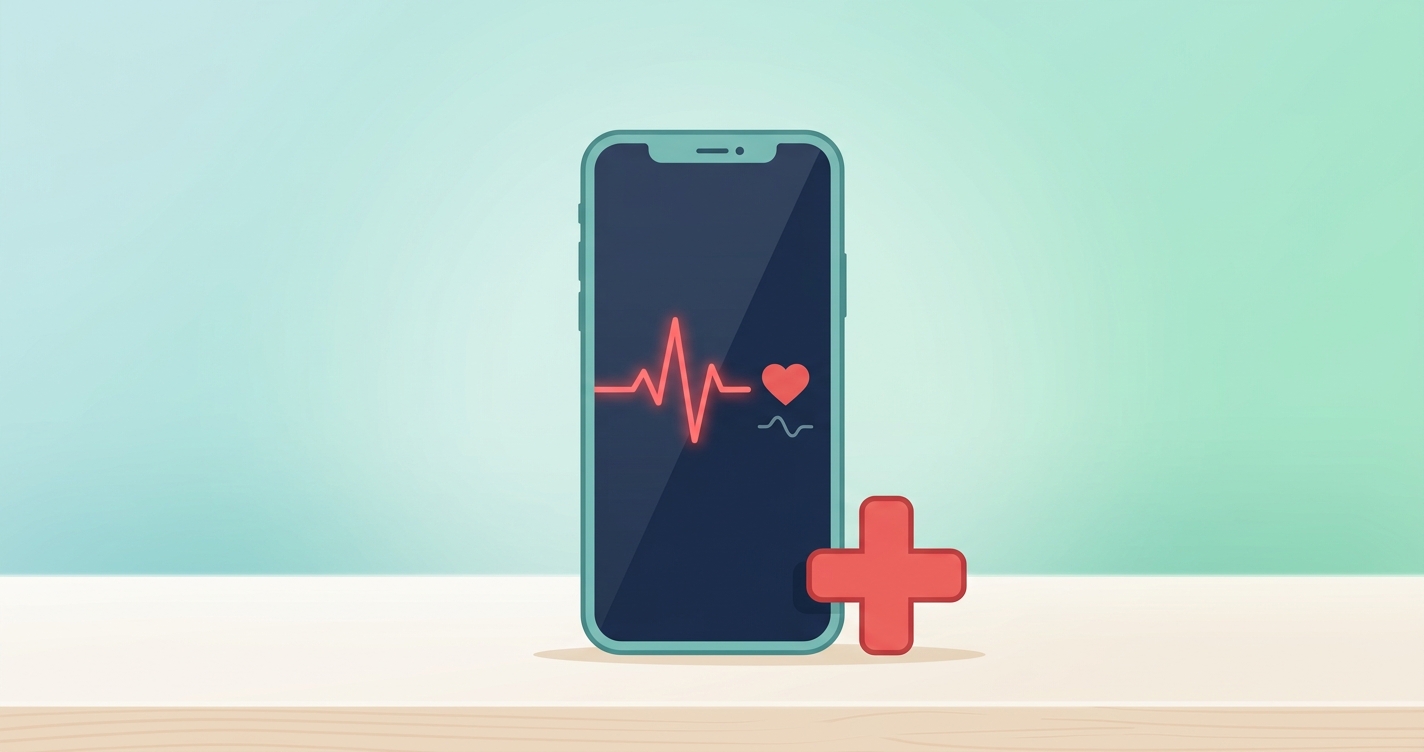
The expansion of care-at-home models has created an operational paradox for health system leaders. While virtual programs were designed to expand the reach of clinical teams, the reality of deploying hardware-based kits often excludes the most vulnerable patient populations. Chief Medical Officers and population health executives face a structural barrier: shipping, maintaining, and teaching patients to use proprietary wearables requires massive logistical overhead and assumes a baseline of technical literacy. To solve this friction, health systems are shifting toward software-only models where a remote patient monitoring camera, specifically the one already built into a patient's existing smartphone, replaces the need for shipped hardware. By bypassing complex supply chains, this "Bring Your Own Device" approach dramatically lowers the barrier to entry, ensuring that high-acuity monitoring can reach every discharged patient without widening the digital divide.
"In a 2023 survey of lower-income communities across three major U.S. cities, 96 percent of respondents owned a smartphone, but only 30 percent utilized remote patient monitoring, highlighting how current device-centric models fail to reach the populations that need them most."
- Dr. Omolola E. Adepoju et al., University of Houston, "Equity in Digital Health: Assessing Access and Utilization", 2024
The logistical burden of device-heavy programs
When health systems launch acute care-at-home initiatives, the initial focus is almost entirely on clinical protocols and readmission metrics. However, as these programs scale from small pilots to enterprise-wide operations, clinical leaders quickly realize they have inadvertently entered the consumer electronics and logistics business. Traditional remote patient monitoring requires a substantial fleet of physical peripherals. A standard discharge kit might include a cellular tablet hub, a Bluetooth-enabled blood pressure cuff, a continuous pulse oximeter, and a weight scale.
Managing this inventory requires a massive, hidden backend operation. Devices must be purchased up front, inventoried in hospital basements, shipped to patient homes via couriers, retrieved after the monitoring period ends, physically sanitized, and recalibrated. The financial model of these programs is highly sensitive to hardware shrinkage. When a patient fails to return a costly cellular hub or accidentally throws away a wearable patch, the health system absorbs the financial loss.
For the patient, the experience is equally cumbersome and often anxiety-inducing. Older adults or individuals recovering from major acute events are handed a box of unfamiliar hardware and expected to act as amateur IT technicians. They must ensure multiple devices remain charged, navigate complex Bluetooth pairing protocols, and interpret ambiguous error codes. This friction leads directly to low adherence. When a patient cannot figure out why their wearable disconnected from the base station, they do not call a help desk, they simply stop using the device. The clinical team immediately loses visibility, and the core purpose of the post-discharge safety net is defeated.
Why a remote patient monitoring camera is essential for health equity
Health equity strategies in digital health cannot succeed if the barrier to entry requires specialized hardware. The assumption that all patients possess the physical environment, cognitive capacity, and technical literacy to manage medical peripherals is deeply flawed. It creates a digital divide that remote monitoring programs often fail to cross.
By shifting to a software-first approach, health systems can utilize a ubiquitous piece of technology: the consumer smartphone. A remote patient monitoring camera uses the hardware patients already own, understand, and habitually keep charged. There is no secondary device to pair. There is no proprietary charging cable to misplace.
This transition is fundamentally an issue of accessible patient monitoring. When the interface for capturing physiological data is as simple as looking into a smartphone camera lens, the cognitive load on the patient drops to near zero. Social determinants of health, such as a lack of reliable transportation to return equipment or housing instability that makes shipping physical kits difficult, are entirely bypassed.
| Feature | Traditional Device-Based RPM | Camera-Based RPM | | :--- | :--- | :--- | | Hardware Procurement Costs | High (purchasing kits, sensors, cuffs) | Zero (utilizes existing patient smartphones) | | Logistics and Fulfillment | Complex (shipping, retrieval, sanitization) | None (instant software deployment via SMS link) | | Patient Setup Experience | High friction (Bluetooth pairing, multiple chargers) | Low friction (clicking a secure link, opening camera) | | Health Equity Impact | Widens gap for low digital literacy populations | Closes gap via familiar, intuitive consumer interfaces | | Lost Device Risk | Significant financial loss for the health system | N/A (patients manage their own personal phones) |
Transforming population health operations
Using a patient's own smartphone camera alters the economics, reach, and scalability of population health programs.
Eliminating the hardware supply chain
For population health vice presidents, the cost of acquiring and replacing proprietary hardware places a hard cap on how many patients can be actively enrolled at any given time. When the remote patient monitoring camera replaces the physical kit, the marginal cost of adding a new patient to the program drops dramatically. Care coordinators can enroll patients immediately at the bedside before discharge, rather than waiting for a courier to deliver a box two days later, a critical window where many readmissions occur.
Bypassing tech literacy barriers
By using familiar consumer interfaces, clinical teams bypass the training bottlenecks that plague traditional programs. The operational benefits of this frictionless, accessible patient monitoring approach include:
- Removing the need for nurses to explain multi-step Bluetooth pairing instructions over the phone.
- Eliminating secondary device chargers that frequently go missing in the patient's home.
- Avoiding return-shipping logistics, automated reminder calls, and unreturned equipment fees.
- Enabling immediate onboarding prior to hospital discharge via a simple text message link.
- Reducing IT support tickets, allowing care coordinators to focus entirely on clinical escalations.
Current research and evidence
The massive gap between digital access and actual digital health utilization was starkly highlighted by researchers evaluating remote monitoring among underserved populations. In a peer-reviewed 2024 study, Dr. Omolola E. Adepoju and colleagues at the University of Houston examined adults from low-income communities across Houston, Los Angeles, and New York. The findings revealed that while 96 percent of respondents owned a smartphone, only 30 percent utilized remote patient monitoring. Furthermore, race and educational attainment were strong determinants of usage, with Black respondents significantly less likely to have used monitoring systems compared to White populations. This data indicates that simply providing a monitoring program is insufficient if the delivery mechanism is complex, costly, or alienating to the user.
The core technology enabling health systems to reverse this trend is remote photoplethysmography (rPPG). This software analyzes the subtle micro-color changes in human skin that occur with each heartbeat. Ambient light reflects off the skin, and the smartphone camera captures these microscopic variations, translating them into measurable vital signs. While traditional photoplethysmography requires a physical contact sensor, such as a rigid finger clip, rPPG extracts the exact same underlying physiological signal optically from a distance.
Current research in computer vision is actively addressing the historical limitations of optical monitoring, particularly concerning equitable accuracy across diverse skin tones. Because melanin absorbs light differently, early optical sensors frequently struggled with darker skin types. Modern algorithms, trained on larger and significantly more diverse datasets, are actively closing this performance gap, ensuring that camera-based systems can serve as a truly equitable, population-wide tool.
The future of remote monitoring
The trajectory of acute care at home points decisively toward software-defined infrastructure. Relying on physical hardware distribution and centralized depot management is a transitional phase in the evolution of digital health. As computer vision models become more sophisticated, the remote patient monitoring camera will evolve from a supplementary screening tool to the primary modality for continuous and spot-check physiological tracking.
Health systems that adopt device-agnostic platforms will be able to scale their monitoring capabilities without exponentially scaling their logistics overhead. This operational efficiency is what makes accessible patient monitoring financially sustainable for value-based care contracts. By removing the friction of hardware, hospitals can finally monitor the patients who need oversight the most, rather than just the patients who have the technical proficiency to operate a Bluetooth hub.
Frequently asked questions
What is a remote patient monitoring camera?
A remote patient monitoring camera refers to the use of a standard device camera, such as the front-facing lens on a smartphone or tablet, equipped with advanced software that measures physiological signs. It uses optical techniques to detect heart rate, respiratory rate, and other metrics without requiring the patient to wear physical patches or sensors.
How does digital divide remote monitoring affect patient outcomes?
When monitoring programs rely on expensive, complex hardware or require managing multiple device connections, they inadvertently exclude low-income and elderly populations. This digital divide results in vulnerable populations missing out on early clinical interventions, ultimately leading to higher readmission rates and widening historical health disparities.
Do patients need to purchase new devices for this monitoring?
No. The primary advantage of a camera-based approach is its reliance on "Bring Your Own Device" models. Patients use the smartphones or tablets they already own and know how to use, completely eliminating the hardware cost barrier for both the individual and the healthcare provider.
How does a contactless RPM platform measure vital signs?
Contactless platforms use remote photoplethysmography (rPPG). The camera detects micro-variations in the color of the patient's face caused by blood volume changes beneath the skin with each heartbeat. Software algorithms analyze these light absorption changes to calculate accurate physiological metrics.
Health systems looking to bypass the logistical hurdles of device kits and expand health equity can explore how Circadify is addressing this space with software-only solutions. Learn more about launching a frictionless RPM pilot program today.