How do hospitals track patients at home without sending equipment?
Health systems are adopting contactless RPM platforms to monitor patients remotely without the logistical burden of hardware, using patients' own devices for data.
The expansion of hospital-at-home programs and post-discharge monitoring initiatives presents a significant operational challenge for health systems: managing the logistics of remote patient monitoring (RPM) equipment. Traditionally, RPM has required shipping medical devices like pulse oximeters, blood pressure cuffs, and scales to patients' homes. This process involves significant costs related to procurement, shipping, cleaning, and technical support for patients who may struggle with new hardware. As these programs scale, the logistical and financial burdens can become unsustainable, forcing care-at-home leaders to seek more efficient models. The emerging solution is to remove the hardware entirely.
"Health systems report that for every dollar spent on the RPM device itself, another dollar is spent on reverse logistics, cleaning, and technical support. This 50% overhead is a major barrier to scaling remote care."
The Shift to a Contactless RPM Platform
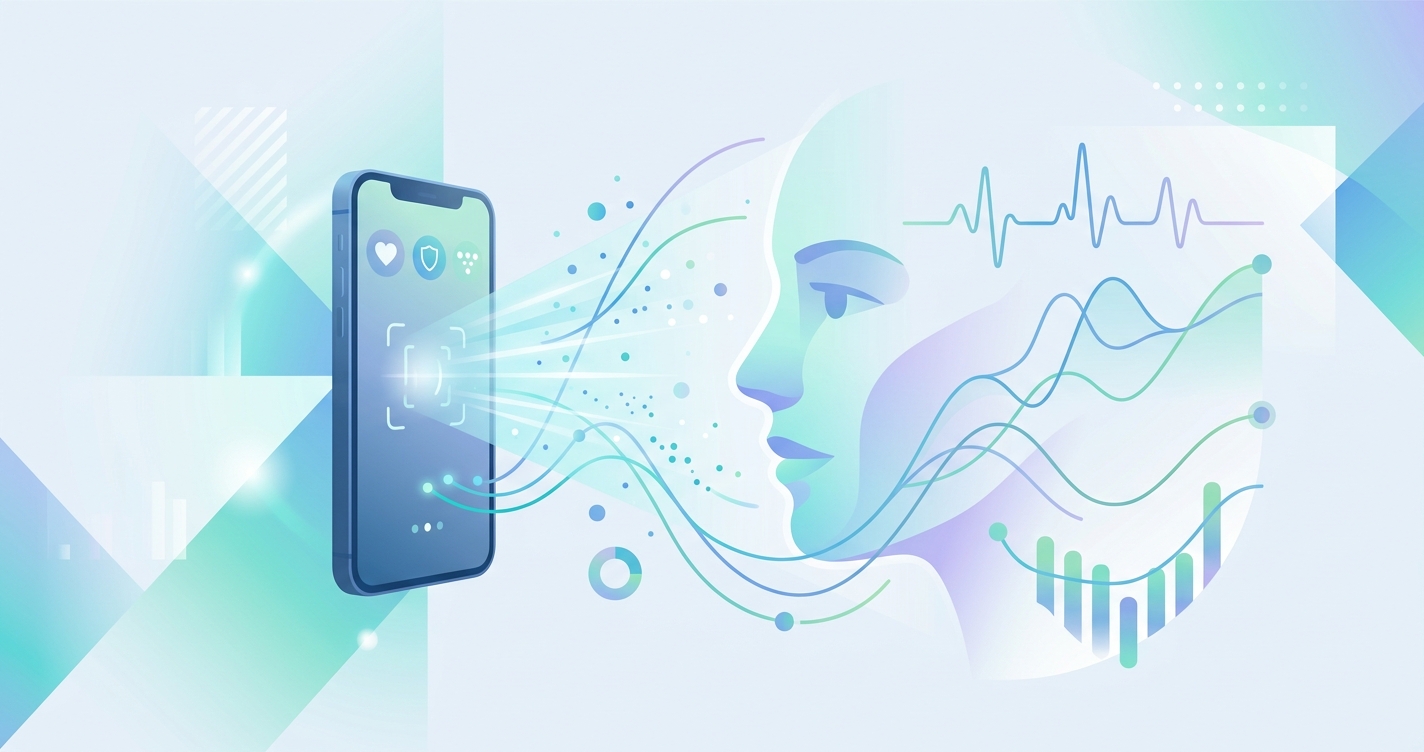
The primary barrier to scaling remote monitoring is not clinical capability but operational overhead. A contactless RPM platform addresses this directly by eliminating the need for dedicated medical hardware. Instead of shipping equipment, these platforms use the technology patients already own and use daily: their smartphones. By using a software-as-a-medical-device (SaMD) approach, health systems can deploy sophisticated monitoring capabilities through a simple app download. This model transforms the patient's personal smartphone camera into a clinical-grade sensor, capable of capturing vital signs without any physical contact or additional peripherals. This fundamentally changes the RPM cost structure and deployment model, shifting from a hardware-and-logistics focus to a more scalable and patient-centric software solution. For hospital CMOs and population health VPs, this represents a pivotal change in how remote care can be delivered, making it possible to monitor large patient populations without a proportional increase in logistics staff or equipment budget.
| Feature | Traditional Equipment-Based RPM | Contactless RPM Platform (Software-Only) | | :--- | :--- | :--- | | Patient Onboarding | Requires shipping, setup, and troubleshooting of new hardware. | Patient downloads an app on their own smartphone. | | Logistics & Cost | High costs for device procurement, shipping, retrieval, and sanitation. | Minimal to no logistics cost; scales without hardware inventory. | | Patient Adherence | Can be low due to unfamiliar devices and "tech fatigue." | Higher potential adherence by using a familiar device (the patient's phone). | | Data Types | Spot data from specific devices (e.g., BP cuff, oximeter). | Continuous and spot data, including heart rate, HRV, respiratory rate, and trends. | | Scalability | Limited by equipment inventory and logistics team bandwidth. | Infinitely scalable with software downloads. |
Industry Applications
A contactless RPM platform can be deployed across various clinical and operational settings within a health system, streamlining care and reducing the need for manual processes.
Post-Discharge Monitoring
For patients recovering from surgery or acute illness, consistent monitoring is crucial to prevent readmissions. Instead of sending patients home with a box of equipment they need to learn, a hospital can provide a link to download an app. The care team receives regular updates on the patient's vital signs, enabling early intervention if signs of deterioration appear.
Chronic disease management
Patients with conditions like hypertension or COPD require ongoing monitoring. A software-based approach makes it easier for them to integrate monitoring into their daily routine. A simple daily face scan can provide the care team with more data points than a weekly blood pressure check, leading to better-managed care and fewer exacerbation events.
Virtual nursing and hospital-at-home
As virtual nursing and hospital-at-home programs become more prevalent, the need for efficient, scalable monitoring technology is critical. A contactless RPM platform allows a small team of virtual nurses to oversee a large patient panel, focusing their attention on patients whose data indicates a potential issue, rather than on triaging hardware support calls.
Current research and evidence
The technology underpinning the contactless RPM platform is known as remote photoplethysmography (rPPG). It works by using a standard video camera to detect subtle, imperceptible changes in the color of skin on a person's face. These changes are caused by the flow of blood through the vessels just beneath the skin. Sophisticated algorithms analyze these signals to calculate vital signs like heart rate, heart rate variability, respiratory rate, and even blood pressure and oxygen saturation.
This is not a speculative technology. A significant body of research validates its accuracy and clinical potential. Researchers like Dr. Edward S. Chen and his team at Johns Hopkins University have published studies on the use of smartphone cameras for extracting clinical-grade data. A 2022 systematic review published in the Journal of Medical Internet Research analyzed numerous studies and confirmed the viability of rPPG for monitoring vital signs in a variety of settings. The work of researchers like Steffen Leonhardt at RWTH Aachen University and Ramakrishnan Swaminathan at the Indian Institute of Technology Madras has further advanced the algorithms, improving their accuracy and robustness against challenges like motion and varying lighting conditions. While it is not a replacement for ICU-level monitoring, the evidence shows it is a reliable tool for tracking trends in stable patients at home.
- Reduced Logistical Burden: Eliminates the need to procure, ship, track, and sanitize devices.
- Lower Program Costs: Shifts spending from hardware and logistics to a more predictable software subscription model.
- Improved Patient Experience: uses the patient's own device, removing the friction of learning and using new hardware.
- Enhanced Data Flow: Provides a more consistent stream of data, as patients are more likely to perform a quick scan than to set up multiple devices.
The future of contactless patient monitoring
The future of the contactless RPM platform lies in deeper integration and more sophisticated data analysis. As smartphone camera technology continues to improve, the accuracy and range of measurable biomarkers will expand. We can anticipate the integration of artificial intelligence (AI) and machine learning to move beyond simple data collection to predictive analytics. An AI-powered contactless RPM platform could identify patients at high risk of a specific event, like a heart failure decompensation or a post-operative infection, days before the patient becomes symptomatic. This would enable proactive, rather than reactive, care. Furthermore, as wearable sensors become more consumer-friendly, they can be fused with camera-based measurements to create a more comprehensive picture of a patient's health, all without requiring the health system to manage a single piece of hardware.
Frequently asked questions
Q: How can a smartphone camera measure vital signs accurately? A: It uses a technology called remote photoplethysmography (rPPG). The camera detects tiny changes in the color of the blood vessels under the skin to measure blood flow, which is then analyzed by algorithms to calculate heart rate, respiratory rate, and other vitals.
Q: Is a contactless RPM platform secure? A: Yes. Reputable platforms are HIPAA-compliant and use end-to-end encryption. Patient data is processed securely, either on the device or in a secure cloud environment, and is handled with the same level of privacy as any other electronic health record.
Q: What about patients who are not tech-savvy or don't have a smartphone? A: While the majority of adults own a smartphone, this model does not cover 100% of the population. For the small subset of patients without access to a compatible device, traditional equipment-based RPM or other care pathways remain an option. The goal is to shift the majority of patients to the more efficient software-based model.
Q: How does this model impact reimbursement? A: The billing codes for remote patient monitoring (CPT codes 99453, 99454, 99457, 99458) are generally focused on the monitoring service itself, not the specific technology used. As long as the platform collects and transmits reliable data for clinical interpretation, it typically qualifies for reimbursement.
Circadify is at the forefront of developing solutions in this space, helping health systems address the operational challenges of remote care. To learn more about how a software-first approach can help you scale your care-at-home initiatives, explore our RPM pilot program.