How often does my hospital actually look at my remote-monitoring data?
Understand the hospital check RPM data frequency. Learn how and when clinical teams review your remote patient monitoring data for your health and safety.
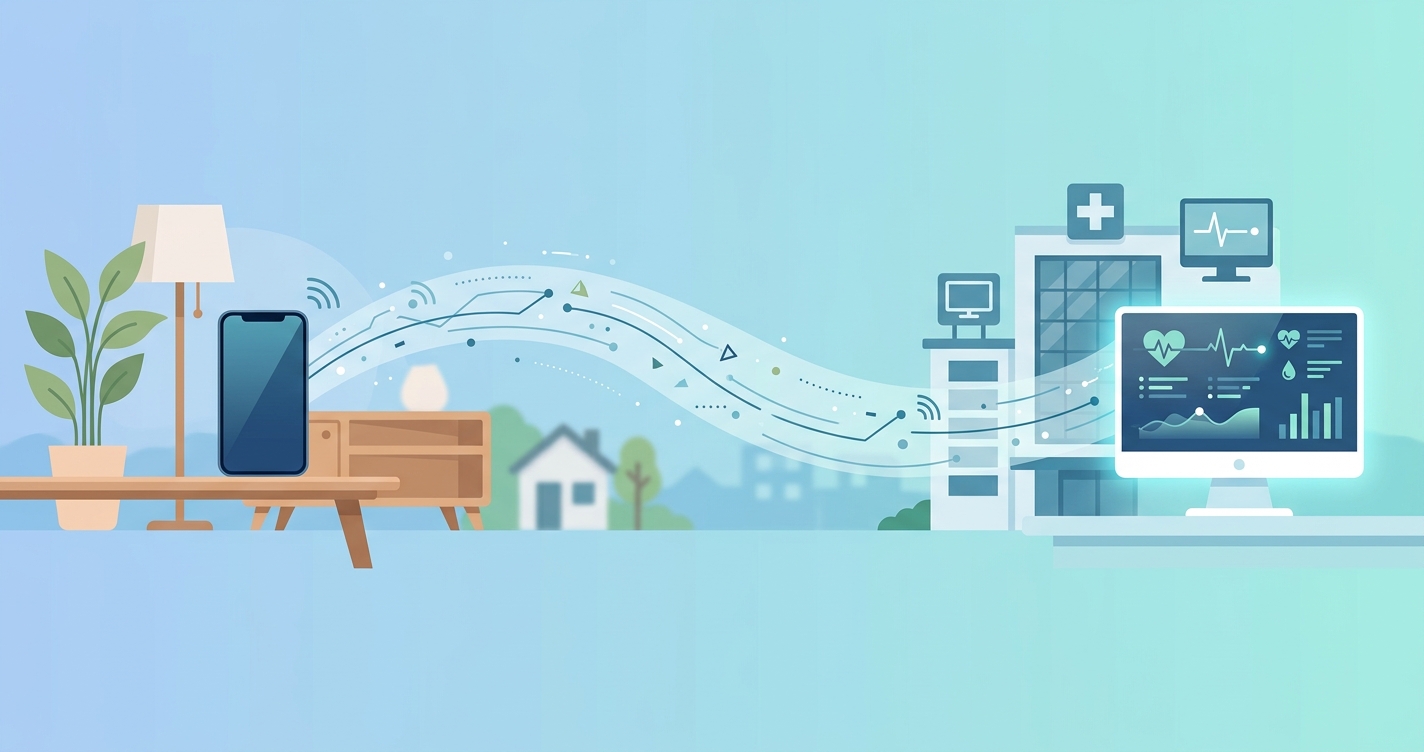
Being sent home from the hospital with a set of remote monitoring tools, a blood pressure cuff, a pulse oximeter, or a smartphone app, can bring a mix of reassurance and uncertainty. It's comforting to know your health is still being tracked, but it's natural to wonder: is someone really watching? How often does a nurse or doctor actually check the data I'm sending? The short answer is that it depends on the program, your condition, and the data itself, but all established remote patient monitoring (RPM) programs are built on structured clinical review. It is not a system where data is sent into a void.
"A recent survey found that while 80% of patients are willing to use remote monitoring, their biggest concern is whether the data is reviewed in a timely manner. This highlights the critical importance of transparent clinical workflows in building patient trust and engagement." - Health Tech Trust Report, 2023
How hospitals review and triage your RPM data
The core question of hospital check RPM data frequency is not about a doctor staring at a continuous data feed 24/7. Instead, health systems build sophisticated workflows to manage this information efficiently and safely. The goal is not to react to every single reading, but to identify meaningful trends and intervene before a minor issue becomes a major one.
Most RPM programs are managed by a dedicated team of nurses or clinical staff. They don't watch your data in real-time like an ICU monitor. Instead, they review incoming data in batches and respond to automated alerts. According to research from clinical workflow specialists at TriageLogic, a common best practice is for a registered nurse to review all triggered alerts within a four-hour window during business hours.
These alerts are the first line of defense. The software platform your hospital uses has pre-set thresholds, determined by your clinical team. For example, if your doctor wants your systolic blood pressure to stay below 140 mmHg, any reading you submit above that number could trigger an alert. This system allows the clinical team to focus on the data points that matter most, rather than getting lost in a sea of normal readings. The focus is on trend analysis over several days, not single data points in isolation.
Comparing RPM data review models
Not all RPM programs are the same. The frequency and style of review depend heavily on the patient's condition and the goals of the monitoring program.
| Feature | Alert-Based Monitoring | Daily Review Model | Continuous Monitoring (Virtual ICU) | | :--- | :--- | :--- | :--- | | Primary Use Case | Chronic conditions (e.g., hypertension, COPD) | Post-operative recovery, complex care | Acute "Hospital at Home" programs | | Review Frequency | When an alert is triggered by a reading | Once or twice daily by a nurse | Real-time by a dedicated clinical team | | Patient Interaction | Primarily for education and alert follow-up | Regular check-ins and trend discussion | Constant availability, similar to a nurse call button | | Data Type | Intermittent spot-checks (e.g., daily weight, BP) | Multiple vital signs submitted 1-2 times daily | Continuous or near-continuous data streams |
Who is looking at your data?
Several layers of technology and clinical expertise work together to ensure your data is reviewed appropriately. It's a team approach designed for safety and efficiency.
- A centralized team of RPM nurses or medical assistants provides first-line review.
- Automated software systems flag abnormal readings based on your doctor's orders.
- Data is integrated into the hospital's electronic health record (EHR) for a complete picture.
- Physicians are typically looped in when a trend requires a change in your care plan.
The Role of the RPM Nurse
The RPM nurse is the central hub of most monitoring programs. This individual is a registered nurse who has been trained to manage incoming patient data. They are responsible for reviewing daily submissions, responding to alerts, providing patient education, and escalating concerns to a physician when necessary. They are your primary point of contact and the person most consistently reviewing your information.
Automated alerts and triage
The software itself does much of the initial sorting. When you take a reading, the platform instantly compares it to the parameters set by your doctor. If a reading is outside the "normal" range, the system generates an alert. These alerts are often color-coded by severity, allowing the RPM nurse to prioritize the most critical information first. This combination of automation and clinical judgment ensures that significant changes in your condition are addressed promptly.
Physician Oversight
Your primary care physician or specialist is generally not reviewing every single data point. Their time is focused on interpreting trends identified by the RPM team and making high-level decisions about your care. They might receive a weekly summary report from the RPM nurse or be notified immediately if a critical alert requires a change in medication or an office visit.
Current research and evidence
The effectiveness of RPM is a major area of study. Research consistently shows that these programs improve patient outcomes, but only when they include structured, timely clinical review. A systematic review in the Journal of Medical Internet Research (O'Connell, A., et al., 2022) examined the components of successful RPM programs, finding that consistent patient-provider communication, enabled by the flow of data, was a key driver of improved health.
Studies also show that the simple act of being monitored can improve a patient's adherence to their care plan. Knowing that a clinical team will see their data encourages patients to take their medications, follow dietary guidelines, and be more engaged in their own health. The frequency of data review is less about constant surveillance and more about creating a rhythm of accountability and support that keeps a patient's recovery on track.
The future of remote monitoring
The field of RPM is evolving quickly. The next generation of technology is moving toward more passive and contactless monitoring. Instead of requiring patients to use multiple devices, new camera-based technologies can measure vital signs like heart rate, respiratory rate, and blood pressure from a simple smartphone scan. This removes the burden of device management and can increase adherence.
As these technologies become more widespread, the question of hospital check RPM data frequency will become even more important. The future lies in AI-powered platforms that can analyze continuous data streams, detect subtle changes that predict a decline in health, and provide clinicians with actionable insights rather than just raw data. This will allow care teams to manage larger patient populations more effectively and intervene even earlier.
Frequently asked questions
Will I be notified if one of my readings is abnormal? Yes. If a reading triggers a critical alert, a member of your care team will contact you according to the program's specific protocols. This might be a phone call, a secure message, or instructions to seek immediate care.
Does my doctor see every single reading I submit? Typically, no. A specialized RPM nurse or clinical team is responsible for the day-to-day data review. They analyze trends and will escalate any significant or concerning patterns to your doctor. This ensures your doctor's time is focused on making critical decisions about your care plan.
What if I feel unwell but all my readings are within the normal range? Always trust your body. Remote monitoring technology is a powerful tool, but it does not replace your own feeling of well-being. If you feel sick, dizzy, or otherwise unwell, you should contact your doctor's office or the RPM program's nurse line directly, regardless of what your data shows.
For health systems exploring how to build trust and improve clinical capacity through better remote monitoring, the underlying technology and workflow design are critical. Circadify is at the forefront of creating camera-based, patient-centric monitoring solutions that integrate seamlessly into clinical practice. To learn more about launching a pilot program, explore our solutions for remote patient monitoring.