How do I know if my recovery is on track without going back to the doctor?
Learn how to monitor your post-discharge recovery from home. Understand how remote patient monitoring helps you and your care team know if your recovery is on track without a doctor visit.
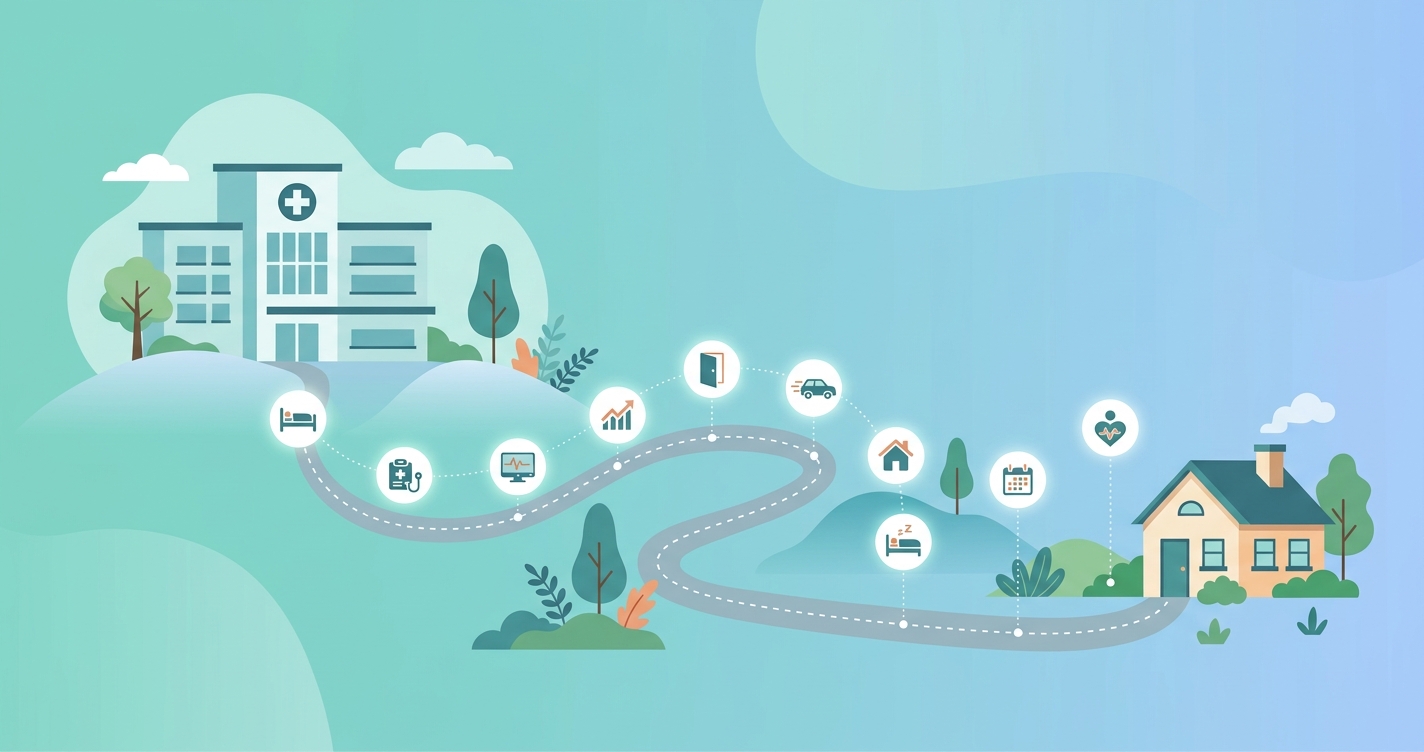
Leaving the hospital can feel like a strange mix of relief and anxiety. You're happy to be home, but the structured support of the hospital is gone. This leaves many people asking a critical question: How do I know if my recovery is on track without going back to the doctor? In the past, the answer involved waiting for a follow-up appointment or making a call if symptoms worsened. Today, technology provides a more proactive way for your care team to monitor your progress from afar, giving you peace of mind and ensuring your recovery stays on course. This approach relies on "patient-generated health data" (PGHD), a term for the health information you can collect and share from home.
"A systematic review and meta-analysis of remote patient monitoring found that it significantly reduced all-cause readmissions and heart failure-related readmissions." - (Bielska, et al., Journal of Medical Internet Research, 2023)
Keeping your recovery on track without a doctor visit
The key to knowing if your recovery is on track without a doctor visit is the ability to track key health metrics consistently. When your care team has access to daily data points, they can spot subtle changes that might indicate a problem long before you would feel the need to schedule an appointment. This shift from reactive to proactive care is made possible by remote patient monitoring (RPM) technologies that use everyday devices, like your smartphone, to gather vital information.
This method isn't about replacing your doctor; it's about extending their oversight between visits. For individuals recently discharged after surgery or managing chronic conditions like heart failure or COPD, this continuous connection is critical. It allows for timely adjustments to your care plan and helps prevent complications that could lead to a readmission. The goal is to provide a safety net, ensuring that any deviation from your expected recovery path is noticed and addressed immediately.
| Feature | Traditional Follow-Up | Remote Monitoring | | :--- | :--- | :--- | | Data Frequency | Episodic (at appointments) | Continuous (daily or more) | | Intervention Time | Delayed until next visit | Near real-time | | Patient Convenience | Requires travel to clinic | Done from home | | Data for Clinicians | Limited to in-person checks | Rich, longitudinal data sets | | Hospital Readmission Risk | Higher due to data gaps | Lower due to early detection |
This data-driven approach empowers both you and your clinical team. You gain a better understanding of your own recovery, while your care team gets the insights they need to support you effectively from a distance.
Industry Applications
For hospitals and health systems, the ability to monitor patients after discharge is a critical operational and clinical challenge. Effective remote monitoring programs are becoming a standard part of post-discharge care protocols.
Reducing unnecessary hospital readmissions
One of the most significant benefits of RPM is its proven ability to reduce hospital readmissions. Research has consistently shown a strong correlation. For example, a 2022 meta-analysis focusing on heart failure patients found that telemonitoring programs reduced the odds of a 30-day readmission by 44%. By catching and addressing issues like a sudden weight gain or a change in blood pressure, care teams can intervene before the problem escalates into an emergency.
Enabling hospital-at-home programs
The "hospital-at-home" model, where patients receive acute-level care in their residence, relies entirely on robust remote monitoring. This model is expanding because it offers a way to manage hospital capacity while improving patient satisfaction. Key components include:
- Daily virtual "rounds" via telehealth.
- Continuous vital signs monitoring.
- In-home support for infusions or other treatments.
- A central command center staffed by clinicians to oversee patient data.
Improving patient self-management and engagement
When patients can see their own health data, they become more engaged in their own recovery. Tracking daily progress provides positive reinforcement and helps individuals understand the connection between their actions (like medication adherence or diet) and their health outcomes. This improved health literacy is a cornerstone of long-term wellness and chronic disease management.
Current research and evidence
The evidence supporting remote monitoring for post-discharge recovery is extensive and growing. A landmark 2023 systematic review and meta-analysis published in the Journal of Medical Internet Research by Karolina Bielska and fellow researchers confirmed that RPM significantly lowers the risk of all-cause hospital readmissions. This large-scale analysis synthesized findings from numerous smaller studies, providing a high level of confidence in the effectiveness of these programs.
Earlier work, such as a 2020 study from the University of Pittsburgh Medical Center, demonstrated dramatic results, reporting that their RPM program helped reduce readmission rates by 76% and increased patient satisfaction. Researchers noted that the combination of technology and a dedicated remote clinical team was essential to this success. The data allows care teams to triage and prioritize patients who need immediate attention, using their resources more efficiently.
The future of post-discharge recovery
The future of recovery tracking is moving toward even more seamless and patient-friendly technologies. While early RPM programs often required patients to manage multiple devices with complex Bluetooth pairing, the industry is shifting to "contactless" or camera-based monitoring. These next-generation systems use the camera on a patient's own smartphone or a dedicated device to measure vital signs like heart rate, respiratory rate, and blood pressure without requiring any wearables. This approach solves the persistent problem of patient non-adherence with wearables and makes it easier for elderly patients or those with low technical literacy to participate. As these technologies become more widespread, the ability to ensure a patient's recovery is on track without a doctor visit will become a standard feature of a connected and proactive healthcare system.
Frequently asked questions
Q: How can a smartphone camera measure my vital signs?
A: This technology, known as photoplethysmography (PPG), analyzes tiny, imperceptible changes in the color of the skin on your face. As your heart pumps blood, the capillaries in your skin expand and contract, causing subtle shifts in how light is reflected. Advanced algorithms translate this video data into measurements of heart rate, respiratory rate, and other key vitals.
Q: Is my hospital watching me 24/7?
A: No. These systems are not for live surveillance. You are typically prompted to perform a brief scan at set times, such as once or twice a day. The system only collects data during these short, patient-initiated sessions. The rest of the time, the system is inactive, and no data is being gathered or transmitted, ensuring your privacy.
Q: Do I have to use special equipment or wearables?
A: It depends on the program, but many modern systems are designed to work with the technology you already own, like your smartphone. The goal is to make participation as easy as possible. Camera-based monitoring, in particular, eliminates the need for you to wear, charge, or troubleshoot separate medical devices.
Keeping an eye on your recovery after you leave the hospital is a shared responsibility between you and your care team. New technologies are making it easier than ever to stay connected and ensure that you have the support you need, right from the comfort of your home. Circadify is at the forefront of developing camera-based monitoring that helps hospitals provide better post-discharge support. To see how health systems are using these tools to improve patient outcomes, learn more about our RPM pilot program at circadify.com/solutions/remote-patient-monitoring.