Is my hospital really watching over me 24/7 even if I live alone?
What 24/7 remote monitoring home really means for solo patients, and how care-at-home teams design virtual nursing coverage that is continuous in practice.
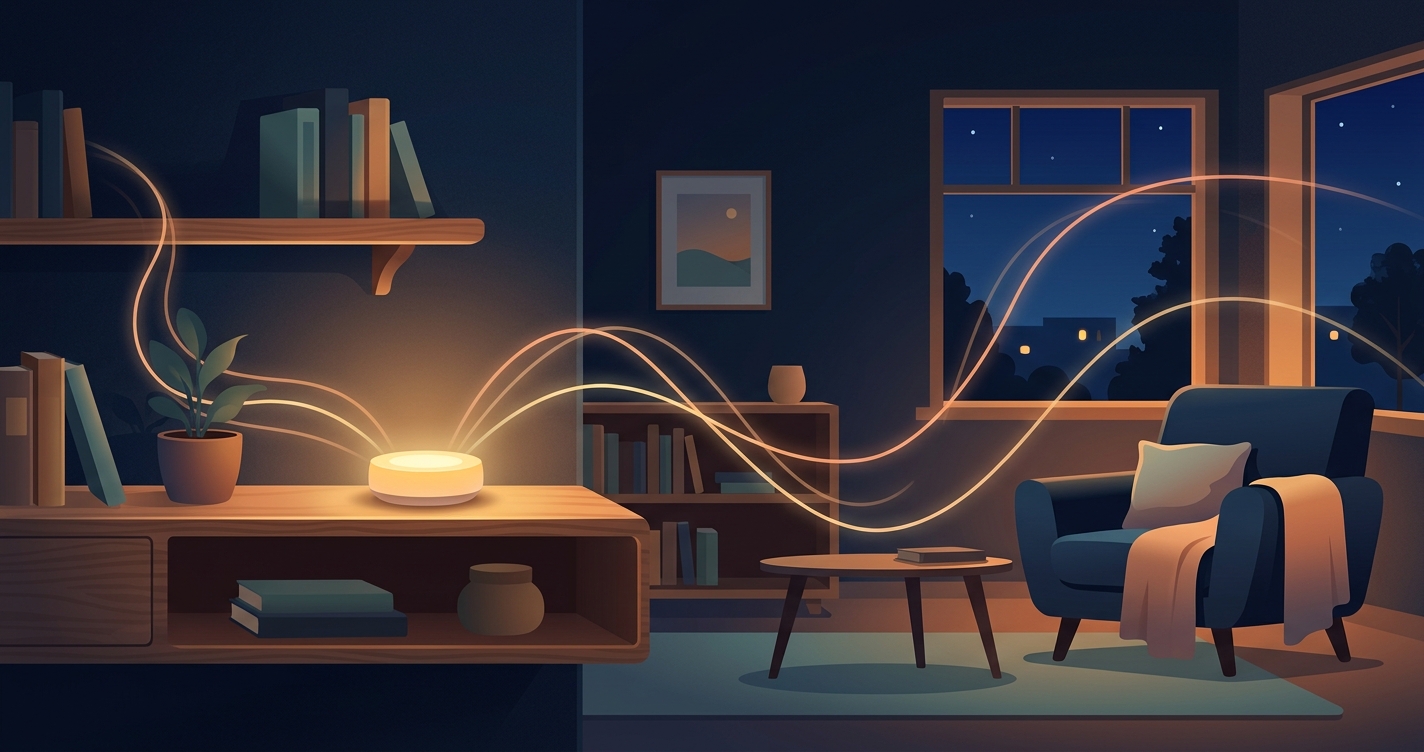
If you live alone and your hospital has enrolled you in a home monitoring program, the phrase "around the clock" can feel reassuring and slightly hard to believe at the same time. The honest answer is that 24/7 remote monitoring home programs do not mean a nurse is staring at a live video feed of your living room every minute. They mean something more practical: a system that collects health signals continuously, applies thresholds to those signals, and routes anything unusual to a clinician who can act. For care-at-home directors building these programs, the gap between what patients imagine and what the technology actually does is the most important thing to get right.
A 2024 prospective cohort study published in JMIR Formative Research reported a 30 percent absolute reduction in 30-day readmissions among high-risk patients enrolled in a remote health monitoring program, with measurable drops in hospitalizations and emergency department visits at three and six months.
What 24/7 remote monitoring home actually covers
The promise of 24/7 remote monitoring home care rests on a distinction between continuous data capture and continuous human attention. These are not the same thing, and conflating them is where patient anxiety and program disappointment both come from.
Continuous data capture means a sensor, app, or camera-based platform records vital signs and activity patterns on a recurring schedule, sometimes every few seconds, sometimes at set intervals through the day. Continuous human attention is neither realistic nor necessary. Instead, mature programs use exception-based monitoring: the technology watches constantly, and a clinician is alerted only when readings cross a defined threshold or when expected check-ins do not happen.
For a patient living alone, the meaningful safety net is not a person watching a screen. It is the certainty that if a vital sign drifts out of range at 3 a.m., or an expected morning reading never arrives, someone is notified and follows up. That is the operational definition care teams should communicate plainly.
The model breaks down into a few layers:
- Passive sensing that runs without the patient doing anything, such as contactless capture of respiration or movement
- Active check-ins the patient performs, such as a guided camera-based vitals reading
- Threshold logic that classifies readings as normal, watch, or escalate
- A staffing model that determines who responds, and how fast, when an alert fires
How continuous coverage compares to older approaches
The table below contrasts how different home monitoring models behave for a patient who lives alone, where there is no family member to notice a problem.
| Model | Data capture | Human response | Solo-patient gap risk | Compliance burden | |-------|-------------|----------------|----------------------|-------------------| | Scheduled phone check-ins | A few times per week | Nurse calls at set times | High, hours of blind spots | Low | | Wearable-based RPM | Continuous while worn and charged | Alert-driven follow-up | Moderate, depends on the patient wearing the device | High | | Peripheral devices (cuff, oximeter) | Only when patient self-measures | Alert-driven follow-up | Moderate to high, missed readings go unseen | High | | Camera-based contactless RPM | Continuous passive plus guided checks | Exception-based escalation | Lower, no device to forget | Low | | In-person home nursing visits | Only during the visit | On-site during visit | Very high between visits | Low |
The pattern that matters for solo patients is the column on gap risk. Any model that depends on the patient remembering to wear, charge, or operate equipment introduces silent failure points. When no one else is in the home to catch a missed reading, those gaps become the difference between early intervention and a delayed one.
Industry applications for care-at-home programs
Hospital-at-home and acute substitution
Hospital-at-home programs treat patients who would otherwise occupy an inpatient bed. For these higher-acuity cases, continuity is non-negotiable, and the monitoring stack has to approximate the cadence of a hospital floor. Virtual nursing technology lets a single remote clinician oversee a panel of home-based patients, with the platform surfacing the ones who need attention. A 2024 analysis summarized by Becker's Hospital Review found virtual nursing models reduced average length of stay by more than 7 percent and trimmed 30- and 60-day readmission rates by roughly 2 percent, largely through earlier intervention.
Post-discharge and extended recovery
For patients in the vulnerable window after discharge, the goal is catching deterioration before it becomes a return trip to the emergency department. Here the value of 24/7 remote monitoring home coverage is the elimination of the multi-day blind spots that scheduled calls leave behind.
Aging in place and solo living
Older adults living alone are the clearest case for continuous, low-burden monitoring. Research compiled in a 2023 PMC survey of elderly monitoring projects noted that in-home systems tracking mobility, activity, and daily patterns can flag both medical risk and signs of social isolation. A separate PubMed study on remote monitoring interventions reported that older adults receiving such monitoring spent more days at home compared with usual home care recipients.
Current research and evidence
The evidence base for continuous home monitoring has matured from pandemic-era improvisation into measured outcomes. Several findings are worth weighing when designing a program:
- The 2024 JMIR Formative Research cohort study showed a 30 percent absolute reduction in 30-day readmissions for high-risk post-discharge patients, alongside fewer ED visits at three and six months.
- Virtual nursing reviews summarized by Becker's Hospital Review in 2024 linked the model to a 7 percent reduction in length of stay and roughly 2 percent lower readmission rates, attributed to standardized intake and earlier clinical intervention.
- The 2023 PMC survey of elderly monitoring technologies emphasized that user acceptance and perceived intrusiveness are decisive factors in whether patients keep using a system, a point that favors passive and contactless approaches.
- Market analysts project the remote patient monitoring sector to reach roughly 41.7 billion dollars by 2028, driven heavily by hospital-at-home expansion.
The throughline across these studies is that outcomes improve when monitoring is both continuous and actually used. A program that captures data 24/7 but loses patients to device fatigue cannot deliver on its safety promise. This is why adherence, not just sensor accuracy, has become the central design question for solo-patient coverage.
The Future of 24/7 remote monitoring home
The next phase of home monitoring is moving toward reducing what the patient has to do, not adding to it. Contactless and camera-based approaches point in that direction by removing the wearable from the equation entirely, which matters most for patients who live alone and have no one to remind them. Three shifts are likely to define the next few years:
- Passive-first design, where continuous baseline capture happens without patient action and active check-ins become the exception rather than the rule
- Smarter escalation logic that distinguishes genuine deterioration from noise, reducing alert fatigue for the remote nursing staff who carry larger panels
- Tighter integration between monitoring data and the care team's workflow, so a flagged reading routes to the right clinician with context attached
For care-at-home directors, the strategic question is shifting from "can we capture the data" to "will the patient still be enrolled and engaged in week six." Continuous coverage only protects a solo patient if the patient keeps using it, which makes burden reduction the quiet driver of every other outcome.
Frequently asked questions
Does 24/7 monitoring mean someone is watching me on camera all the time?
No. Contactless and camera-based systems typically capture health signals such as respiration or movement and process them automatically. A human clinician is brought in only when readings cross a threshold or an expected check-in is missed. It is exception-based attention, not a constant live feed.
What happens if my vital signs go out of range in the middle of the night and no one is with me?
That is precisely the scenario continuous monitoring is built for. When a reading crosses a defined limit, the platform sends an alert to the on-call clinical team, who follow the program's escalation protocol, which may include calling you, dispatching help, or contacting an emergency contact.
Is this reliable if I live alone and have no one to help me operate devices?
Programs designed for solo patients lean toward passive and contactless capture specifically to remove the operational burden. Approaches that depend on wearables or peripheral devices carry higher gap risk for people living alone, because a forgotten or uncharged device creates a silent blind spot.
How quickly will someone respond to an alert?
Response time depends on the program's staffing model and the acuity level assigned to your case. Hospital-at-home and high-risk programs are built around rapid escalation, while lower-acuity extended-care programs may use a tiered response. Your care team should tell you the expected response standard for your enrollment.
Circadify is working on this space through camera-based remote patient monitoring designed to keep solo patients continuously covered without the compliance problems of wearables. Care-at-home directors evaluating a continuous coverage model can explore an RPM pilot program to see how contactless monitoring fits an extended-care population.