Monitoring for Sepsis at Home Without Any New Devices
Discover how health systems use patient monitoring without devices to track heart rate and respiratory rate, reducing post-discharge sepsis readmissions.
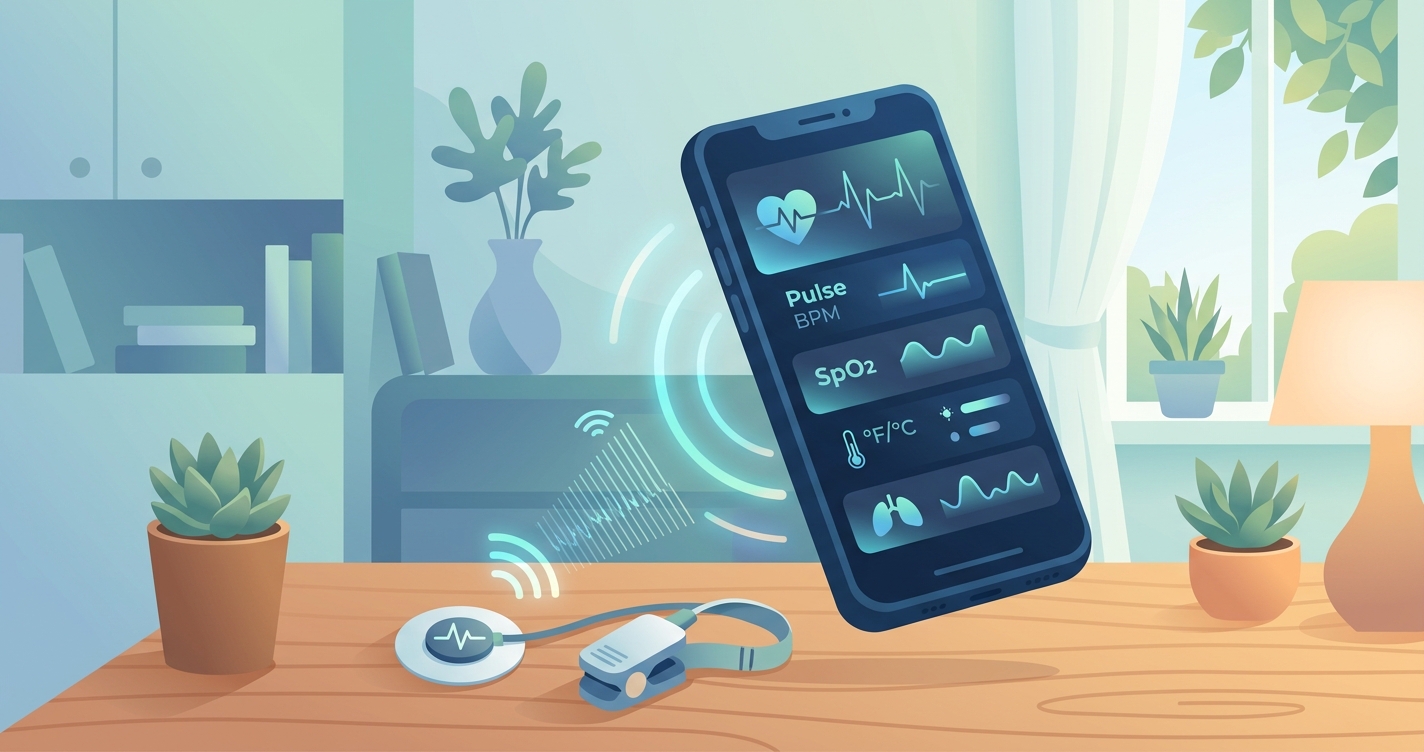
Managing patients post-discharge is a complex logistical challenge for population health directors, but few conditions present a higher financial and clinical risk than sepsis. Surviving the initial acute hospitalization is only the first hurdle. Once a patient returns home, their physiological vulnerability remains high, and early signs of a recurring infection are notoriously subtle. Historically, health systems have relied on shipping boxes of wearable monitors to track high-risk discharges, only to face single-digit compliance rates from exhausted patients. As readmission penalties mount, clinical leaders are shifting their strategy toward patient monitoring without devices. By turning the smartphone a patient already owns into a clinical-grade vital sign scanner, health systems can detect the earliest physiological markers of deterioration before a patient requires an emergency department visit.
"The median cost of a readmission for sepsis survivors is $20,320, and as many as 23.6 percent of adult sepsis survivors are readmitted to the hospital within thirty days of their initial discharge."
- AACN Researchers, Readmissions in Sepsis Survivors: Discharge Setting Risks (2024)
The economics of post-discharge sepsis
Sepsis is one of the most expensive conditions treated in the United States healthcare system. Acute hospitalizations and subsequent skilled nursing care cost the system an estimated $62 billion annually. However, the financial burden does not end when the patient leaves the facility. According to recent health economic analyses, the median total healthcare cost for sepsis survivors in the first year after discharge is $28,719 (in 2022 US dollars).
Readmissions drive a massive portion of this subsequent cost. For a population health vice president managing risk-based contracts, a 23.6 percent readmission rate is disastrous for value-based care performance. Readmission penalty programs rigorously penalize hospitals for returns to the emergency department that could have been prevented with appropriate ambulatory oversight.
The traditional approach to this problem involves remote patient monitoring programs built around hardware. Hospitals ship pulse oximeters, blood pressure cuffs, and wearable chest straps to the patient's home. The patient is expected to charge the devices, pair them via Bluetooth, and wear them continuously. For a patient recovering from a massive systemic infection, this physical and cognitive burden is often too high. Devices end up in a drawer, data stops flowing, and the hospital is left blind to the patient's physiological status until they arrive back at the emergency department in septic shock.
Evaluating patient monitoring without devices
To solve the adherence problem, health systems are actively evaluating patient monitoring without devices. This methodology utilizes remote photoplethysmography (rPPG) and artificial intelligence to extract vital signs directly from a standard smartphone camera.
When a patient looks at their phone screen, the camera captures microscopic changes in skin pixel intensity caused by blood volume oscillating beneath the skin with each heartbeat. When ambient light hits the patient's face, the hemoglobin in their blood absorbs a specific amount of that light. As the heart pumps blood, the volume of blood in the facial microvascular bed changes. During systole, when blood volume is high, more light is absorbed, and less is reflected back to the camera. During diastole, the opposite occurs.
These microscopic changes in skin pixel intensity are invisible to the naked eye but easily captured by standard high-definition smartphone cameras. Advanced algorithms process these video frames to calculate an accurate heart rate and extract the respiratory rate from the subtle movements of the chest and shoulders, as well as sympathetic nervous system responses. Because the patient uses hardware they already own and know how to operate, adherence rates rise significantly.
Comparing traditional wearables to contactless programs
Health systems transitioning their post-sepsis care protocols must weigh the operational differences between legacy hardware and modern contactless platforms.
| Feature | Wearable Hardware Monitoring | Patient Monitoring Without Devices | | :--- | :--- | :--- | | Patient Adherence | Low (requires charging, wearing, pairing) | High (uses patient's existing smartphone) | | Deployment Cost | High (purchasing and shipping physical kits) | Low (software application or web link) | | Logistics Burden | Significant (inventory tracking, retrieval) | None (no hardware to ship or retrieve) | | Primary Sepsis Metrics | Heart rate, oxygen saturation | Heart rate, respiratory rate | | Accessibility | Limited by supply chain and shipping times | Instantaneous upon discharge |
Key clinical indicators for remote sepsis tracking
Sepsis does not typically manifest suddenly without warning. The body signals physiological distress hours or even days before a catastrophic failure. Tracking these changes requires a consistent baseline. Contactless monitoring programs focus on several critical vital sign shifts:
- Elevated resting heart rate: Tachycardia is often the earliest systemic inflammatory response to an infection. A baseline heart rate that slowly creeps upward over a period of 48 hours is a primary warning sign.
- Changes in respiratory rate: Tachypnea, or rapid breathing, is a highly sensitive indicator of physiological distress. It is frequently the first vital sign to become abnormal in sepsis, yet it is notoriously difficult to track with traditional wearables.
- Heart rate variability shifts: A decrease in heart rate variability indicates that the autonomic nervous system is under stress, often before a fever develops.
- Temperature fluctuations: While contactless monitoring primarily focuses on cardiopulmonary metrics, subjective reports of chills combined with an objectively elevated resting heart rate provide a powerful diagnostic baseline.
- Oxygen saturation variations: Advanced algorithms are actively researching the extraction of peripheral oxygen saturation from video feeds, adding another layer of security for post-discharge patients.
Industry applications: scaling care at home
As the technology behind camera-based vital sign capture matures, healthcare organizations are deploying it across multiple strategic initiatives to improve post-discharge outcomes.
Preventing readmission penalties
Chief Medical Officers and population health leaders use contactless monitoring to build safety nets for their most vulnerable discharges. By tracking respiratory rate and heart rate daily, care teams receive automated alerts when a patient deviates from their post-discharge baseline. This allows a nurse practitioner to intervene, prescribe oral antibiotics, or adjust a care plan while the patient is still stable at home.
Virtual nursing workflows
The national nursing shortage has accelerated the adoption of virtual nursing programs, shifting many routine post-discharge check-ins to a telehealth format. However, traditional telehealth relies purely on subjective patient reports. A patient might say they feel fine, while their resting heart rate is quietly sitting at 110 beats per minute. Virtual nurses can use patient monitoring without devices to gather objective data during these routine calls. While the patient speaks with the nurse through a secure video interface, the underlying software analyzes their facial blood flow to provide real-time heart rate and respiratory rate readings. This transforms a simple wellness check into a clinical assessment, adding rigor to the remote visit and empowering the virtual nurse to make evidence-based triage decisions.
Reducing hardware logistics
Hospital-at-home programs and remote monitoring initiatives frequently stall due to the hidden complexities of logistics. Managing a fleet of Bluetooth-connected medical devices requires dedicated warehouse space, expensive cellular data contracts, and dedicated staff to clean, test, and repackage returned equipment. Furthermore, lost or unreturned devices represent a constant drain on the program's operating budget. Transitioning to a software-only model eliminates the entire physical device supply chain. Because the technology lives entirely in the cloud and operates through a secure application, health systems can enroll thousands of patients at a fraction of the traditional cost, redirecting those funds toward clinical personnel rather than plastic hardware.
Current research and evidence
The shift toward contactless vital sign capture is supported by a robust body of academic research and clinical validation. The foundational physics of capturing heart rate through a camera were demonstrated in 2008 by researchers W. Verkruysse, L. O. Svaasand, and J. S. Nelson, who proved that ambient light and standard digital cameras could detect remote plethysmographic signals.
Research specifically addressing post-discharge outcomes highlights the urgency of this transition. A 2024 analysis published in AACN Journals titled "Readmissions in Sepsis Survivors: Discharge Setting Risks" analyzed the trajectories of adult sepsis survivors. The researchers found that the discharge setting and the lack of structured ambulatory monitoring significantly increased the risk of readmission. The data revealed that patients discharged directly home without intensive monitoring had a higher likelihood of returning to the hospital within thirty days, reinforcing the need for scalable monitoring solutions.
Since then, the methodology has advanced significantly. A 2023 study published in JAMIA Open analyzed the performance effectiveness of vital parameter combinations for early warning of sepsis. The researchers utilized machine learning algorithms and found that monitoring the trends of heart rate and respiratory rate together provides high predictability for sepsis up to six hours before traditional clinical diagnosis. This makes the precise measurement of respiratory rate a critical requirement for any home monitoring program.
Furthermore, a 2024 observational prospective study managed through ClinicalTrials.gov is currently evaluating the accuracy of cell phone-based remote photoplethysmography in emergency department settings. As the evidence base grows, the consensus among researchers is that continuous or daily monitoring of basic vital signs is far more effective at predicting patient deterioration than sporadic, device-dependent spot checks.
The future of post-discharge sepsis detection
The future of managing sepsis recovery at home relies on making data collection completely invisible to the patient. When healthcare organizations remove the friction of charging hardware and syncing Bluetooth sensors, they gain access to continuous, longitudinal data that was previously impossible to acquire. Predictive algorithms will become vastly more sophisticated, learning the unique physiological baseline of each individual patient rather than relying on generalized clinical thresholds that often generate false alarms.
As camera technology in consumer smartphones continues to improve, with higher frame rates and better low-light performance, the resolution and accuracy of remote photoplethysmography will only increase. We are moving toward a paradigm where a simple daily video check-in can analyze facial blood flow, track respiratory effort, and measure autonomic nervous system stress all at once. Ultimately, the goal is to shift sepsis care entirely from reactive emergency room treatments to proactive, ambulatory interventions, preserving hospital capacity for the most critically ill while keeping recovering patients safely in their own beds.
Frequently asked questions
What are the earliest signs of sepsis that can be monitored at home?
Elevated heart rate and increased respiratory rate are two of the earliest physiological indicators of sepsis. These vital signs often change hours before a patient develops a fever or feels subjectively unwell.
How does patient monitoring without devices actually measure vital signs?
The technology uses a process called remote photoplethysmography. A smartphone camera detects microscopic changes in the color of the patient's skin, which correspond to blood volume changes with each heartbeat. Algorithms then calculate heart rate and respiratory rate from these video frames.
Why do health systems struggle with traditional wearable monitors?
Traditional monitors require patients to charge batteries, pair devices to networks, and physically wear equipment. For patients recovering from severe illness, this process is exhausting, leading to low adherence rates. Additionally, shipping and managing physical hardware is highly expensive for hospitals.
Can a smartphone camera replace a hospital monitor?
While a smartphone camera cannot replace the continuous, multi-parameter intensive care unit monitors used for critically ill patients, it provides highly accurate spot checks for stable patients recovering at home, serving as a reliable early warning system for physiological deterioration.
Circadify is addressing this space by providing a platform for camera-based vital sign capture that eliminates hardware logistics entirely. For health systems ready to implement patient monitoring without devices, launching an RPM pilot program is the first step toward reducing readmissions, improving patient adherence, and protecting value-based care margins.