Remote Patient Monitoring Camera: How It Works in 2026
How a remote patient monitoring camera reads vital signs at home in 2026, the science behind contactless measurement, and what care-at-home leaders should know.
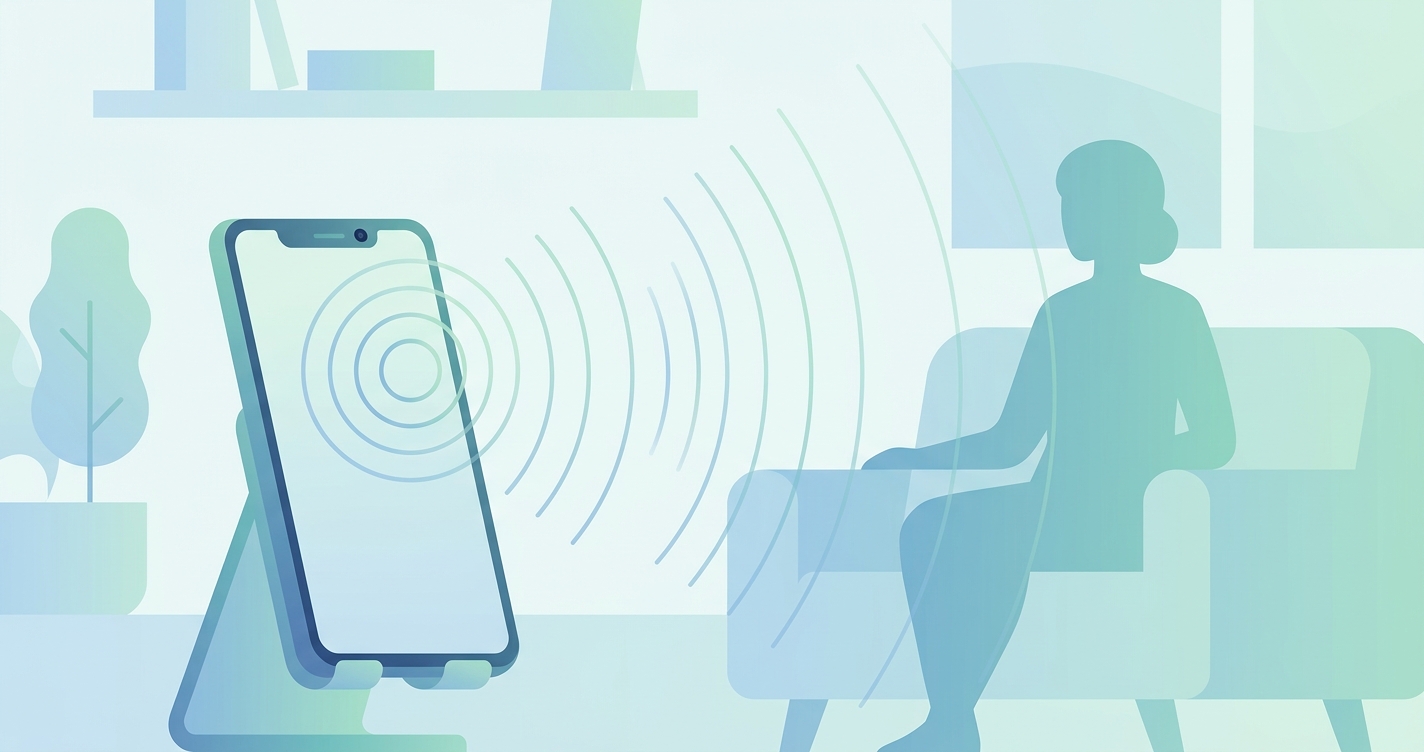
Camera-based vital sign measurement has moved from research labs into real hospital-at-home programs, and the questions arriving in clinical leadership inboxes have changed accordingly. The conversation is no longer whether a lens can read a pulse, but how reliably it can do so across diverse patients, lighting conditions, and home environments. A remote patient monitoring camera works by reading tiny optical and motion signals that the human eye cannot perceive, converting an ordinary phone, tablet, or fixed sensor into a source of heart rate, respiratory rate, and other vital trends. For care-at-home program directors weighing expansion, understanding the mechanism matters as much as understanding the marketing.
"Camera-based monitoring offers advantages including lower financial costs, reduced visit times, increased patient comfort, and improved safety for healthcare professionals." - Findings summarized in a 2025 systematic review of non-contact vision-based vital sign techniques, published in MDPI Sensors.
How a remote patient monitoring camera measures vitals
The core science behind most camera-based patient monitoring is remote photoplethysmography, usually shortened to rPPG. Every time the heart beats, a pulse of blood moves through the small vessels just beneath the skin, especially in the face. That pulse slightly changes how much light the skin absorbs and reflects. The shift is far too subtle to see, but a camera sensor records it across dozens of frames per second. Software isolates the green-channel color variation in skin regions, filters out noise, and reconstructs a waveform that tracks the cardiac cycle. From that waveform, an algorithm derives heart rate and heart rate variability.
Respiratory rate is read a second way. As a person breathes, the chest, shoulders, and head move in small, rhythmic patterns. Techniques such as Eulerian Video Magnification amplify these micro-motions in the video signal so the breathing cadence can be counted. Some systems combine the optical pulse signal with motion analysis to estimate respiration even when chest movement is partly obscured.
More advanced pipelines layer machine learning on top. Instead of relying only on hand-tuned color filters, neural networks learn to map raw video to physiological signals, which helps the system stay accurate when a patient turns their head, the room dims, or skin tone varies. This is the direction most of how RPM cameras measure vitals research has taken since 2023.
The practical inputs are modest:
- A standard RGB camera found in any recent smartphone or tablet
- Adequate, reasonably stable ambient light
- The patient's face or upper body in frame for roughly 30 to 60 seconds
- A network connection to move the signal to secure processing
The outputs that matter to a care team include heart rate, respiratory rate, and trend data over time. Blood oxygen and blood pressure estimation are areas of active development, with accuracy that varies more than heart rate.
Camera-based vs device-based monitoring
The contrast that program directors care about is operational, not just technical. The table below compares contactless camera measurement against the wearable and peripheral devices that have defined the first generation of remote programs.
| Factor | Remote patient monitoring camera | Wearable / peripheral devices | | --- | --- | --- | | Hardware to ship | None; uses patient's own phone or tablet | Cuffs, oximeters, patches, hubs | | Patient setup burden | Open app, face the camera | Charge, pair, wear, replace | | Adherence risk | Lower; nothing to forget or wear | Higher; devices abandoned over time | | Vitals captured | HR, respiratory rate, trends; SpO2/BP emerging | HR, SpO2, BP depending on device | | Continuous vs spot | Spot checks or scheduled sessions | Spot or continuous by device type | | Cost per patient | Low marginal cost | Device, logistics, replacement cost | | Sensitivity to motion/light | Yes; needs stable framing and light | Less so; contact sensors |
Neither approach is universally superior. Contact devices still hold an edge for continuous overnight capture and for measurements like cuff-based blood pressure. The camera's advantage shows up in scale and adherence, the two places where conventional programs most often stall.
Industry Applications
Hospital-at-Home Programs
Acute care delivered in the home depends on frequent, reliable vital sign checks. A remote patient monitoring camera lets a patient complete a structured check-in without a nurse physically present and without juggling several peripherals. For programs managing dozens or hundreds of concurrent patients, reducing the per-check labor and equipment overhead changes the economics of scaling.
Post-discharge and readmission reduction
The days after discharge are when deterioration most often goes unnoticed. Brief daily camera sessions create a trend line for heart rate and respiratory rate, the same early signals clinicians watch for on a ward. Catching an upward drift in resting heart rate or breathing rate can prompt an outreach call before a patient ends up back in the emergency department.
Virtual nursing and capacity relief
Virtual nursing models stretch scarce clinical staff across more patients. When vitals arrive through a camera the patient already owns, the nurse spends time interpreting data and talking to patients rather than troubleshooting hardware. That shift directly addresses the staffing constraints driving most care-at-home expansion decisions.
Current research and evidence
The evidence base for camera-based patient monitoring has matured but remains honest about limits. A 2025 systematic review in MDPI Sensors cataloged non-contact vision techniques across visible, near-infrared, and far-infrared spectrums and found heart and respiratory rate estimation to be the most established outputs. Validation work on respiratory rate using Eulerian Video Magnification has reported error rates around 1.5 percent in controlled conditions.
Accuracy is not constant across all scenarios. Researchers Bhargav Acharya, William Saakyan, Professor Barbara Hammer, and Hanna Drimalla at Bielefeld University reported in 2025 that rPPG heart rate accuracy drops sharply at elevated heart rates, a reminder that resting and near-resting measurement is where the technology is strongest. A separate 2025 study of a non-contact photoplethysmography mobile application found excellent agreement for heart rate and blood oxygen saturation but only moderate agreement for systolic and diastolic blood pressure, consistent with the broader literature that camera-based blood pressure is promising but not yet equivalent to a cuff.
Hardware-focused work has shown the approach can run efficiently. A study published in PMC, "Contactless Camera-Based Heart Rate and Respiratory Rate Monitoring Using AI on Hardware," demonstrated that AI models can extract both signals on constrained devices. Earlier proof-of-concept work mattered too: in 2020, researchers at MIT and Brigham and Women's Hospital mounted computer vision on a mobile robot to read breathing rate, pulse, and oxygen saturation without contact, establishing feasibility in a clinical setting.
The consistent themes across these studies:
- Heart rate and respiratory rate are the most validated camera-derived vitals
- Motion and lighting remain the primary accuracy challenges
- Machine learning narrows the gap across skin tones and conditions
- Blood pressure and SpO2 from camera alone are advancing but still variable
The future of camera-based monitoring
Three trajectories are visible heading deeper into 2026. First, multi-modal fusion: combining camera signals with radio-frequency sensing or depth cameras to hold accuracy when a patient moves or light shifts. A 2025 MIT thesis described extracting high-fidelity breathing signals from ambient radio reflections, pointing toward systems that blend optical and RF inputs. Second, broader vital coverage, as blood pressure and oxygen estimation move from moderate toward clinically useful agreement through better models and larger, more diverse training data. Third, deeper workflow integration, where camera readings flow automatically into the same dashboards and alerting logic clinicians already use, rather than living in a separate app.
For care-at-home leaders, the strategic point is that adherence, not raw sensor precision, is usually the bottleneck in remote programs. A measurement that is slightly less precise but consistently captured can outperform a more precise device that patients stop using. The future of the field will be decided as much by patient behavior as by signal processing.
Frequently asked questions
What vital signs can a remote patient monitoring camera actually measure?
Heart rate and respiratory rate are the most established and validated camera-derived vitals as of 2026. Heart rate variability and general trend data are also reliable. Blood oxygen saturation and blood pressure can be estimated by some systems, but accuracy for these is more variable and is an active area of research rather than a settled capability.
How accurate is camera-based vital sign measurement compared to a device?
For resting heart rate and respiratory rate, peer-reviewed studies report strong agreement with reference devices under good conditions. Accuracy declines with movement, poor lighting, and elevated heart rates, as a 2025 Bielefeld University study documented. Contact devices still lead for continuous overnight capture and cuff-based blood pressure.
Does the patient need special equipment or a wearable?
No. The defining feature of camera-based patient monitoring is that it runs on a standard smartphone or tablet the patient already owns. There is nothing to charge, pair, wear, or replace, which is why these programs often see better adherence than device-dependent ones.
Is a camera-based check continuous or a spot reading?
Most home programs use scheduled or on-demand sessions lasting roughly 30 to 60 seconds rather than continuous video. This produces a trend line of vital signs over days and weeks, which is what clinicians use to spot early deterioration.
Circadify is building camera-based remote patient monitoring designed around the adherence problem that limits conventional programs, turning a device patients already own into a source of vital sign trends clinical teams can act on. Care-at-home program directors evaluating contactless monitoring can explore an RPM pilot program and request a platform demo at circadify.com/solutions/remote-patient-monitoring.