How RPM With No Wearable Helps Prevent Falls in Seniors
Discover how an RPM no wearable model uses contactless camera technology to continuously monitor elderly patients, prevent falls, and improve home safety.
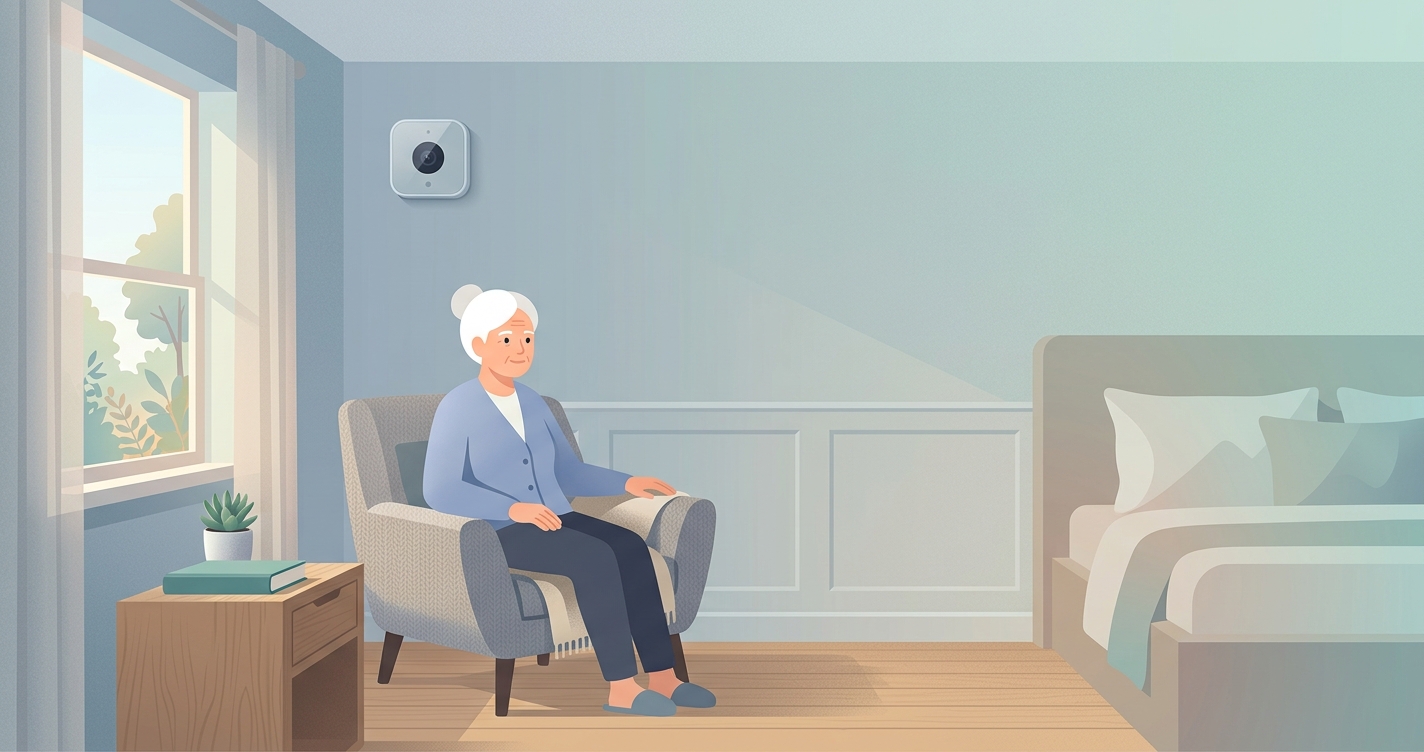
The expansion of hospital-at-home programs and geriatric population health initiatives forces care directors to confront a persistent operational threat: patient falls. Discharging an elderly patient to an empty home creates a significant vulnerability gap, often addressed by issuing wearable fall-detection pendants or smartwatches. However, compliance remains structurally flawed. Patients forget to wear the devices, remove them to shower, or fail to keep them charged, rendering the technology useless exactly when it is needed most. For health systems managing high-risk elderly populations, shifting to an RPM no wearable framework represents a transition from relying on patient compliance to ensuring passive, continuous safety. By utilizing contactless camera systems, clinical teams can monitor mobility, identify early warning signs of physical decline, and detect falls the moment they happen without requiring the patient to interact with a physical device. This approach entirely redesigns post-acute logistics, replacing complex hardware distribution with ambient infrastructure that works the moment it is plugged in.
"In 2023, nearly one in three adults aged 65 and older reported a fall, leading to over 3.85 million emergency department treatments. The healthcare costs for non-fatal older adult falls totaled approximately $80 billion in 2020, with projections indicating an increase to over $101 billion by 2030." , Centers for Disease Control and Prevention, Healthcare spending for non-fatal falls among older adults, 2023
The compliance problem and RPM no wearable
When health systems evaluate fall detection without wearables, they are actively trying to solve the adherence problem inherent to traditional remote monitoring for the elderly. Wearables require a series of daily actions that are difficult for aging patients, particularly those recovering from acute illnesses or managing cognitive decline. A device must be worn consistently, positioned correctly, and charged regularly. If a patient removes a smartwatch before bed because it causes skin irritation, the monitoring system is entirely blind during nocturnal trips to the bathroom, which are historically high-risk events for falls.
The implementation of an RPM no wearable system removes the burden of action from the patient. Contactless technology relies on ambient sensors and optical cameras placed strategically in the living environment. These systems run continuously in the background, utilizing computer vision and advanced pose-estimation algorithms to monitor the patient. If the system detects a rapid change in elevation or an abnormal resting position on the floor, it triggers an immediate alert to the remote care team.
This passive approach is especially critical for patients with dementia or severe neuropathy, who may not remember to press a panic button after a fall, or who may lack the physical dexterity to do so. By eliminating the hardware interface, care-at-home program directors can guarantee that monitoring is active regardless of the patient's cognitive state or daily routine. This continuous, unbroken stream of data is what transforms a reactive alert system into a true safety net.
Traditional wearables vs. contactless camera systems
For hospital CMOs comparing senior safety at home solutions, the operational differences between standard wearables and contactless models dictate program efficacy and long-term costs.
| Feature | Wearable Pendants & Smartwatches | Camera-Based Contactless RPM | | :--- | :--- | :--- | | Patient Compliance Required | High (Must be worn and charged daily) | None (Passive continuous monitoring) | | Fall Detection Mechanism | Accelerometer and manual button press | AI pose estimation and elevation tracking | | Cognitive Barrier | High (Requires memory and active participation) | Low (No patient action required) | | Gait Analysis Capability | Limited to step counting and basic movement | High (Full body kinematic tracking) | | Device Fatigue & Skin Irritation | Common among elderly patients | Eliminated entirely | | Maintenance Burden | Ongoing battery management by patient | Powered independently via wall outlet |
Core mechanisms of contactless fall detection
The shift toward patient monitoring without devices relies on sophisticated optical and algorithmic frameworks. Rather than looking for the physical impact registered by an accelerometer, optical systems analyze human geometry in real time. This technical leap allows for far more granular data collection.
- Three-Dimensional Pose Estimation: Cameras map the human body into a series of skeletal joints, tracking the spatial relationship between the head, torso, and limbs to differentiate between a controlled sit and an uncontrolled fall. This prevents the false alarms commonly triggered by a dropped wearable device.
- Ambient Illumination Processing: Modern sensors utilize infrared arrays to maintain visibility in complete darkness, ensuring continuous monitoring during high-risk nighttime hours when traditional clinical supervision is at its lowest.
- Privacy-Preserving Edge Computing: Advanced systems process video data locally on the device, converting visual input into binary telemetry data (e.g., standing, sitting, fallen) without transmitting identifiable video feeds to the cloud. This architecture satisfies stringent healthcare data compliance standards.
- Micro-Mobility Tracking: Algorithms monitor slight changes in gait speed, stride length, and posture over days and weeks to identify physical degradation before a fall actually occurs. This allows care teams to intervene days in advance.
Industry Applications
The deployment of contactless remote monitoring serves distinct functions across different clinical operating models, each prioritizing different aspects of senior care and risk management.
Hospital at home and acute recovery
In the hospital-at-home model, patients are often discharged while still in a fragile state. The introduction of new medications, particularly antihypertensives or heavy analgesics, can cause sudden dizziness and orthostatic hypotension. In these environments, an RPM no wearable setup functions identically to a continuous observation unit in a traditional hospital. Virtual nursing teams receive instantaneous alerts if a patient attempts to leave their bed unassisted, allowing clinical staff to intervene via two-way audio before a fall happens. This immediate feedback loop is critical for preventing readmissions during the first 72 hours post-discharge.
Population health and geriatric care management
For population health VPs managing thousands of Medicare beneficiaries, the goal is long-term risk mitigation. In chronic care management, falls are a leading driver of high-cost hospital readmissions, resulting in thousands of dollars in uncompensated care and extended rehabilitation stays. Contactless systems provide longitudinal data on a patient's mobility, functioning as a continuous diagnostic tool. If a system notes that an elderly patient now takes twice as long to walk from the bed to the door compared to the previous month, care coordinators can preemptively schedule a physical therapy evaluation or a home safety audit. This shift from reactive emergency response to proactive mobility management is the primary financial driver for adopting camera-based remote patient monitoring across large risk-bearing organizations. By identifying the decline before the injury occurs, health systems preserve their margins while dramatically improving the quality of life for their patients.
Current research and evidence
Clinical literature increasingly supports the efficacy of contactless infrastructure for reducing adverse events in older adults. Traditional fall prevention relies heavily on physical restraints or continuous human observation, both of which are resource-intensive and ethically complex.
A 2024 analysis published by the Agency for Healthcare Research and Quality evaluated the impact of remote video monitoring in acute care settings. The clinical data demonstrated that intelligent video systems, when combined with standard clinical precautions, reduced patient falls by 33.7 percent and fall-related injuries by 47.4 percent. The researchers noted that the technology allowed for rapid intervention without requiring a physical sitter in the room, solving a major staffing constraint for nursing managers.
Furthermore, studies utilizing 3D depth cameras, such as those evaluated in recent Frontiers in Digital Health publications (2023), indicate that camera-based gait analysis is highly accurate in identifying fall risks. By comparing optical skeletal tracking to traditional wearable sensors, researchers concluded that contactless systems deliver comparable or superior clinical data without the friction of patient non-compliance. These findings confirm that optical pose estimation is clinically valid for remote vestibular and gait analysis. The elimination of the hardware interface allows clinical researchers to gather uninterrupted data sets, free from the gaps typically caused by a patient forgetting to charge their device.
The future of remote senior safety
The next iteration of senior safety at home will move beyond simple event detection. As artificial intelligence models mature, the focus is shifting toward predictive analytics. Future contactless platforms will aggregate thousands of micro-movements, the slight hesitation before standing, the minor widening of a stance for balance, to generate a real-time fall probability score.
Health systems will integrate these predictive scores directly into the electronic health record. When a patient's probability score crosses a specific threshold, automated workflows will dispatch a home health aide or trigger a medication review, entirely bypassing the need for a catastrophic event to initiate care. This evolution will firmly establish camera-based monitoring as the standard of care for aging populations, transforming the home into a truly intelligent clinical space.
Frequently asked questions
How does a contactless camera system detect a fall?
The system utilizes advanced pose estimation algorithms to track the skeletal structure of the patient. If the algorithm detects a sudden change in vertical orientation or recognizes that the patient has come to rest on the floor, it immediately signals the remote care team to initiate an intervention.
Will the system work if the room is completely dark?
Yes. Clinical-grade camera systems are equipped with infrared sensors that allow for complete visibility in low-light and zero-light conditions. This is essential for monitoring nocturnal bathroom trips, which represent a high percentage of senior falls.
Are there privacy concerns with having a camera in the home?
Privacy is a central design consideration for medical monitoring. Modern systems utilize edge computing, meaning the video feed is analyzed locally by the device processor. Only the vital data and alerts are sent to the clinical dashboard, ensuring that raw, identifiable video is not recorded or stored.
What happens if the patient leaves the camera's field of view?
Standard setups involve strategically placing sensors in high-risk areas, such as the bedroom or living room, to maximize coverage. If a patient leaves the field of view, the system logs their absence. Prolonged absences outside of normal behavioral patterns, such as spending an unusually long time in an unmonitored room, can also trigger an alert for the care team to check in on the patient.
Circadify is actively addressing the complexities of geriatric monitoring with technology that prioritizes passive safety over patient compliance. For health systems looking to protect their most vulnerable populations at home, evaluating a robust RPM pilot program is the necessary next step.