How can my hospital know if I'm getting enough sleep without me wearing anything?
How sleep monitoring without wearables lets hospitals track patient rest passively. A research view for population health teams on contactless RPM and well-being.
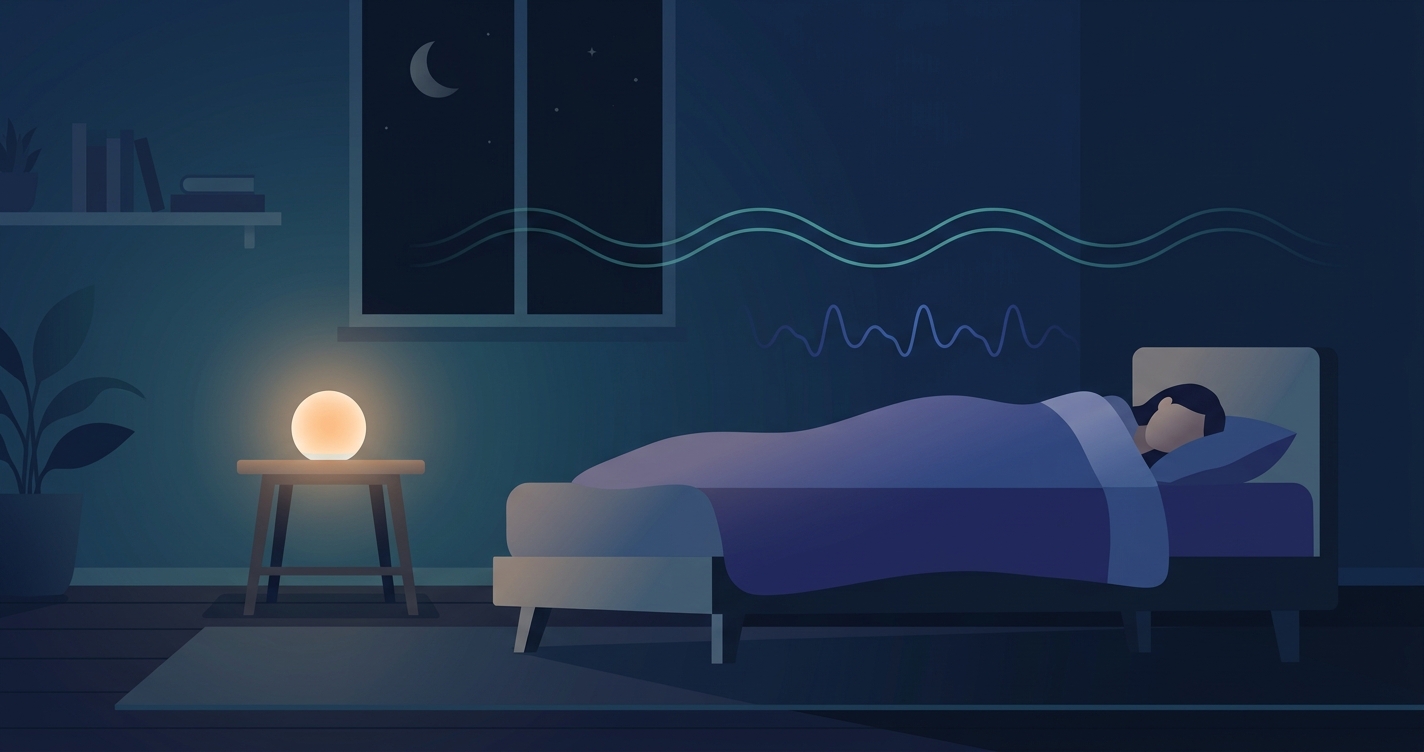
If your care team asked about your sleep after a hospital stay, you might wonder how they could possibly know whether you slept six hours or two without strapping a band to your wrist or clipping a sensor to your finger. The answer is that a growing class of passive technology can infer rest from the room and the bed around you. Sleep monitoring without wearables has become a serious area of interest for health systems precisely because rest is one of the strongest early signals of how a recovery is going, and because the devices patients are asked to wear are the ones they most often abandon. For population health teams managing thousands of discharged patients, the practical question is not whether sleep matters, but how to observe it at scale without depending on someone remembering to charge and wear a gadget every night.
A 2023 analysis of 6,908 hospitalizations found that patients with obstructive sleep apnea and heart failure with reduced ejection fraction had a 30-day all-cause readmission rate of 23.4 percent, with total readmission charges estimated at $195 million. Source: Impact of sleep apnoea on 30-day hospital readmission, PMC, 2023.
Why sleep monitoring without wearables matters for population health
Sleep is not a vanity metric. Disrupted rest is associated with worsening heart failure, poor glycemic control, delirium risk in older adults, and slower post-surgical recovery. The problem for a population health VP is observability. Traditional sleep assessment relies on either a patient-reported diary, which is subjective and often skipped, or polysomnography, which is expensive and confined to a lab. Neither scales to a hospital-at-home census of hundreds of patients.
Sleep monitoring without wearables closes that gap by reading physiological and movement signals passively, from the environment rather than from the body. The category generally splits into three approaches: radar or radio-frequency sensing placed at the bedside, ballistocardiography (BCG) sensors embedded under a mattress or sheet, and camera-based optical sensing that reads breathing motion and stillness. Each captures a different slice of the same picture: when a person fell asleep, how long they stayed down, how restless the night was, and what their heart and breathing rates looked like while at rest.
The appeal for care-at-home programs is straightforward. A passive sensor has no compliance curve. There is nothing to charge, nothing to remember, and nothing that signals "you are sick" the way a clinical-looking wristband does. Adherence, the metric that quietly determines whether any RPM program produces usable data, becomes a function of installation rather than daily patient behavior.
| Monitoring approach | Patient action required | Captures sleep timing | Captures heart/breathing rate | Main limitation | |---|---|---|---|---| | Wearable wrist device | Charge and wear nightly | Yes | Yes | Adherence drops over weeks | | Radar/RF bedside sensor | None after setup | Yes | Yes | Placement and multi-occupant rooms | | Under-mattress BCG sensor | None after setup | Yes | Yes | Weak at sleep-stage detection | | Camera-based optical sensing | None after setup | Yes | Yes (resting) | Requires line of sight, lighting | | Self-reported sleep diary | Manual entry daily | Approximate | No | Subjective, frequently skipped |
A few patterns are worth pulling out of that comparison:
- Every passive method shares one advantage that no wearable can match: the data keeps coming whether or not the patient is engaged.
- Resting heart rate and breathing rate are now measurable contactlessly with reasonable agreement to reference standards, while sleep staging remains the harder problem.
- The right approach often depends on the living environment, not just the technology, which is why platform flexibility matters more than any single sensor.
Industry applications for passive sleep tracking
Hospital-at-home and post-discharge programs
For acute care delivered in the home, sleep trends add context that spot vital checks miss. A patient whose nighttime breathing rate creeps up and whose rest fragments over three nights may be heading toward fluid overload before a daytime weight check flags it. Passive sleep data gives virtual nursing teams a continuous backdrop against which daytime readings make more sense.
Chronic disease and well-being surveillance
Heart failure, COPD, and diabetes management all benefit from rest data. Because sleep apnea and disordered breathing are so common in these groups, a contactless sensor that runs every night without patient effort can surface a problem that would otherwise wait for an annual sleep referral. For population health teams, this turns sleep from an occasional diagnostic event into an ongoing population signal.
Older adults and independent living
Among patients who live alone, passive monitoring answers a humane question: did this person rest, and did anything change? Families and care managers consistently resist solutions that feel like surveillance or require an elderly relative to operate a device. A sensor that simply observes the bed removes both the cognitive load and the stigma.
Current research and evidence
The validation literature for sleep monitoring without wearables is maturing. A 2023 prospective multicenter study of 11 consumer sleep trackers, including nearable radar and mattress-based devices, found substantial variation in sleep-stage classification, confirming that staging is still the weak point across the field. At the same time, vital-sign capture is performing well. A 2022 validation of the EMFIT ballistocardiograph against polysomnography found accurate measurement of average resting heart rate and sleep onset latency, even though sleep-wake agreement was modest.
Radar approaches have shown encouraging numbers. Researchers at Google reported a contactless bedside radar system reaching 87 percent epoch-by-epoch sleep-wake accuracy against polysomnography in healthy sleepers. On the vital-sign side, a 2024 RFID-based BCG mattress system demonstrated average absolute errors of about 1.8 beats per minute for heart rate and 0.6 breaths per minute for breathing rate, accuracy that is clinically meaningful for trend monitoring.
The clinical case for paying attention is equally documented. The 2023 readmission analysis cited above linked sleep-disordered breathing in heart failure to a 23.4 percent 30-day readmission rate, longer lengths of stay, and higher in-hospital mortality on readmission. When poor sleep is this tightly coupled to the outcomes population health teams are measured on, the value of observing it passively becomes a budget question, not just a clinical one.
The honest summary of the evidence is this: contactless systems are already reliable for rest timing and resting vital signs, and they are improving but not yet equivalent to lab polysomnography for fine-grained sleep staging. For population health surveillance, where the goal is detecting change over time rather than diagnosing a specific sleep disorder, that level of fidelity is often exactly what is needed.
The future of sleep monitoring without wearables
The trajectory points toward fusion. Rather than choosing radar or camera or mattress sensor, platforms are beginning to combine modalities so that strengths cover weaknesses, and machine learning models trained on larger, more diverse populations close the staging gap. Expect three shifts over the next few years: sleep data integrated directly into RPM dashboards alongside daytime vitals rather than living in a separate app, alerting logic that treats multi-night rest trends as a deterioration signal, and reimbursement frameworks that increasingly recognize passive monitoring as legitimate data collection. As radar and optical sensing improve at distinguishing multiple people in a room and operating in varied lighting, the remaining deployment frictions will fall away. The endpoint is a model where rest is monitored as routinely as blood pressure, with no patient burden at all.
Frequently asked questions
Can a hospital really tell if I slept without any device on my body? Yes. Passive sensors using radar, under-mattress ballistocardiography, or camera-based optical sensing can detect when you fell asleep, how long you rested, and your resting heart and breathing rates, all without contact. Validation studies show strong performance for rest timing and resting vital signs.
Is contactless sleep monitoring as accurate as a sleep lab? Not for detailed sleep staging. Polysomnography remains the gold standard for diagnosing specific sleep disorders. Contactless systems are accurate for tracking rest patterns and trends over time, which is what most remote monitoring and population health programs actually need.
Does passive sleep monitoring feel like surveillance? Most systems capture physiological signals such as movement, breathing, and heart rate rather than recording identifiable detail, and they require no daily action from the patient. Many patients and families find a passive sensor less intrusive than a wearable they must manage every night.
Why would my care team care about my sleep specifically? Disrupted sleep is an early signal in heart failure, COPD, diabetes, and post-surgical recovery. Research links sleep-disordered breathing in heart failure to a 23.4 percent 30-day readmission rate, so observing rest helps teams intervene before a problem escalates.
Circadify is addressing this space with camera-based remote monitoring designed around the reality that the most accurate device is the one a patient never has to think about. If your team is evaluating passive, no-wearable approaches to track patient well-being at scale, you can explore an RPM pilot program to see how contactless monitoring fits an existing population health workflow.