
Virtual Nursing Technology: 7 Ways It Eases Staffing Gaps
How virtual nursing technology stretches thin nursing staff, improves patient checks, and helps hospital CMOs plan a remote nursing rollout that works.
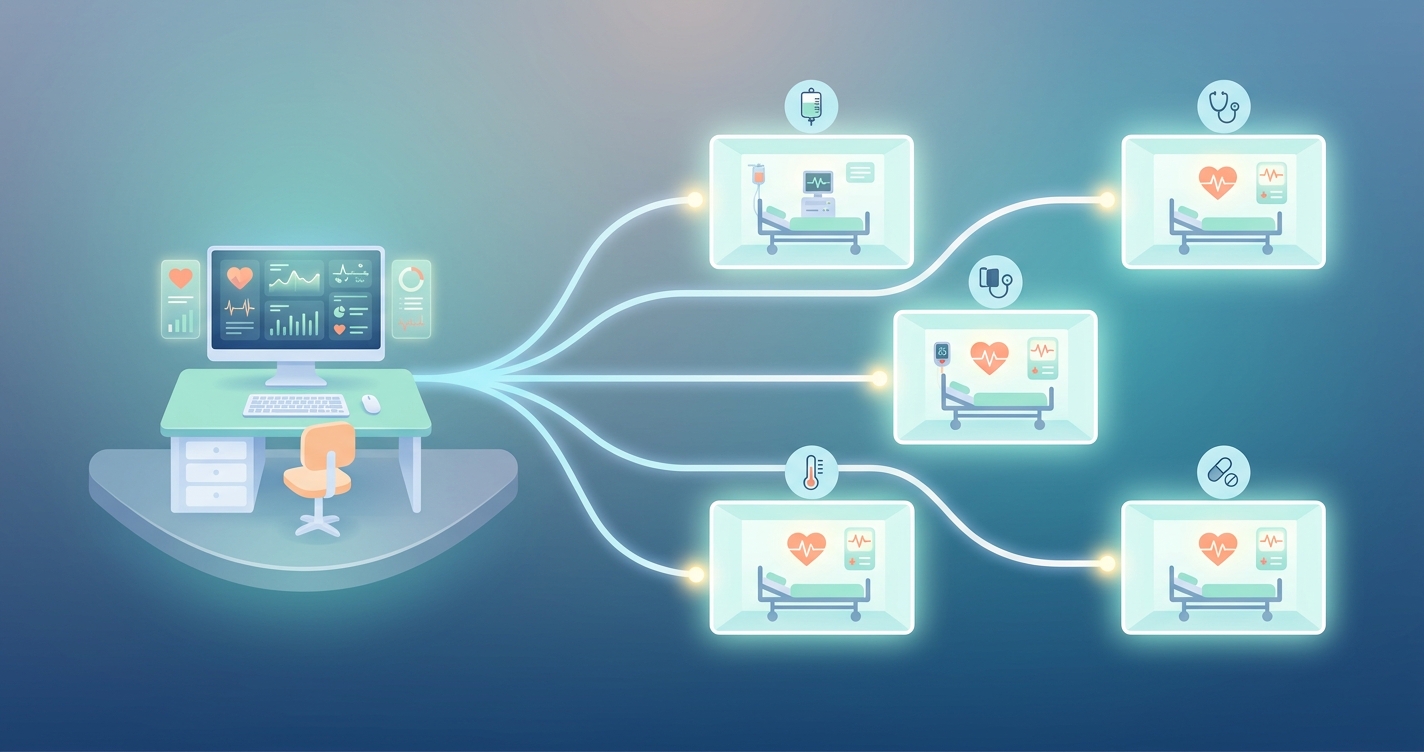
Hospital workforce math has stopped balancing. Acute care units are running with vacancy rates that would have triggered emergency planning a decade ago, and the experienced nurses who once absorbed that strain are the same people heading for the exit. Virtual nursing technology has moved from pilot curiosity to operating-model strategy because it answers a narrow but expensive question: how do you keep an experienced clinician involved in patient care when there are not enough bodies on the floor? The premise is simple. A remote nurse, supported by cameras, audio, and integrated documentation tools, handles the cognitive and administrative work that does not require hands at the bedside, freeing the on-site team to do the physical work that does.
A 2023 analysis from the American Nurses Association estimated roughly 100,000 registered nurses left the profession during the pandemic, with as many as 800,000 signaling intent to leave by 2027. Against that backdrop, AvaSure reported that 74% of hospital leaders believe virtual nursing will become integral to acute inpatient care delivery.
How virtual nursing technology closes the gap
Virtual nursing technology is not a single product. It is a layer of remote staffing built on a remote nursing platform that connects an off-unit nurse to patients and bedside colleagues through in-room cameras, two-way audio, and a shared electronic record. The model works because a meaningful share of nursing labor is documentation, education, and coordination, not direct physical care. When those tasks shift to a virtual care nursing role, the floor nurse reclaims time for assessments, medication administration, and the unpredictable events that genuinely require presence.
The results health systems are publishing point in a consistent direction. Advocate Health reported saving more than 43,000 nursing hours across 25 hospitals in 2024, with patient experience scores climbing by up to 80% on participating units. WellSpan Health, using virtual nursing tools across eight hospitals, reduced patient falls by 23% and recovered roughly 4,300 nursing hours. The mechanism behind those numbers is worth understanding before any CMO commits capital.
| Staffing pressure | Traditional bedside-only model | Virtual nursing technology model | |---|---|---| | Admission documentation | Floor nurse completes during peak workload | Remote nurse handles intake while bedside team triages | | Discharge education | Rushed at end of shift, often incomplete | Dedicated virtual session, teach-back verified | | Experienced staff retention | Senior nurses burn out or retire | Veterans mentor remotely from lower-strain roles | | Patient check frequency | Limited by physical rounding capacity | Continuous remote observation supplements rounds | | New-graduate support | Sparse, depends on charge nurse availability | On-demand virtual mentor for clinical questions | | Cost of coverage | Premium agency and overtime spend | Single remote nurse covers multiple units |
The seven functions that move the needle
- Admission intake and history. A virtual nurse completes medication reconciliation and admission paperwork while the bedside team stabilizes and assesses the patient.
- Discharge education with teach-back. Remote nurses run unhurried discharge sessions and confirm patient understanding, a known lever on readmission risk.
- Dual-nurse safety checks. Blood transfusions, high-alert medications, and other two-nurse verifications can use a remote second signer.
- Continuous patient observation. Camera-based monitoring extends check frequency between physical rounds, supporting fall and deterioration awareness.
- Mentorship for new graduates. Veteran nurses in virtual roles answer clinical questions in real time, shortening the experience gap.
- Documentation offload. Routine charting and order follow-up shift off the floor, cutting the administrative burden that drives burnout.
- Patient and family communication. Remote nurses field questions and coordinate care updates without pulling a floor nurse out of a room.
Industry applications across care settings
Acute inpatient units
Medical-surgical and telemetry floors have been the proving ground because they carry high documentation loads and moderate acuity. A single virtual nurse typically supports 30 to 60 patients across multiple units, concentrating on admissions and discharges where bottlenecks form. The Penn Leonard Davis Institute noted in its 2024 review that the model earns mixed marks: 53% of nurses reported improved care quality, but 57% said it did not reduce their personal workload and 10% felt it increased theirs. The lesson for program design is that virtual nursing succeeds when it removes specific tasks, not when it is layered on as additional oversight.
Hospital-at-home and post-discharge programs
The same remote nursing platform logic extends naturally beyond the hospital walls. As acute-care-at-home programs grow, a virtual nurse can run daily check-ins, review vital sign trends, and escalate concerns without a windshield visit. This is where camera-based remote patient monitoring becomes relevant: a virtual nurse can observe a patient's status and gather objective data without relying on a patient to wear and charge a device. Compliance failures with wearables are one of the quiet reasons home programs underperform, and contactless monitoring removes that point of friction.
Rural and access-constrained systems
Rural hospitals operate with the thinnest staffing and the largest catchment areas. Virtual care nursing lets a regional health system concentrate specialty nursing expertise centrally and distribute it across small facilities that could never recruit it locally. The remote nurse becomes a shared asset rather than a position each site must fill independently.
Current research and evidence
The evidence base is young but accumulating. A 2024 NIH-indexed review on virtual nursing for hospitalized patients catalogued early implementations and found consistent reductions in documentation time and improvements in discharge quality, while noting that rigorous outcome studies remain limited. The American Nurses Association, in its virtual nursing practice guidance, frames the model as a care-delivery redesign rather than a technology purchase, emphasizing that role clarity between virtual and bedside nurses determines success.
Operational data from large systems is more concrete than the academic literature so far. Beyond the Advocate and WellSpan figures, the Advisory Board's 2024 analysis of staffing ratios found that virtual nursing can support modest extensions of bedside nurse-to-patient ratios without measurable harm, provided the virtual layer absorbs admission and discharge work. Reported length-of-stay reductions cluster around 7% and readmission reductions around 2% in programs that staff virtual roles with experienced nurses rather than treating them as entry-level positions.
What the research does not yet settle is the durability of these gains and the right economic model. Early savings can come from reduced agency spend and overtime, but those depend on whether the virtual role is staffed internally or contracted. CMOs evaluating a rollout should treat published hour-savings figures as directional, not as guaranteed line-item returns.
The future of virtual nursing technology
The next phase moves from screen-and-camera setups toward platforms that supply objective clinical data, not just a video feed. A virtual nurse watching a patient on camera is limited to what the eye can see. The trajectory points toward integrating contactless vital sign capture, ambient monitoring, and trend analytics directly into the remote nursing workflow, so the off-unit nurse reasons from data rather than impression. That convergence matters most for hospital-at-home, where there is no bedside team to take a manual reading.
Expect three shifts over the next several years. First, the virtual nurse role will specialize, splitting into admission specialists, discharge educators, and observation roles rather than one generalist seat. Second, reimbursement will catch up, as payers recognize that virtual coverage changes total cost of care. Third, monitoring will become device-light, because every wearable handed to a patient is a compliance risk and a logistics cost. The systems that win will be the ones that pair experienced remote clinicians with monitoring that patients do not have to think about.
Frequently asked questions
What is virtual nursing technology?
It is a care-delivery model where a registered nurse works remotely, connected to patients and bedside staff through cameras, two-way audio, and a shared electronic health record. The virtual nurse handles admissions, discharge education, documentation, dual-nurse verifications, and patient communication so on-site nurses can focus on hands-on care.
Does virtual nursing actually reduce staffing strain?
It reduces strain when it removes specific tasks from the floor. Systems like Advocate Health and WellSpan have reported tens of thousands of recovered nursing hours. However, Penn LDI research shows that more than half of nurses did not feel their personal workload dropped, so program design and role clarity determine whether the relief is real.
How does virtual nursing apply to hospital-at-home?
A remote nurse can run daily check-ins, review vital sign trends, and escalate concerns without traveling to the patient. The model works best when paired with monitoring that captures objective data at home, ideally without requiring the patient to wear or charge a device, which is a common failure point in home programs.
Is virtual nursing financially worth it for a health system?
Early returns come from reduced agency and overtime spend plus fewer readmissions and shorter stays. Published savings are directional rather than guaranteed, and the economics depend heavily on whether virtual roles are staffed internally or contracted, and on whether the model genuinely offloads bedside work.
Circadify is building toward the data layer this model needs: camera-based remote patient monitoring that captures vital signs without wearables, so virtual nurses can reason from objective data instead of a video feed alone. Hospital leaders weighing a virtual nursing rollout can explore an RPM pilot program to see how contactless monitoring fits an extended virtual care strategy.