How can my nurse check on me multiple times a day from her office?
How virtual nursing technology lets a single nurse check on patients many times a day, and what it means for hospital staffing and care-at-home programs.
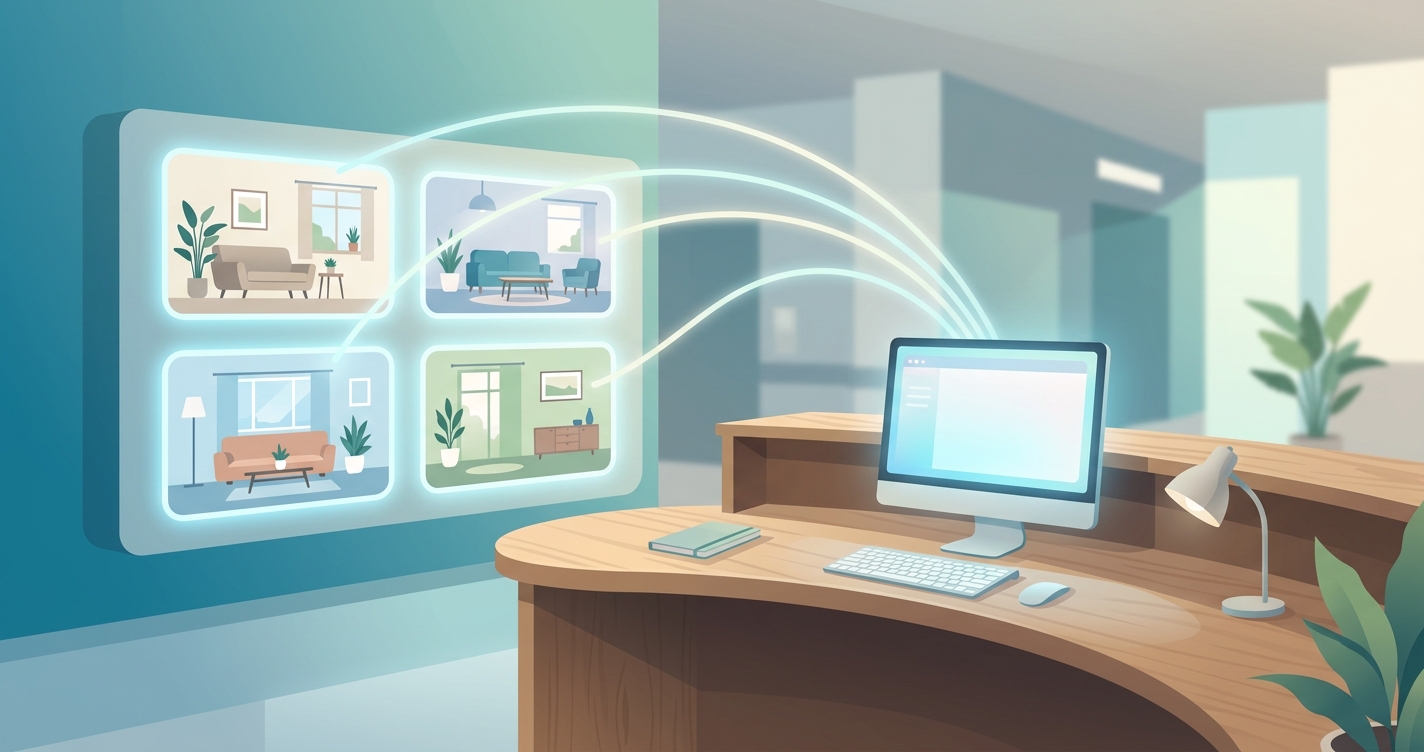
If a nurse can look in on you three or four times a day without driving to your house or pulling you into a clinic, the question that follows is a practical one: how does that actually work? The short answer is virtual nursing technology, a model that pairs a remote clinician with cameras, sensors, and software so that one experienced nurse can check on many patients from a central station. For you, it means more frequent touchpoints. For the hospital paying for it, it means stretching a scarce workforce without lowering the standard of attention you receive.
The shift is not a fringe experiment. It has moved into the core operating plans of large health systems, driven by a workforce shortage that bedside staffing alone cannot solve.
"Advocate Health saved more than 43,000 nursing hours across 25 hospitals in 2024 and reported roughly 6.3 million dollars in cost avoidance tied to reduced turnover, with virtual nursing cited as a contributing factor.", Epic case report, 2024
What virtual nursing technology actually does
Virtual nursing technology is best understood as a layer that sits on top of existing care, not a replacement for the person at the bedside or the body in the home. A virtual nurse works from a workstation, often miles away, and connects to you through a combination of two-way video, the electronic health record, and increasingly a stream of passive vital-sign data. That combination is what allows the multiple daily check-ins you asked about.
When the model is applied inside a hospital room, the virtual nurse handles admission interviews, medication history, discharge teaching, and scheduled rounding through a wall-mounted camera. When the same model extends to your home through a care-at-home or remote patient monitoring program, the camera and contactless sensing matter even more, because there is no in-room monitor to fall back on. A camera-based platform can read heart rate, respiratory rate, and movement without asking you to strap anything on, which is what makes frequent, low-friction check-ins realistic rather than aspirational.
The reason a single nurse can cover many patients comes down to how the work is split. Instead of one nurse physically walking to each room or each house, the technology brings each patient to the nurse's screen, and software flags who needs attention first.
| Check-in method | Touchpoints per patient per day | Nurse time per check | Patient effort | Best fit | | --- | --- | --- | --- | --- | | In-person home visit | 1 (if any) | 60-90 min incl. travel | Low | Acute, complex cases | | Phone call check-in | 1-2 | 10-15 min | Moderate (must answer) | Stable chronic patients | | Wearable-based RPM | Continuous data, periodic review | 5-10 min review | High (charging, wearing) | Motivated, tech-comfortable patients | | Video plus contactless RPM | 3-5 | 3-8 min per touch | Very low (no device) | Hospital-at-home, post-discharge |
The bottom row is where the multiple-daily-check-in promise lives. Passive monitoring means the nurse is not starting from zero each time she looks in; she sees a trend, decides whether a video call is warranted, and moves on.
Why frequency matters more than a single daily call
- More touchpoints catch deterioration earlier, before a small change becomes an emergency.
- Short, frequent contacts reassure patients and family without overwhelming the clinician.
- Passive data fills the gaps between video calls, so the nurse is never blind for 23 hours a day.
- Lower patient effort means higher participation, which is the difference between a program that works and one that quietly fails.
Industry applications for hospital leaders
For a chief medical officer or population health VP, the appeal of virtual nursing technology is rarely the gadgetry. It is the ability to redeploy experienced nurses to the work only they can do.
Inpatient virtual nursing
Inside the hospital, a virtual nurse takes administrative and educational tasks off the bedside team. WellSpan Health reported an 8 percent decrease in nurse turnover at one hospital and saved bedside nurses roughly 4,300 hours across eight hospitals after introducing virtual nursing. The model also keeps senior nurses who might otherwise retire, by offering a role that does not demand twelve hours on their feet.
Hospital-at-home and post-discharge monitoring
This is where the home-based version of the question becomes most relevant. A virtual nurse running a care-at-home panel can check on dozens of recovering patients in a shift because the data comes to her. Contactless monitoring removes the two biggest failure points of home programs: equipment logistics and patient compliance. There is nothing to ship, charge, or remember to wear.
Chronic disease and high-risk populations
For patients with heart failure, COPD, or recent surgery, the value is in trend detection across many short check-ins rather than one long visit. A virtual nurse can prioritize the patient whose resting heart rate has crept up overnight and leave the stable patient to a brief reassurance call.
Current research and evidence
The evidence base is maturing, and it is honest about both the promise and the limits. A nine-hospital study summarized by Becker's Hospital Review in 2024 associated virtual nursing at discharge with a 72 percent relative reduction in 30-day emergency department readmissions, a result that points directly to the value of structured, repeated contact during the vulnerable post-discharge window.
At the same time, the American Organization for Nursing Leadership (AONL), in work published with Teladoc Health in 2024, found that a majority of U.S. hospitals expected to have a virtual nursing program in place, signaling that adoption has crossed from pilot to standard practice.
The research also includes a cautionary note worth respecting. A 2024 survey covered by TechTarget found that more than half of bedside nurses felt virtual nursing did not reduce their workload, and a minority reported it increased. Analysts at the University of Pennsylvania's Leonard Davis Institute reached a similar conclusion: virtual nursing helps most when it fills a genuine workforce gap rather than simply shifting tasks around. The practical lesson for hospital leaders is that the technology is a complement to safe baseline staffing, not a substitute for it. Programs that treat it as a cost-cutting shortcut tend to disappoint; programs that use it to add touchpoints and redistribute the right work tend to succeed.
The future of virtual nursing technology
Three trends are likely to define the next phase. First, the move toward fully contactless sensing will continue, because every device a patient has to manage is a point of attrition. Camera-based vital-sign capture lets the check-in happen without the patient doing anything at all. Second, software will take on more of the triage, surfacing the handful of patients who need a human conversation out of a panel of hundreds. Third, the line between inpatient virtual nursing and home-based monitoring will blur, so the same virtual nurse may follow you from your hospital bed to your living room without a handoff.
The constraint will remain human, not technical. The supply of experienced nurses is finite, and the goal of the technology is to make each of those hours reach further. When it is designed around the patient's experience, with no device to wear and no call to dread, the result is exactly what you described: a nurse who can look in on you several times a day from her office, and notice when something is off before you would have called anyone.
Frequently asked questions
Does a virtual nurse replace my in-person nurse? No. Virtual nursing technology adds a remote clinician who handles check-ins, education, and monitoring, while a bedside or in-home nurse still provides hands-on care when it is needed. The model is built as a layer on top of direct care, not a replacement for it.
How can one nurse safely watch so many patients? Software does the first pass. Passive vital-sign data and movement signals flow to the nurse's workstation continuously, and the system flags the patients whose readings are trending the wrong way. The nurse spends her attention where it matters instead of checking everyone equally.
Do I have to wear a device for the nurse to check on me? Not with a contactless approach. Camera-based remote patient monitoring can capture heart rate, respiratory rate, and activity without a wearable, which is what makes frequent daily check-ins easy to sustain and removes the compliance problems that sink device-based programs.
Is virtual nursing proven to help after discharge? Studies are encouraging. A nine-hospital analysis reported in 2024 linked virtual nursing at discharge with a 72 percent relative reduction in 30-day ED readmissions, reflecting the value of repeated, structured contact during recovery.
Circadify is building toward this exact need with camera-based remote patient monitoring that gives virtual nurses the frequent, low-friction touchpoints patients actually accept, with no wearable to manage. Health systems exploring how to extend their nursing workforce can learn more through our RPM pilot program.