Why did my hospital send me home with remote monitoring?
Explore the strategic shift towards remote monitoring after discharge, its role in population health, and how it reduces hospital readmissions.
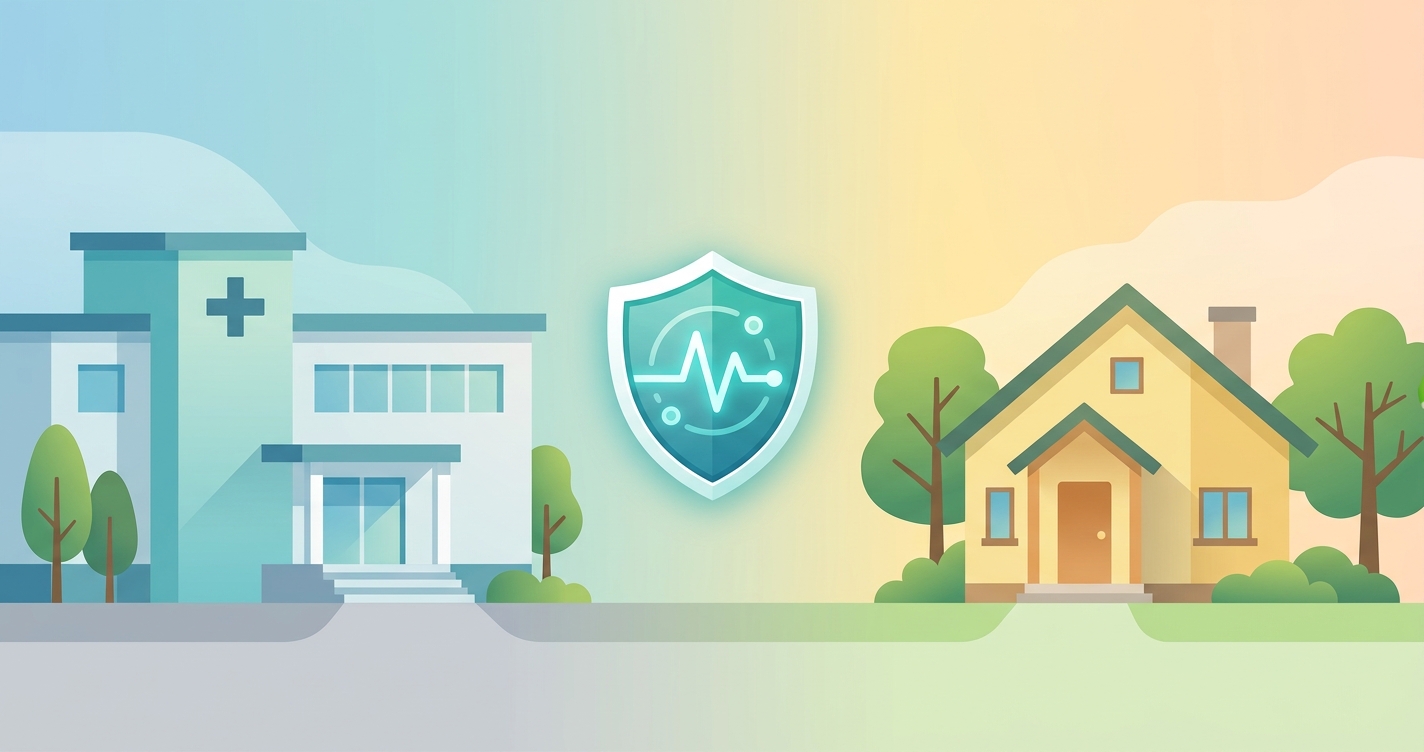
The transition from hospital to home marks a critical phase in a patient's recovery. For health systems, ensuring continuity of care during this period is a significant operational priority. The growing practice of sending patients home with remote monitoring tools is not just about tracking the recovery of an individual; it represents a strategic shift in how healthcare providers manage the health of entire populations. By extending care beyond the hospital walls, organizations are better equipped to prevent costly readmissions, improve patient outcomes, and transition towards a more sustainable, value-based care model. This approach moves care from being episodic to continuous, a necessary evolution for managing chronic disease and post-acute recovery at scale.
"A 2022 study in the Journal of the American Medical Association found that remote patient monitoring programs were associated with a 30% lower rate of hospital readmissions for patients with heart failure." - (JAMA Network)
The strategic value of remote monitoring after discharge
The decision to implement remote monitoring after discharge is a calculated, strategic one for health systems, driven by clinical and economic imperatives. With the average all-cause hospital readmission rate in the U.S. hovering around 15%, the financial and clinical incentives to prevent these events are substantial. The University of Pittsburgh Medical Center (UPMC), a pioneer in this space, reported a 76% reduction in readmission rates by using RPM for post-discharge care. This isn't an isolated success. For specific conditions like heart failure, studies have shown that RPM can reduce related readmissions by as much as 64%. The underlying principle is simple: continuous data provides an early warning system. Rather than waiting for a patient to feel unwell enough to call a doctor or visit an emergency room, care teams can identify negative trends in vital signs, such as blood pressure, heart rate, or oxygen saturation, and intervene proactively. This proactive model is fundamental to population health management, where the goal is to keep large groups of patients as healthy as possible, minimizing the need for high-acuity, high-cost interventions.
The operational benefits extend beyond readmission avoidance. RPM platforms create a new, high-fidelity data stream that enriches the patient record and allows for more personalized care planning. This data enables health systems to triage resources more effectively, focusing clinical attention on the patients who need it most. The increase in Medicare claims for RPM codes, which grew 82% from 2021 to 2023, highlights the rapid adoption and integration of these technologies into standard care protocols.
| Feature | Traditional Wearable RPM | Contactless Camera-Based RPM | | :--- | :--- | :--- | | Technology | Physical devices (cuffs, scales, pulse oximeters, smartwatches) that must be worn or used manually by the patient. | Software-based, using a smartphone or tablet camera to measure vital signs. No dedicated hardware required. | | Patient Adherence | Often faces challenges due to discomfort, the need for charging, complex setup, and forgetfulness. | Higher potential for adherence as it removes the burden of wearing or managing a physical device. | | Data Capture | Intermittent, based on when the patient remembers or is scheduled to take a reading. | Can be scheduled for passive, automated readings, providing more consistent data with less patient effort. | | Logistical Overhead | Requires device inventory management, shipping, cleaning, and retrieval, which adds significant operational complexity and cost. | Eliminates device logistics entirely, simplifying program scalability and reducing overhead costs. |
Industry Applications
The applications for remote patient monitoring after discharge are broad, addressing some of the most pressing challenges in population health.
Post-surgical recovery monitoring
After surgery, patients are vulnerable to complications like infections, blood clots, or adverse reactions to medication. Remote monitoring allows care teams to track key indicators like heart rate, respiratory rate, and blood pressure, providing reassurance that recovery is on track or enabling early intervention if vital signs deviate from expected trends.
Chronic disease management
- Congestive Heart Failure (CHF): Daily monitoring of weight, blood pressure, and oxygen saturation can alert clinicians to fluid retention, a key indicator of worsening heart failure, often before the patient notices symptoms.
- COPD: Tracking respiratory rate and oxygen levels helps in managing chronic obstructive pulmonary disease, potentially preventing acute exacerbations that would otherwise lead to hospitalization.
- Hypertension: Regular blood pressure readings taken at home, free from the "white coat" effect, provide a more accurate picture of a patient's condition, allowing for better medication management.
High-risk pregnancy and postpartum care
For patients with high-risk pregnancies, such as those with preeclampsia, remote monitoring of blood pressure can provide a crucial safety net during and after delivery. It allows for the early detection of dangerous blood pressure spikes, a leading cause of maternal morbidity.
Current research and evidence
The evidence base supporting remote patient monitoring is expanding rapidly. A systematic review published by the National Institutes of Health (NIH) confirmed that RPM interventions are effective in improving quality-of-life and reducing hospitalizations. Research from institutions like Johns Hopkins has shown that RPM can lead to significant improvements in blood pressure control among hypertensive patients. A 2023 study focused on oncology patients found that post-discharge monitoring was associated with a 3% decrease in 30-day readmissions, which translated into millions of dollars in annual savings for the health system. These studies, conducted by researchers like Dr. H. Gilbert Welch and others, consistently point toward the dual benefits of improved clinical outcomes and greater healthcare efficiency.
The future of post-discharge monitoring
The future of remote patient monitoring lies in making the technology more intelligent and less intrusive. The industry is moving away from cumbersome hardware and toward seamless, software-based solutions. The integration of artificial intelligence will enable platforms to not just collect data but to identify predictive patterns that can forecast a patient's risk of decline. This shift to predictive analytics will allow care teams to intervene even earlier, moving from a reactive to a preemptive care model. Contactless technologies, particularly camera-based monitoring, are at the forefront of this trend. By using the ubiquitous cameras on smartphones and tablets, health systems can deploy sophisticated monitoring programs without the logistical challenges of hardware, making this powerful tool for population health accessible to more patients.
Frequently asked questions
What conditions are most commonly managed with remote monitoring after discharge? The most common use cases include managing chronic conditions like congestive heart failure (CHF), chronic obstructive pulmonary disease (COPD), and hypertension. It is also widely used for post-surgical recovery and for high-risk pregnancies.
How often do care teams check the data from remote monitoring? This varies by program, but data is typically reviewed daily by a centralized nursing team or care coordinator. Advanced platforms use algorithms to flag concerning trends, which are then escalated for clinical review, ensuring that providers are not overwhelmed with data and can focus on patients who need immediate attention.
Is this technology secure and is my privacy protected? Yes, all reputable remote patient monitoring platforms are required to be HIPAA-compliant. This means they use robust encryption and security protocols to protect patient data, just like any other hospital system. Patient data is only accessible to authorized members of their care team.
For health systems exploring how to implement or scale their own post-discharge programs, Circadify is actively addressing the challenges of patient adherence and logistical complexity. To learn more about designing a successful RPM pilot program, visit circadify.com/solutions/remote-patient-monitoring.