Why do I feel abandoned the day my hospital sends me home?
Patients often feel a drop in support after leaving the hospital. We explore this 'post-discharge abandonment' and how RPM offers a new model for transition of care.
The moment of discharge from a hospital is a mix of relief and anxiety. While happy to be returning home, many patients feel a sudden and unnerving drop-in support. The constant presence of a clinical team, the regular rhythm of vital signs checks, and the immediate access to expertise vanish. This phenomenon, often felt as abandonment, is a critical challenge in healthcare. It's a failure not of intention, but of process. For health systems, addressing this gap is essential for improving patient outcomes and reducing readmissions. The solution lies in creating better transition of care after hospital discharge support, moving from an abrupt hand-off to a gradual, connected process.
"Less than half (44%) of patients in 2023 'definitely' knew what would happen next in their care after leaving the hospital." - Care Quality Commission, 2023
This statistic highlights a significant communication and support gap. When patients leave the hospital feeling uncertain, they are more likely to experience complications, miss follow-up steps, and feel a profound sense of being left on their own. This is not just a matter of perception; it has tangible consequences for both patient health and health system resources.
The disconnect in post-discharge care
The traditional discharge process is often a one-time, condensed information transfer. A patient, who may still be recovering from a procedure or illness, is given a stack of papers detailing medications, follow-up appointments, and warning signs. While well-intentioned, this model does not account for the reality of recovery at home. Questions arise, new symptoms may appear, and the confidence felt within the hospital walls can quickly fade. This is where the need for robust transition of care after hospital discharge support becomes most apparent. Without it, patients are navigating a complex and vulnerable period alone, and clinical teams lose visibility into patient recovery, only regaining contact when a problem becomes severe enough to warrant an emergency visit.
| Feature | Traditional Discharge Model | RPM-Supported Transition of Care | | :--- | :--- | :--- | | Data Collection | Episodic, in-clinic visits | Daily, automated vital signs data | | Clinician Oversight | Reactive (patient-initiated calls) | Proactive (trend analysis, alerts) | | Patient Support | Dependent on follow-up appointments | Continuous, on-demand virtual connection | | Readmission Risk | High, due to lack of early warnings | Reduced, through early intervention | | Patient Confidence | Low, uncertainty about recovery | High, reassurance of being monitored |
Bridging the gap with remote monitoring
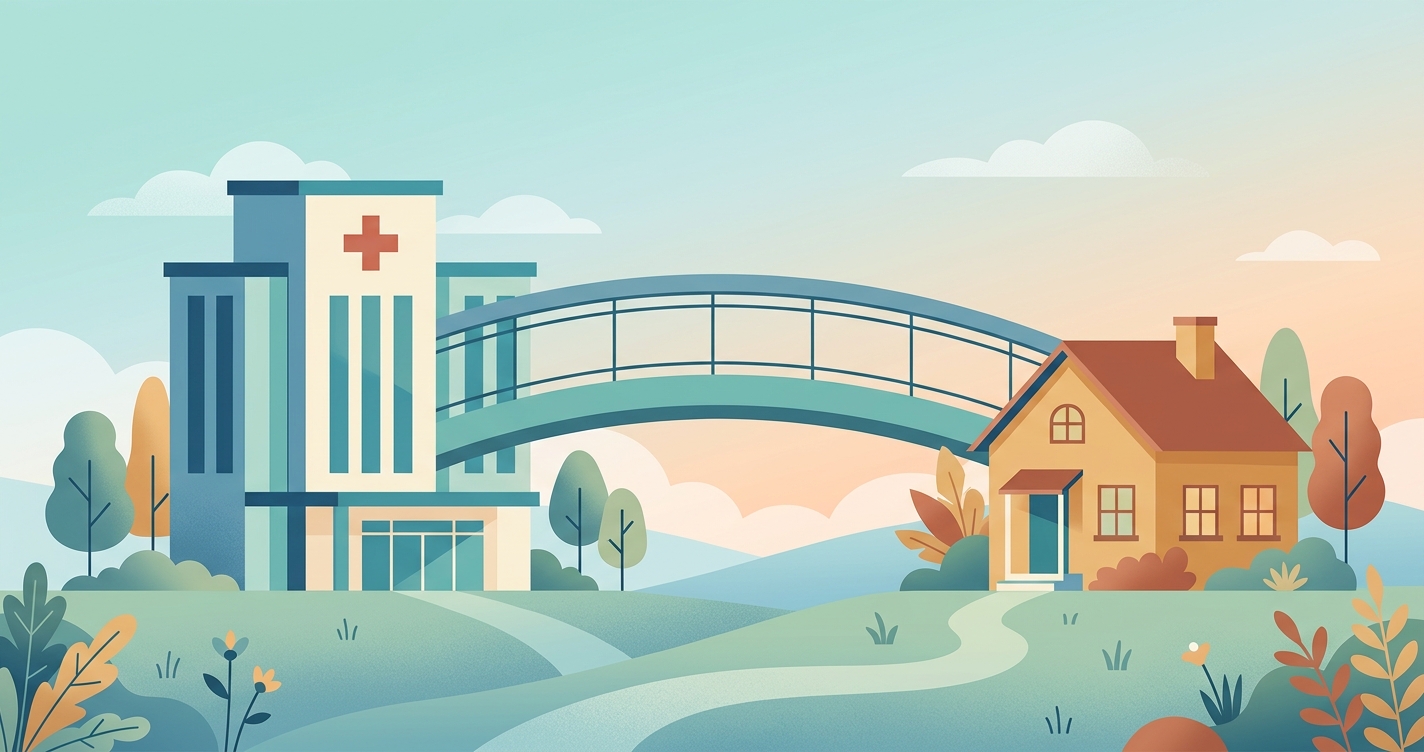
Remote Patient Monitoring (RPM) is emerging as a critical technology to transform the post-discharge experience from a moment of abandonment to a period of connected care. Instead of a sudden cliff, RPM creates a bridge, extending the oversight of the clinical team into the patient's home.
This is achieved through:
- Continuous Data Flow: RPM systems automatically collect and transmit key vital signs, such as heart rate, blood pressure, oxygen saturation, and respiratory rate, to the clinical team. This provides a level of daily insight previously impossible.
- Early Warning Detection: Advanced platforms can analyze trends and flag deviations from a patient's baseline. A subtle, multi-day increase in respiratory rate, for example, could indicate a developing complication long before a patient feels sick enough to call a doctor.
- Strengthened Patient-Provider Connection: The presence of monitoring technology reassures patients that their care team is still watching over them. It replaces the fear of being alone with the confidence of a continuous clinical connection.
Industry Applications
For hospital CMOs and population health VPs, implementing RPM as a standard for post-discharge support addresses several key strategic imperatives.
Improving readmission rates
Thirty-day readmissions are a significant cost driver and quality metric for all health systems. RPM directly addresses the primary causes of readmission, such as medication errors, lack of follow-up, and the delayed recognition of complications. By providing daily data, care teams can intervene proactively, often with a simple telehealth call or medication adjustment, preventing a costly return to the hospital.
Enhancing patient experience
The feeling of abandonment is a major detractor from the patient experience. A well-implemented RPM program reframes the narrative. Patients are not being sent home "alone"; they are being sent home with a system that keeps them connected to their care team. This provides immense psychological comfort and empowers them to take a more active role in their recovery.
Optimizing clinical resources
RPM allows clinical teams to manage a larger panel of post-discharge patients more effectively. Instead of relying on manual check-in calls, they can focus their attention on the patients whose data indicates a potential issue. This "management by exception" model allows nurses and care managers to apply their skills where they are most needed.
Current research and evidence
The effectiveness of structured transitional care is well-documented. Research in the American Nurse Journal has shown that formal Transitional Care Models (TCM), often led by nurses, can significantly improve patient outcomes and reduce costs. A 2020 meta-analysis confirmed that nurse-led transitional care interventions are effective in reducing readmissions for adult patients. Mary Naylor, PhD, RN, at the University of Pennsylvania School of Nursing, developed the original Transitional Care Model, which has demonstrated through numerous studies its ability to improve health outcomes and reduce costs for at-risk populations.
RPM technology acts as a powerful amplifier for these models. A study highlighted by Medical Economics found that RPM cut 30-day hospital readmissions by 50% for heart patients. Research published in The Permanente Journal (2022) on a large-scale RPM program found that it was associated with a significant reduction in hospitalizations. This body of evidence confirms that integrating technology into transition of care after hospital discharge support is not a speculative venture but a proven strategy.
The future of post-discharge support
The future of post-discharge care lies in making monitoring even more seamless and patient-friendly. The industry is moving beyond programs that require patients to manage multiple wearable devices, which often suffer from low compliance. The next generation of RPM technology is contactless, using ambient sensors and cameras to gather vital signs without requiring any action from the patient. This approach removes the burden of device management, increases adherence, and ensures that the data is consistently available for the clinical team. For health systems, this means higher quality data, more reliable insights, and a more scalable solution for managing transitions of care for all types of patients.
Frequently asked questions
Q: Does remote monitoring replace the relationship with my doctor? A: No, it enhances it. Remote monitoring provides your doctor and care team with more consistent data about your health between visits. This allows them to have a more complete picture of your recovery and make more informed decisions, leading to a more proactive and collaborative relationship.
Q: How do hospitals ensure patient privacy with in-home monitoring? A: Patient privacy is a top priority. All data transmission is encrypted and compliant with HIPAA. For camera-based systems, the technology focuses solely on physiological signals and does not store identifiable images or videos. The systems are designed to measure, not to watch in a traditional sense.
Q: Isn't this kind of technology complicated for patients to use, especially older adults? A: Modern RPM systems are designed for simplicity. Many platforms, particularly contactless ones, require no interaction from the patient at all. The technology works in the background, removing the barrier of technical literacy and ensuring the program is accessible to all patients, regardless of their comfort with technology.
The transition from hospital to home should not feel like a cliff. At Circadify, we are building the technology to ensure this critical period is a bridge to a safe and complete recovery, providing the continuous clinical presence that patients deserve. To learn more about implementing a contactless RPM program to improve your organization's post-discharge support, explore our solutions for remote patient monitoring.